
Last updated October 16, 2026
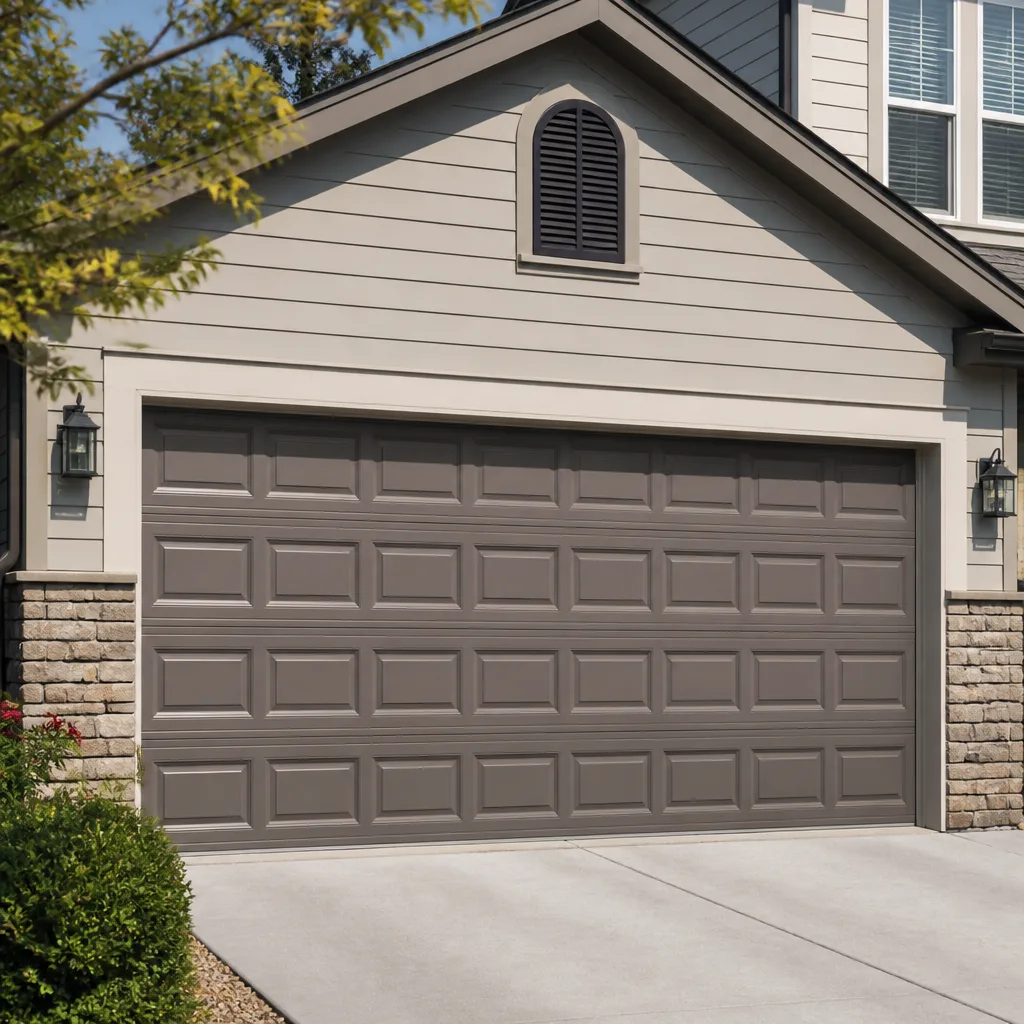 Raised-panel steel
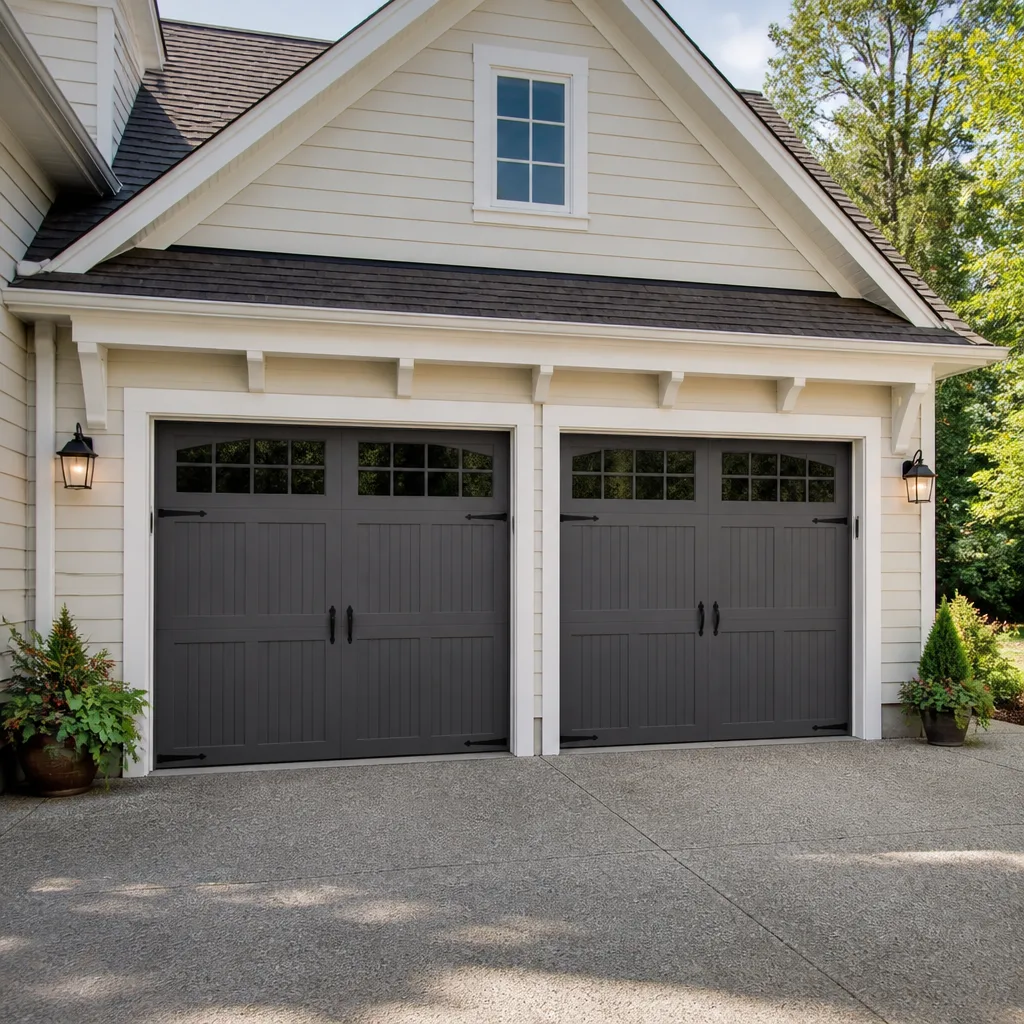 Carriage house
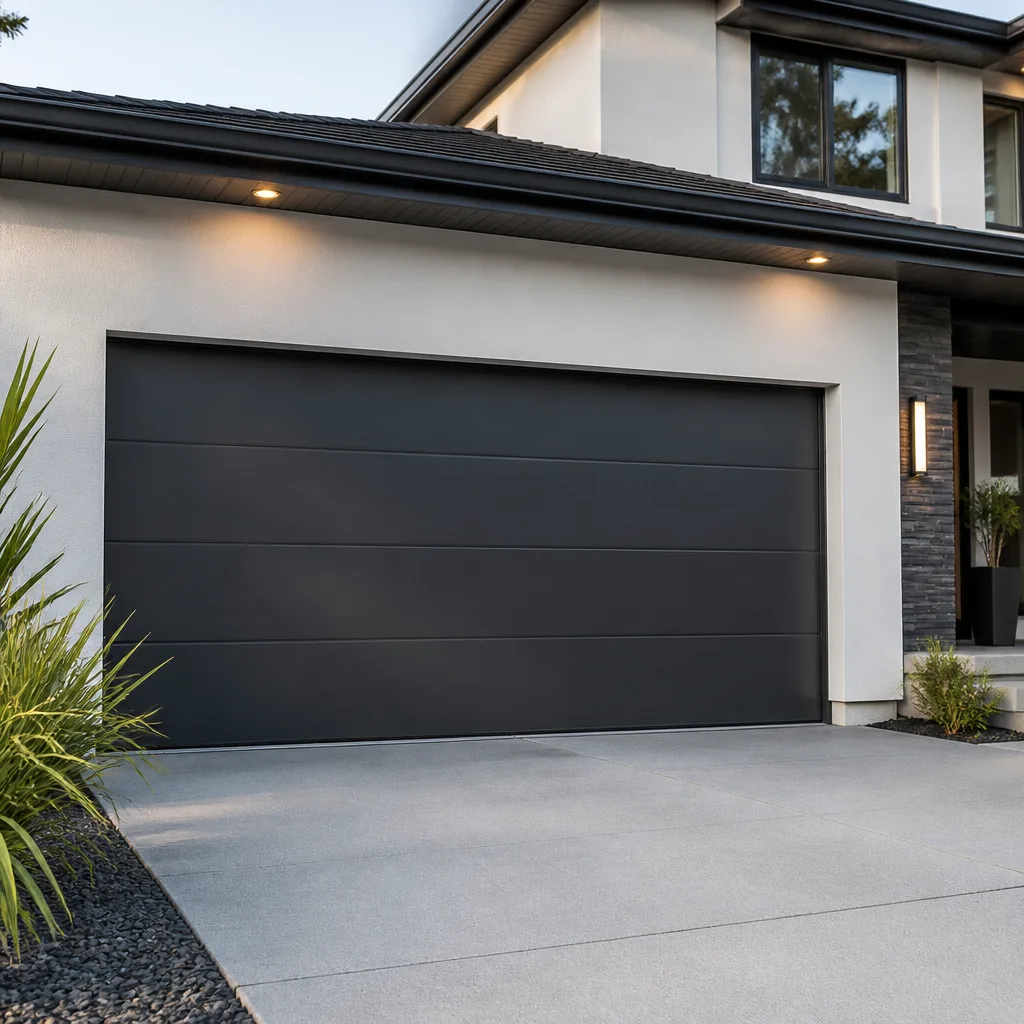 Modern flush
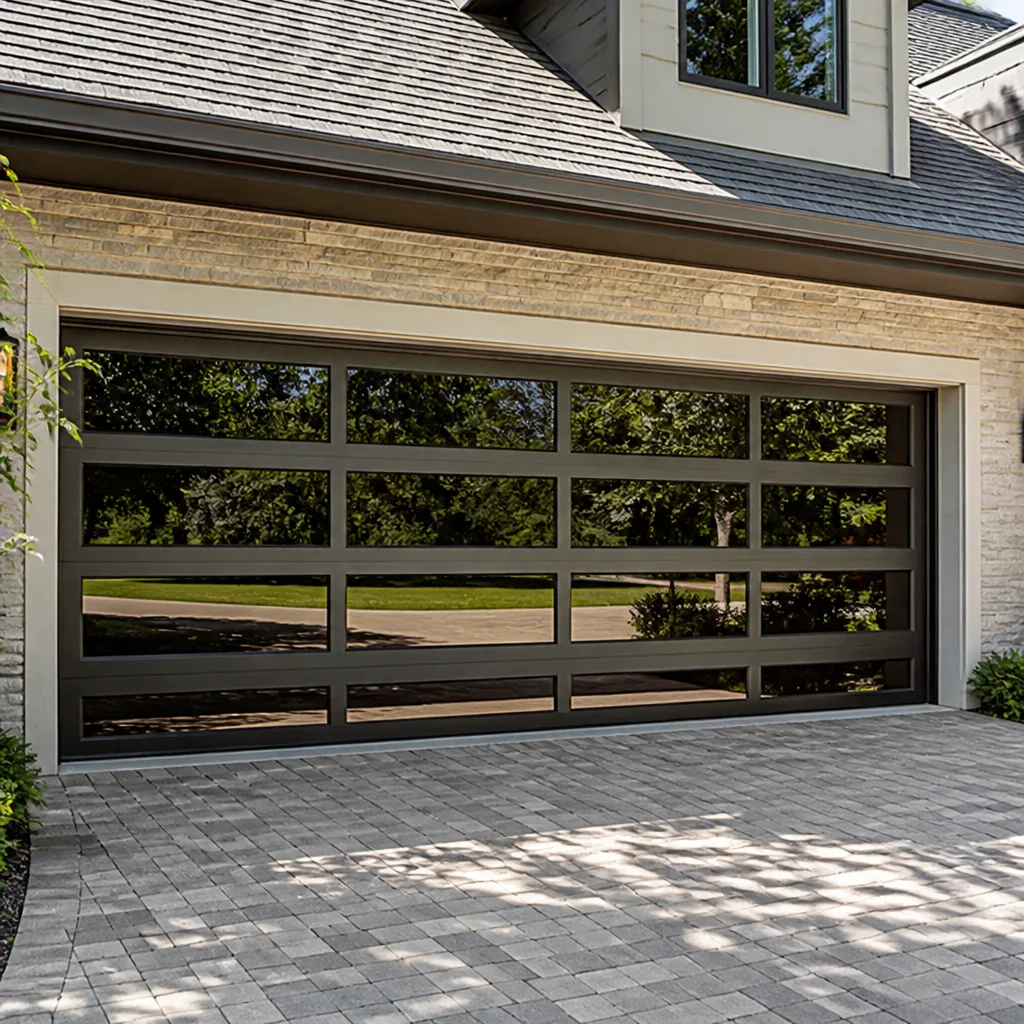 Full-view glass
 LiftMaster openers
 Chamberlain openers
Full 25-point door and opener safety check with every visit - springs, cables, rollers, tracks, and your LiftMaster or Chamberlain opener included
You get a price before we start. It does not change when the truck arrives.
Get your free estimateSeasonal Garage Door Care for Atlanta: Year-Round Homeowner’s Guide
Atlanta’s garage doors take more heat abuse in July and August than a Boston door takes all winter. UV degradation, panel warping, and adhesive breakdown are summer problems here, not winter ones. This guide maps garage door maintenance to Atlanta’s actual calendar: the pollen wave of March and April, the brutal heat of midsummer, the narrow freeze window of January, and the sweet spot that is October. You’ll learn what to check each season, what actually matters at Atlanta’s temperature range, and what you can skip.
Quick Answer
Seasonal garage door care in Atlanta means cleaning pollen off sensors and tracks in spring, checking the bottom seal and opener heat tolerance through summer, replacing weatherstripping in fall, and lubricating metal parts before January’s brief freeze. Most homeowners can handle basic cleaning and visual checks themselves in 20 minutes per season. Torsion spring tension checks and any repair involving the springs or cables should be left to a professional, since those components are under enough tension to cause serious injury.
Styles & brands we work with
Table of Contents
- Why Atlanta’s Climate Demands a Different Maintenance Calendar
- Spring Maintenance: Pollen, Sensors, and Track Debris
- Summer Maintenance: Heat, UV, and the Southern Exposure Problem
- Fall Maintenance: The Weatherstripping Window
- Winter Maintenance: What Actually Freezes in Atlanta
- Seasonal Spring Tension and Door Balance
- Common Mistakes to Avoid
- When to Call a Professional
- Frequently Asked Questions
Why Atlanta’s Climate Demands a Different Maintenance Calendar
Most garage door maintenance guides you’ll find online are written for a generic North American climate. They tell you to worry about snow load in February and salt corrosion in March. That advice is useless for a house in Buckhead or Decatur. Atlanta gets roughly 50 inches of rain a year, with late winter and early spring bringing the heaviest downpours. Our humidity stays above 70% for most of the summer. And the pollen season here is not a minor annoyance; it’s a thick yellow film that coats every surface for six weeks, including your garage door tracks, sensors, and hinges.
What this means in practice: your garage door’s biggest enemies in Atlanta are moisture, pollen, and heat, in that order. Moisture causes rust on hardware and warping on wood doors. Pollen gums up photo-eye sensors and clogs track rollers. Heat breaks down rubber seals, weakens adhesive on weatherstripping, and makes opener motors work harder than they’re rated for, especially if the unit sits in an uninsulated garage that hits 110°F in August. None of this matches the national advice, which is why we wrote this guide specifically for Marlow Garage Door Repair Atlanta home territory.
Spring Maintenance: Pollen, Sensors, and Track Debris
March through early May is Atlanta’s pollen apocalypse. Pine pollen is the main culprit, and it coats everything in a fine yellow dust that works its way into the smallest gaps on your garage door system. Pine pollen is sticky when it lands on a surface that’s even slightly damp, and spring mornings in Atlanta are always damp. That means pollen doesn’t just sit on your sensors; it adheres to them.
Here’s the spring checklist, timed for mid-March through April:
- Clean the photo-eye sensors. These are the two small units mounted about six inches off the floor on either side of the door opening. Wipe the lenses with a dry microfiber cloth. If pollen is caked on, dampen the cloth slightly. Pollen buildup on the sensor lens is one of the most common reasons a garage door reverses for no apparent reason in Atlanta.
- Inspect the bottom seal after pollen adhesion. The rubber strip along the bottom of your garage door collects pollen, and when it gets wet from spring rain, that pollen turns into a paste that can stick the seal to the concrete. Pull the seal away gently and wipe it down. Look for cracks where pollen and moisture can get inside the seal channel.
- Clear track debris. Use a dry rag to wipe the vertical and horizontal tracks. Pollen combines with garage dust to form a gummy layer on track surfaces, which makes rollers work harder and can cause uneven door movement.
- Lubricate hinges and rollers. Use a white lithium grease or silicone spray on the hinge pivot points and roller stems. Do not lubricate the track itself; that attracts more pollen and dust. A few drops per hinge, once in spring, is enough for the next six months.
- Check the balance. Pull the release handle with the door closed, then manually lift the door to about waist height. If it stays put, the springs are balanced. If it drops or rises on its own, call a professional. We’ve seen doors in Garage Door Spring Repair in Atlanta service calls that were dangerously out of balance after a winter of temperature swings.
Summer Maintenance: Heat, UV, and the Southern Exposure Problem
Atlanta summers are rough on garage doors in ways that don’t show up in most maintenance guides. July and August bring sustained highs in the 90s, and garage interiors can hit 110°F or more if the space isn’t insulated. That heat does three things to your door system: it degrades rubber and vinyl components faster, it makes opener motors run hotter, and it warps panels on doors with direct southern exposure.
The southern exposure problem is one we see regularly in neighborhoods like East Atlanta and Grant Park, where homes face the afternoon sun. Doors that get direct sunlight from 2 p.m. to 7 p.m. in July absorb enough heat that the exterior panel surface can reach 140°F and up. Metal doors expand and contract, which stresses the panel seams and can eventually cause cracking or bowing. Wood doors dry out and split, which is why wood garage doors are rare in new Atlanta construction and increasingly rare in older neighborhoods.
Summer maintenance tasks, timed for early June and again in mid-July:
- Test the opener’s heat tolerance. Run the door a full open-close cycle in the late afternoon, when the garage is hottest. Listen for a strained motor sound or a slower-than-normal cycle. If the opener is more than 10 years old and lives in an uninsulated garage, summer is when it’s most likely to overheat and shut down. LiftMaster and Chamberlain units have thermal overload protection that trips when the motor gets too hot; if you’re experiencing random shutdowns on hot afternoons, that’s probably what’s happening.
- Inspect the bottom seal for warping. The rubber at the bottom of your door softens in high heat. If your garage faces west or south, check for a seal that’s lost its shape or pulled away from the door channel. Warped seals let hot air, dust, and insects into the garage.
- Check the weatherstripping along the sides and top. Side seals made of vinyl get brittle after repeated heat cycles. Run your hand along them and look for gaps where daylight shows through. Atlanta’s summer thunderstorms drive rain sideways sometimes, and a quarter-inch gap is enough to let water into the garage.
- Lubricate moving parts again. Summer heat thins lubricant faster than any other season. A second application in mid-July on hinges and rollers helps prevent metal-on-metal wear through the hottest stretch.
Fall Maintenance: The Weatherstripping Window
October is the best month in Atlanta to replace weatherstripping, and most homeowners don’t know it. Here’s why: adhesive-backed weatherstripping bonds best when the ambient temperature sits between 60°F and 80°F. In Atlanta, that’s roughly October through early November. Install it in July and the adhesive softens before it fully cures, leading to peel-away within weeks. Install it in January and the cold makes the adhesive brittle before it bonds. October gives you the right temperature and low humidity, which means the strip sets correctly the first time.
Fall checklist, timed for October or early November:
- Replace bottom seal and side weatherstripping. Measure the door width and buy the right size replacement strip. Genie and Clopay both sell replacement seal kits that fit most standard doors. Pull out the old strip, clean the channel with a dry rag, and slide or press in the new one. If the channel is dented or corroded, you may need to replace that component too.
- Inspect and tighten all hardware. Summer heat cycles cause bolts and screws to loosen. Go over the hinges, brackets, and track bolts with a socket wrench. Do not overtighten track bolts; the track needs a small amount of play to accommodate door movement.
- Test the auto-reverse function. Place a 2×4 piece of wood flat on the ground under the door, then close the door. It should reverse within two seconds of hitting the wood. This is a federal safety requirement since 1993, and it’s the most important test you’ll do all year.
- Clean the track thoroughly one more time. After the fall leaf drop, track debris is less of an issue than spring pollen, but summer dust combined with humidity creates a similar gummy buildup. Wipe tracks down before winter.
Fall is also the right time for a professional tune-up if your door hasn’t had one in a couple of years. The mild temperatures mean a technician can work unhurried, and anything found can be fixed before January’s cold snap, when garages in Atlanta get genuinely uncomfortable for both people and mechanical parts. If your door is showing wear, this is the moment to arrange Garage Door Repair in Atlanta before winter makes it urgent.
Winter Maintenance: What Actually Freezes in Atlanta
Let’s be honest about Atlanta winters. We get maybe 10 to 15 nights a year below freezing, usually spread across December through February, with January being the coldest month. We rarely stay below freezing for more than 48 hours at a stretch. So what does the national winter maintenance advice mean for us? Very little. You don’t need to worry about snow load on the door, and ice dams are not a garage door problem here.
What you do need to worry about in Atlanta winter:
- Metal contraction on torsion springs. Springs contract slightly in cold weather, which makes them marginally stiffer. Combined with colder lubricant, a spring that was already wearing down will show it in January. If your door struggles to open on cold mornings but is fine by afternoon, the springs are nearing the end of their service life.
- Bottom seal freezing to the concrete. When rainwater pools on the garage floor and overnight temps dip below 32°F, the rubber seal can freeze fast to the slab. When you hit the opener, the door strains against the frozen seal, which can damage the seal or trip the opener’s safety mechanism. If the door doesn’t open, don’t force it. Pour lukewarm water along the seal line and wait a few minutes.
- Battery failure in remote controls and keypads. Cold drains batteries faster. This is a small thing, but it’s the most common winter garage door complaint we hear: the remote stops working, the homeowner assumes the opener is dead, and the fix is a $2 battery.
- Stiff rollers in uninsulated garages. Roller bearings with old lubricant get sluggish in cold weather. If your door sounds louder than usual in January, the rollers may need lubrication or replacement.
The narrow window matters because Atlanta’s cold snaps are short. You don’t need to winterize a garage door in November the way a homeowner in Minneapolis would. But you do need to make sure the door’s moving parts are clean and lubricated before the first hard freeze, because they’ll perform noticeably worse in the cold if they’re not.
Seasonal Spring Tension and Door Balance
Torsion springs, the horizontal coil above your door that does most of the lifting, are rated for a specific number of open-close cycles, not for a specific number of years. A spring rated for 10,000 cycles on a door that opens four times a day lasts about seven years. On a door that opens eight times a day, the same spring lasts about three and a half years. Atlanta’s temperature swings don’t destroy springs, but they do change how the door balances from summer to winter.
Here’s what happens: metal springs exert slightly more force in cold weather than in hot weather. When the temperature drops from Atlanta’s August average of 89°F to January’s average of 52°F, a properly balanced door will sit slightly heavier in January than it does in August. That’s normal and won’t strain the opener much, if the springs are in good shape. But if the springs are already worn, the cold weather amplifies the imbalance enough that the opener motor has to work meaningfully harder. Over months of that extra strain, the motor’s service life shortens.
You can check door balance yourself in about one minute:
- Close the door.
- Pull the red release handle to disconnect the opener.
- Lift the door manually to waist height.
- Let go.
If the door stays put, balance is fine. If it drops, the springs are weak and need professional adjustment. If it rises on its own, the springs are too tight, which is less common but still needs correction. This check is safe to do yourself as long as you don’t touch the springs themselves. Torsion springs are under enough tension to cause severe injury or worse if they snap while you’re adjusting them, and we cannot overstate how dangerous they are. If the balance check reveals a problem, that’s a call to a licensed professional, not a DIY project. Garage Door Cable Repair in Atlanta and spring work always involves components under high tension, and the risk is not worth saving a service fee.
Common Mistakes to Avoid
- Lubricating the track. This is the most common garage door maintenance mistake we see in Atlanta. Lubricant on the track surface attracts pollen in spring and dust in summer, turning into a grinding paste that accelerates roller wear. The track should be wiped clean and left dry.
- Skipping the auto-reverse test. This federal safety feature has prevented thousands of injuries and deaths since 1993. It takes 30 seconds to test with a piece of wood. Skipping it puts kids, pets, and any adult who’s not paying attention at real risk.
- Ignoring a noisy door. Squeaks, grinding, and thumps are not personality quirks; they’re signs of wear. A squeak means a hinge needs lubrication. A grinding sound means metal-on-metal contact somewhere in the roller system. A thump when the door opens often means a loose cable or a spring on the way out. Ignoring noise turns a $20 fix into a $300 replacement.
- Replacing weatherstripping in summer. We covered this earlier, but it bears repeating: adhesive fails in Atlanta heat. If you install new weatherstripping in July, you’ll likely be reinstalling it in October.
- Forcing a door that won’t open on a cold morning. If the bottom seal has frozen to the slab and you hit the opener repeatedly, you can tear the seal, bend the bottom panel bracket, or trip the opener’s overload protection. Thaw the seal first.
- Touching torsion springs without training. The torsion spring is the single most dangerous component on your property. A spring under tension stores enough energy to seriously injure or kill someone who makes a mistake while adjusting it. This is not a homeowners’ task, period. If your door won’t balance, call someone who does this work professionally.
- Assuming the opener is dead when the remote stops working. Cold weather drains remote batteries, and a dead remote costs $2 to fix. Check the battery before calling a repair service.
When to Call a Professional
Most of the seasonal maintenance in this guide is DIY-friendly: cleaning sensors, wiping tracks, lubricating hinges, testing balance and auto-reverse. But there are lines you don’t cross. If your torsion spring is broken or visibly worn, if the door is significantly out of balance, if a cable is frayed or off its drum, or if the opener motor keeps tripping its overload protection, that’s a professional job. These components are under tension that can cause severe injury to an untrained person. Garage Door Spring Repair in Atlanta is the most technical service on a garage door, and it’s never a DIY repair. Marlow Garage Door Repair Atlanta offers free estimates in Atlanta, and you’ll get a written price before any work starts, so you won’t face an invoice that surprises you. Call (762) 230-6145 to schedule.
Frequently Asked Questions
Perform a 20-minute seasonal check four times a year, timed to Atlanta’s actual calendar: mid-March for pollen, early June for heat, October for weatherstripping replacement, and mid-January for freeze prep. A professional tune-up once every two years is enough for most doors in Atlanta, assuming no repairs are needed in between. Call (762) 230-6145 if your door is making noise or moving unevenly.
Yes, and this is underappreciated. UV radiation degrades rubber seals and vinyl weatherstripping, and sustained 90°F-plus temperatures soften adhesives and cause metal panels to expand with enough force to stress panel seams. Doors facing south or west take the worst of it. If your door shows cracking, peeling, or warping on the sun-facing side, the heat has already done damage.
Pour lukewarm water, not hot, along the bottom seal where it meets the concrete and wait about five minutes. Don’t hit the opener repeatedly and don’t force the door manually. Once the seal is free, apply a thin coat of silicone spray along the bottom of the seal to reduce future ice adhesion. This is a rare problem in Atlanta, but it happens in January and February.
If you’re doing it yourself, the only cost is lubricant and possibly replacement weatherstripping, which runs $15 to $40 for a standard single door. A professional tune-up in Atlanta typically costs $80 to $150, and any repairs found during the tune-up are quoted separately before the work starts. Marlow Garage Door Repair Atlanta provides a written price before any wrench turns, so the number you agree to is the number you pay. Call (762) 230-6145 for a free estimate.
No. Torsion springs bear the entire weight of a door that can weigh 150 to 300 pounds, and the spring is wound tight enough to cause fatal injury if it releases unexpectedly. This is a job strictly for trained, equipped professionals. Even in Atlanta, where garage door repair tutorials are easy to find, a torsion spring adjustment is not a DIY project, and no amount of caution makes it safe for an untrained person.
Cold weather makes torsion springs stiffer, which slightly increases the force needed to lift the door. If the springs are in good condition, the difference is negligible. If the springs are worn, the colder temperatures expose the weakness, and the opener motor works harder to compensate. This is an early warning sign that the springs are nearing the end of their life and should be replaced before they fail at an inconvenient time.
Common Garage Door Problems by Atlanta Season
Different seasons produce different failure patterns in Atlanta. Knowing what to watch for in each part of the year helps you catch issues early, before they become emergency repairs:
- Spring (March-May): Sensor misfires from pollen buildup, sticky bottom seals from the pollen-and-rain paste, loud grinding from debris-clogged tracks. We see more sensor cleaning calls in April than any other month.
- Summer (June-August): Opener thermal shutdowns in uninsulated garages, warped bottom seals, side weatherstripping that has pulled away from the frame, and cracked panels on doors with southern exposure. If your garage faces the afternoon sun in neighborhoods like Virginia-Highland or East Lake, your door ages measurably faster.
- Fall (September-November): Loose hardware from summer expansion cycles, worn rollers exposed once pollen and dust settle, and the ideal window for weatherstripping replacement. Doors that get fall maintenance are dramatically less likely to need winter repairs.
- Winter (December-February): Stiff rollers on cold mornings, frozen bottom seals, dead remote batteries, and spring failures that were waiting to happen. January is our busiest month for Garage Door Spring Repair in Atlanta because cold metal is less forgiving than warm metal.
See the difference
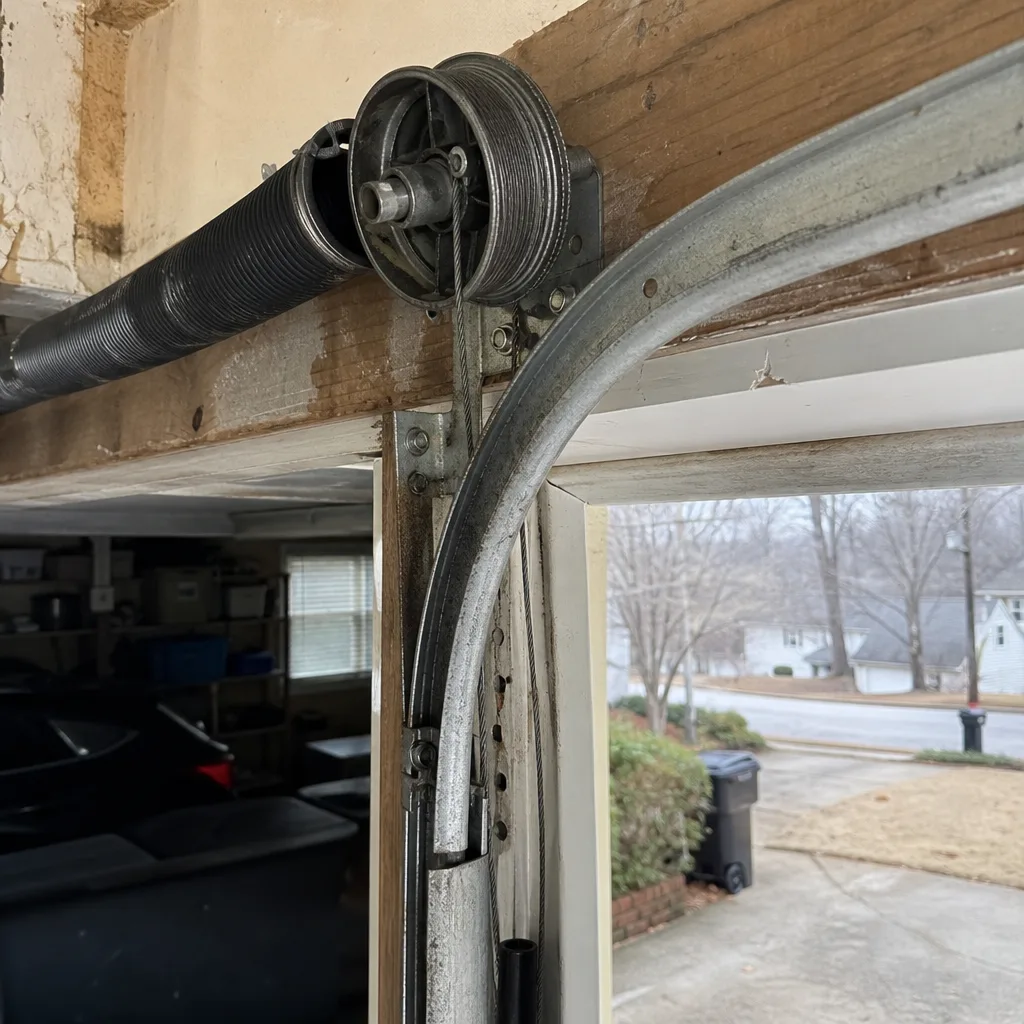 Before
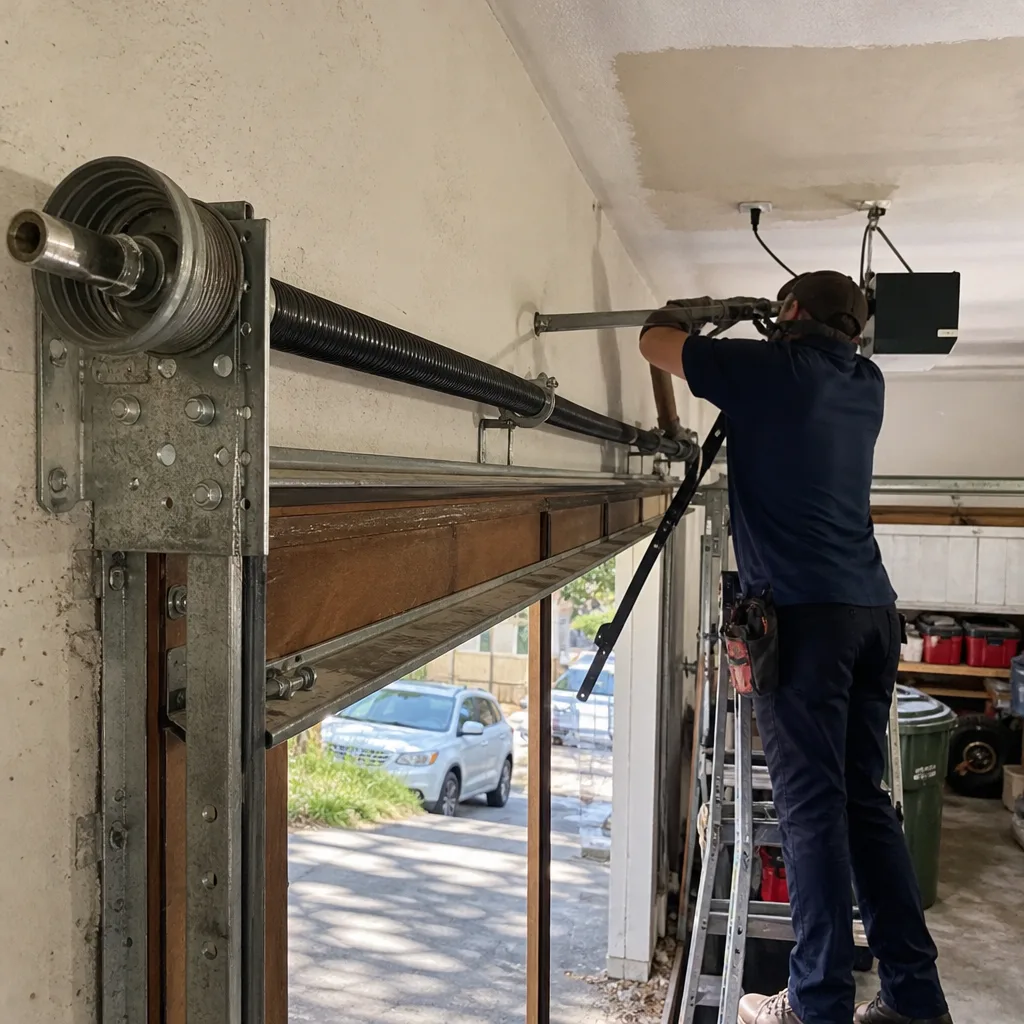 After
After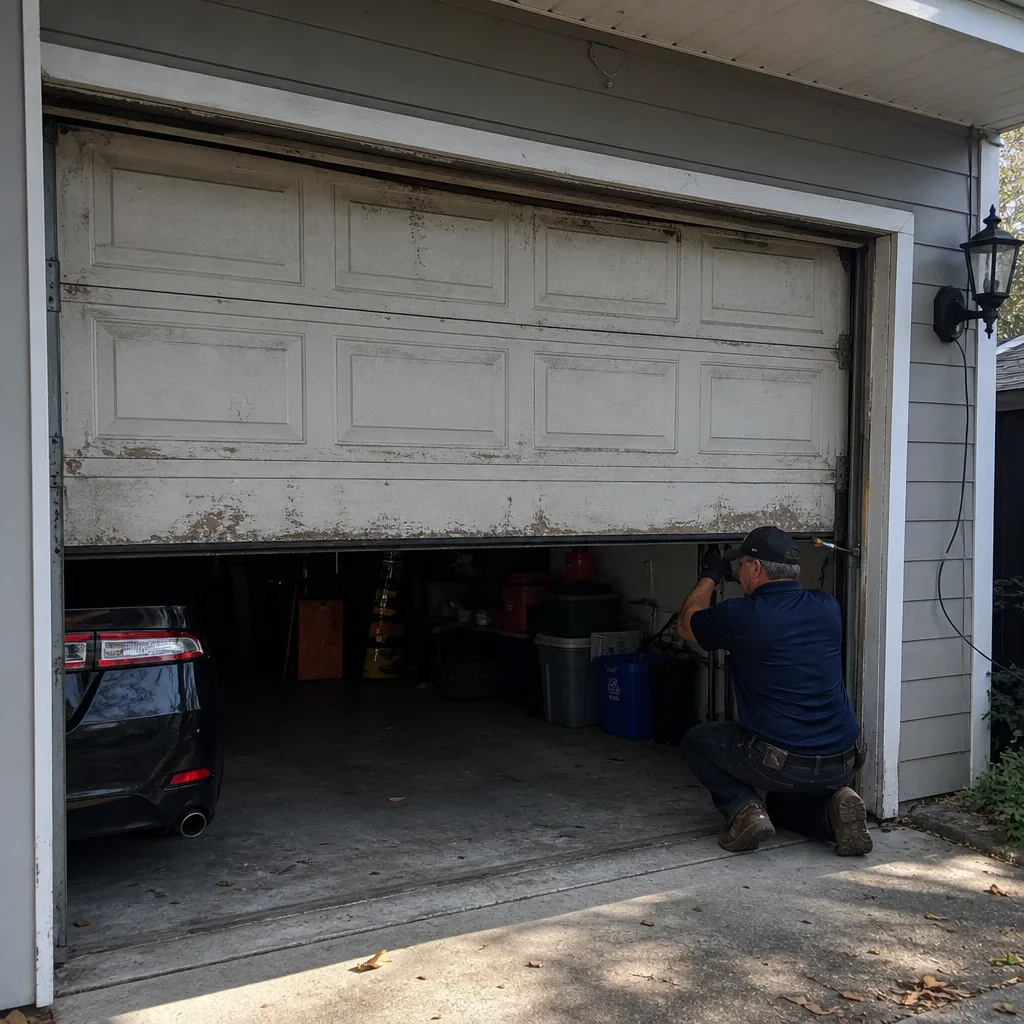 Before
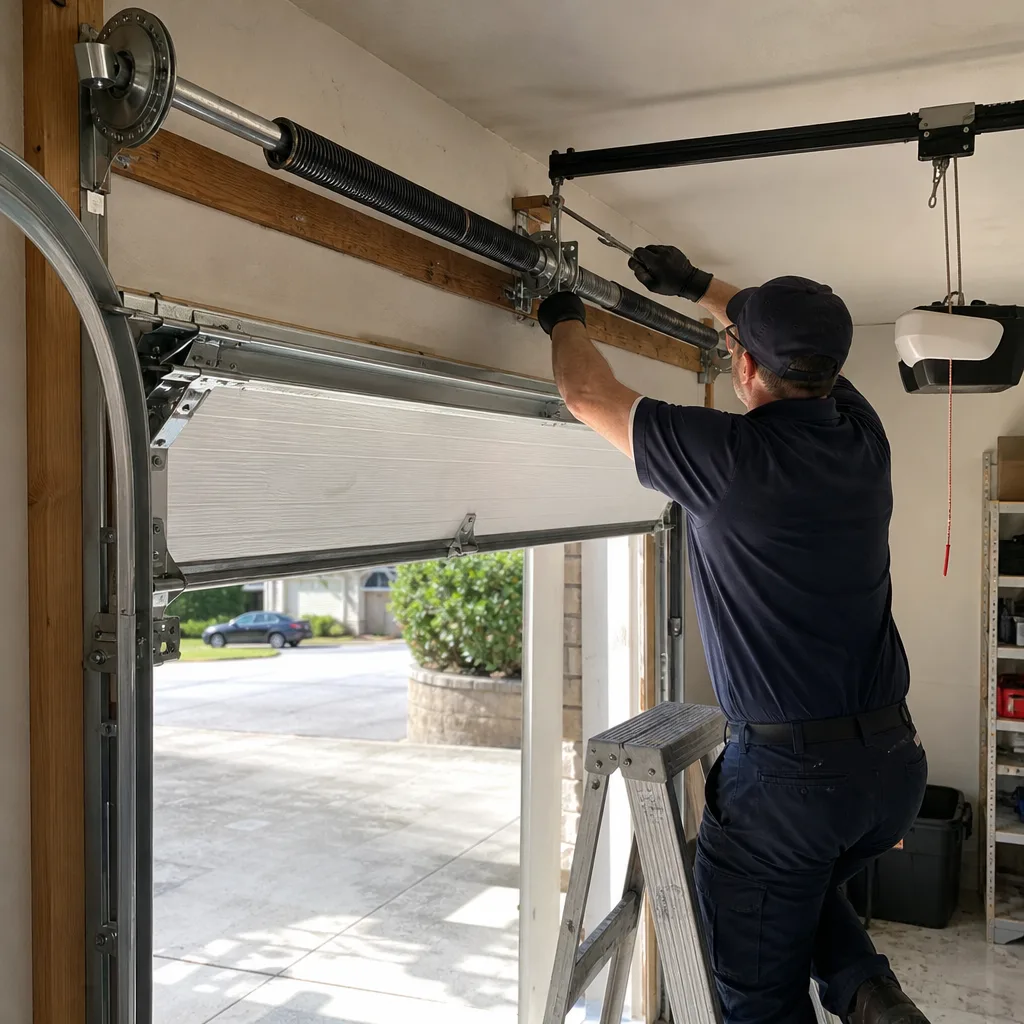 After
After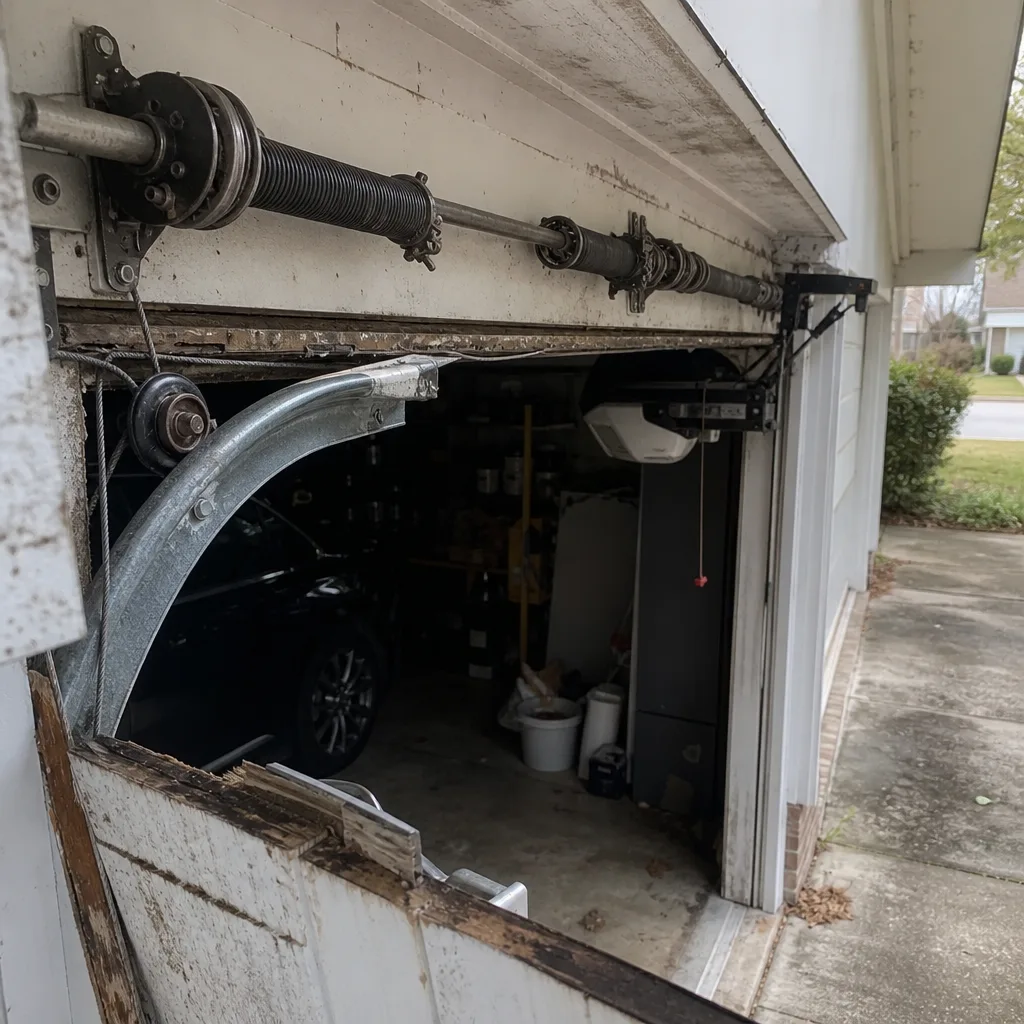 Before
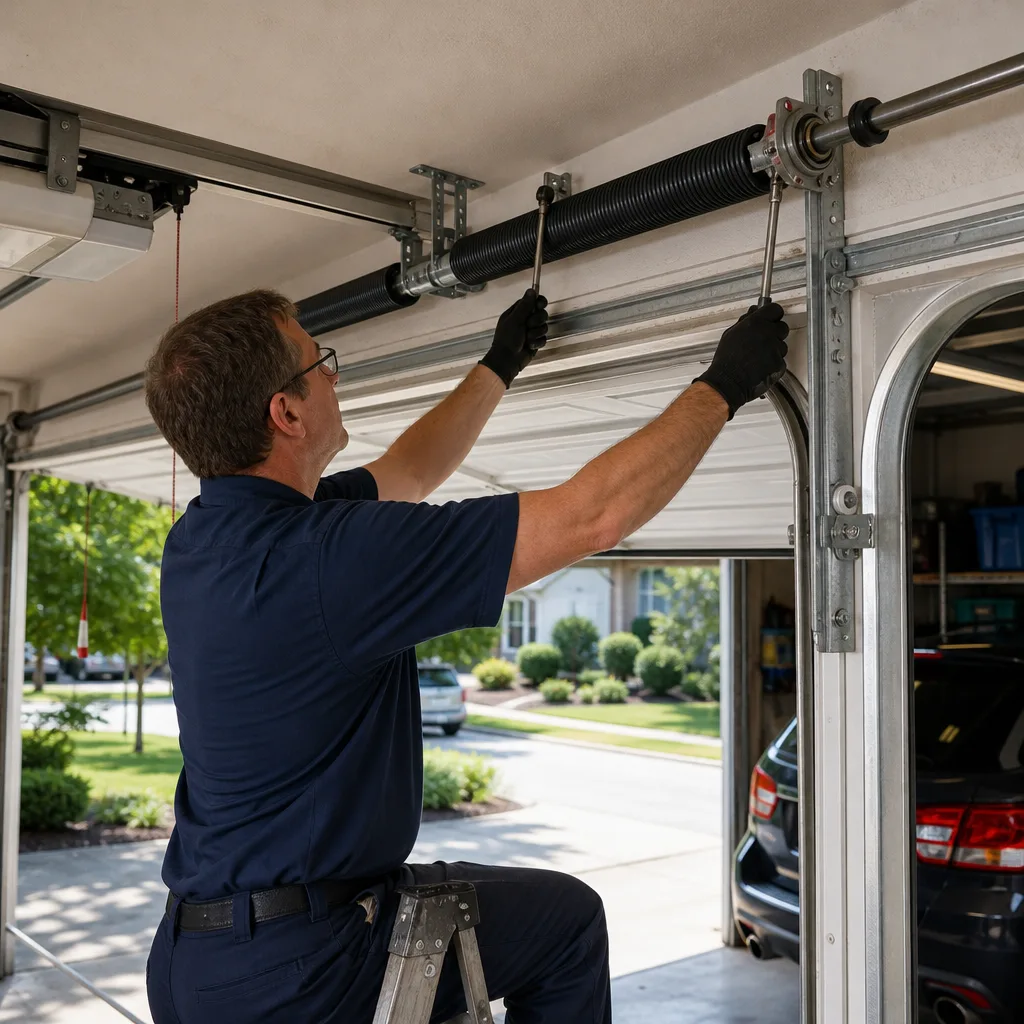 After
AfterBrand-Specific Maintenance Notes
Not all garage doors age the same way in Atlanta’s climate. From our experience servicing eight major brands across the metro area, here’s what we’ve observed:
- LiftMaster and Chamberlain openers: Both brands use thermal overload protection that shuts the motor down when it overheats, which is a bigger factor in Atlanta summers than anywhere north of us. If your opener randomly stops working on hot afternoons, the motor is protecting itself. Ventilating the garage or relocating the opener away from direct sun helps.
- Genie openers: Genie’s belt-drive models are notably quiet, but the belt itself stretches slightly in sustained heat. A Genie that was installed in winter may need a belt tension adjustment after its first Atlanta summer. This is a quick fix for a trained tech.
- Clopay doors: Clopay’s insulated steel doors hold up well in Atlanta heat, but the weatherstripping channels on their entry-level models are prone to warping after a few summers, which makes replacement seals fit poorly. If you’re replacing a Clopay seal, buy the brand-specific version rather than a universal fit.
When to Call a Professional
Most of the seasonal maintenance in this guide is DIY-friendly: cleaning sensors, wiping tracks, lubricating hinges, testing balance and auto-reverse. But there are lines you don’t cross. If your torsion spring is broken or visibly worn, if the door is significantly out of balance, if a cable is frayed or off its drum, or if the opener motor keeps tripping its overload protection, that’s a professional job. These components are under tension that can cause severe injury to an untrained person. Garage Door Cable Repair in Atlanta and spring work are never DIY repairs. Marlow Garage Door Repair Atlanta offers free estimates, and you’ll get a written price before any work starts, so you won’t face an invoice that surprises you. Call (762) 230-6145 to schedule.
The Bottom Line
Garage door maintenance in Atlanta is about timing. Clean sensors and tracks in March and April when pollen is at its worst. Check the bottom seal and opener performance in June and July when the heat exposes weaknesses. Replace weatherstripping in October and November, the only months when adhesives bond reliably in our climate. And before January’s cold arrives, lubricate every moving part and check the door balance. Twenty minutes per season, four times a year, keeps a garage door running smoothly for years. When something’s beyond a basic check, you know who to call: Marlow Garage Door Repair Atlanta, with a written price before we start, a real person on the phone 24/7, and the 365-Day Done Right Promise behind every repair. Call (762) 230-6145 for a free estimate.
Written by Jaylen Ross, Owner at Marlow Garage Door Repair Atlanta, serving Atlanta since 2002.