
Last updated October 16, 2026
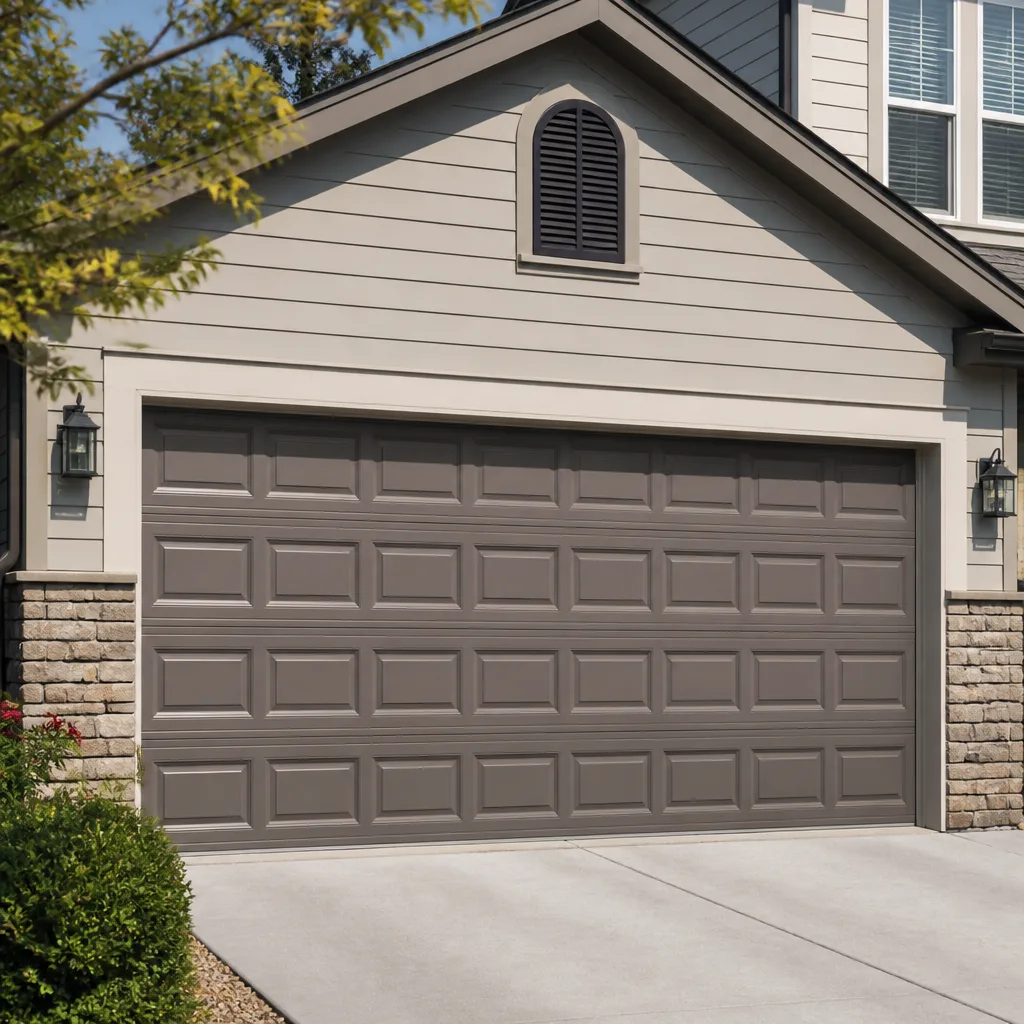 Raised-panel steel
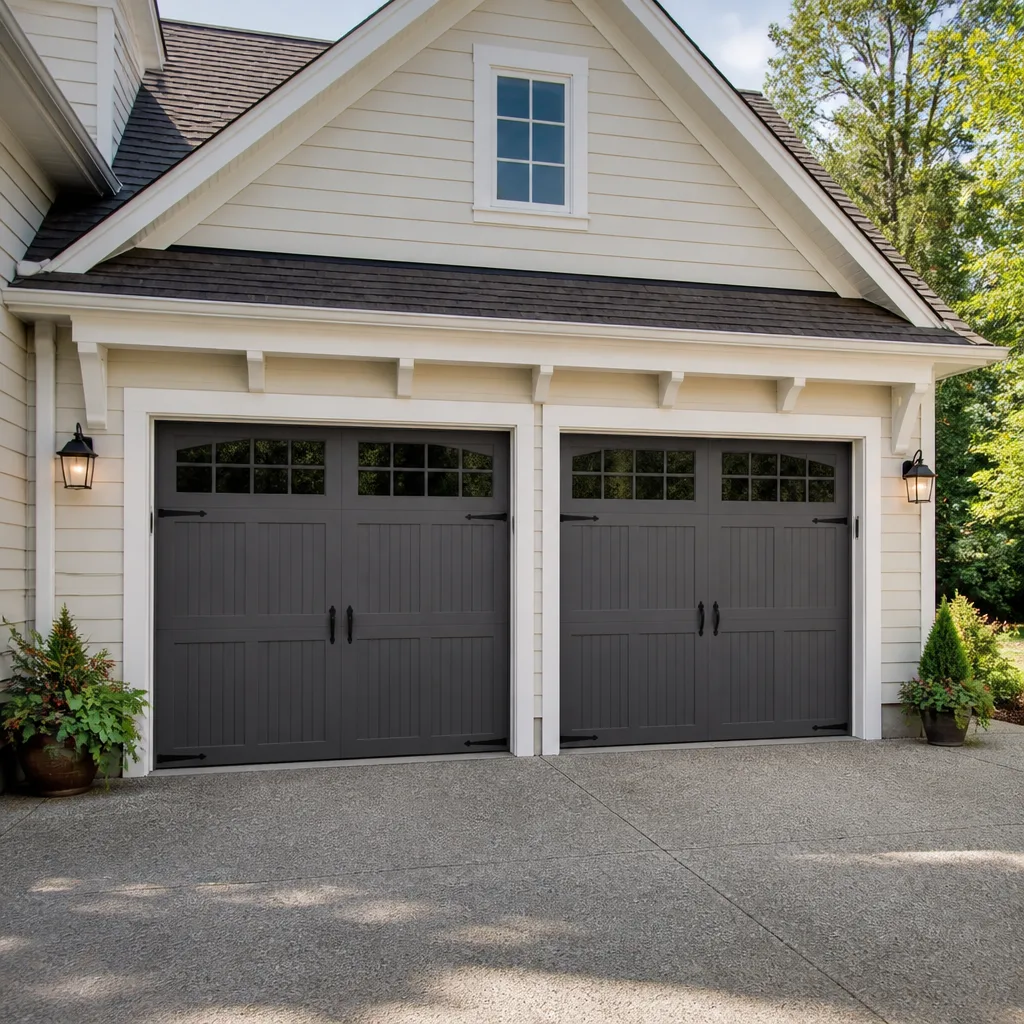 Carriage house
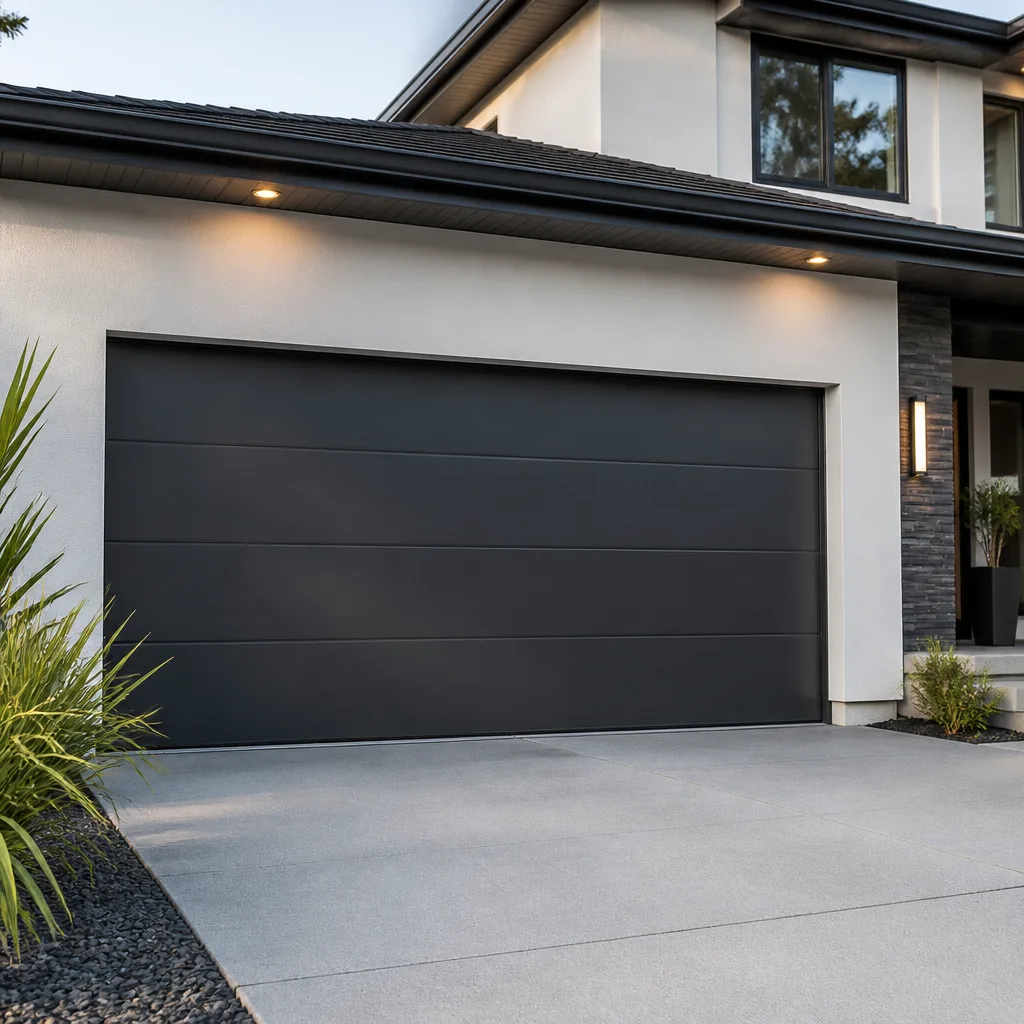 Modern flush
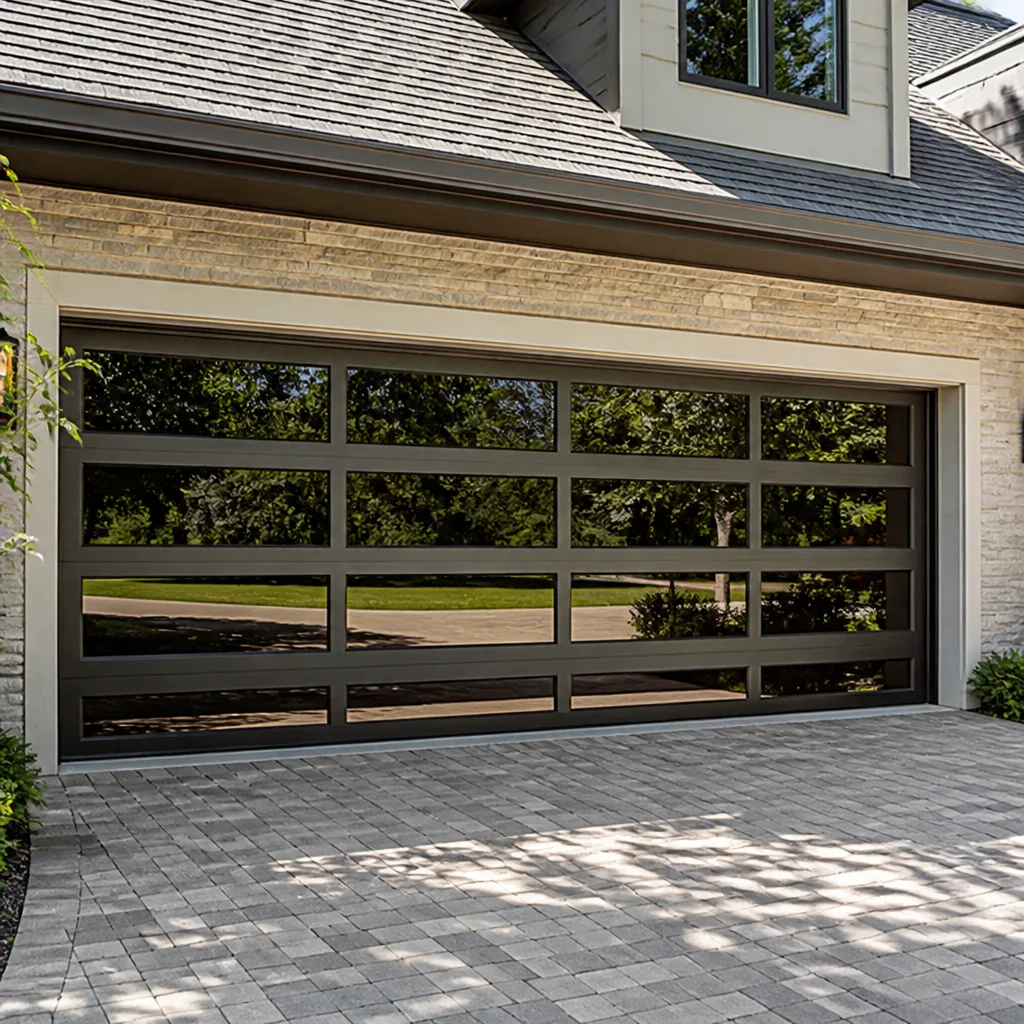 Full-view glass
 LiftMaster openers
 Chamberlain openers
Full 25-point door and opener safety check with every visit - springs, cables, rollers, tracks, and your LiftMaster or Chamberlain opener included
You get a price before we start. It does not change when the truck arrives.
Get your free estimateHow to Hire a Garage Door Contractor in Atlanta: A Step-by-Step Guide
Georgia doesn’t require a specialty license to replace a garage door spring. Read that again. The person who quoted you $89 on the phone might have hung drywall last week and bought a pair of winding bars this morning. That’s not an exaggeration, it’s how the market actually works in Atlanta. This guide walks you through the exact vetting sequence we’d use if we were hiring for our own home, from the three documents you should demand before anyone touches your door to the two bait-and-switch tactics we see most often in this city. For more guides & resources, visit our blog.
Quick Answer
To hire a garage door contractor in Atlanta, verify their liability insurance directly with the carrier, require a written itemized estimate before work begins, ask for a warranty in plain English that covers parts and labor for at least 90 days, and compare how they handle arrival windows. A company with live arrival tracking and upfront written pricing will almost always outperform one that asks you to trust a four-hour window and a verbal quote.
Styles & brands we work with
Table of Contents
- Step 1: Verify What Georgia Actually Requires
- Step 2: Request Three Documents Before Any Work Starts
- Step 3: Read the Quote Line by Line
- Step 4: Spot the Two Most Common Atlanta Bait-and-Switch Tactics
- Step 5: Judge the Arrival Window, Not Just the Star Rating
- Step 6: Watch for Post-Storm Surge Pricing and Out-of-State Crews
- Step 7: Ask These Questions Before You Book
Step 1: Verify What Georgia Actually Requires
Georgia is a general-contractor licensing state, which means the rules for garage door work fall under the state’s residential and general contractor categories rather than a dedicated garage door license. For a deeper look at local requirements, see The Complete Guide to Garage Door in Atlanta. Here’s what that means in practice: a company doing repair and replacement work on a single-family home must hold a Residential Basic Contractor license from the Georgia State Licensing Board for Residential and General Contractors, or work under someone who does. But here’s the gap: many garage door repair jobs are treated as “specialty work” that falls below the dollar threshold where a full residential license kicks in. The threshold matters. Jobs over $2,500 generally require a licensed contractor. Jobs under that number, including a single spring replacement, are often done by people with no license at all.
What should you actually ask for in Atlanta? Start with liability insurance, not a license number. Insurance is the document that protects your home and your finances if something goes wrong. A legitimate garage door contractor in Atlanta should carry general liability coverage of at least $500,000 to $1 million and be able to name you as additionally insured for the day of the work. Ask for a certificate of insurance. Call the carrier. Confirm the policy is active. It takes ten minutes and it eliminates the biggest risk in this market.
Bonding is less common in residential garage door work than in other trades. Some Atlanta companies carry it, most don’t. What matters more is that the company has a physical presence you can verify: a real address, a working local phone number, and a Georgia business registration you can look up on the Secretary of State’s website. If the company’s only footprint is a Google listing and a cell phone, that’s a signal you’re dealing with a one-person operation that may not be around in six months when your warranty claim shows up.
Step 2: Request Three Documents Before Any Work Starts
Before anyone climbs a ladder in your garage, get these three documents in writing. They separate professional operations from the rest, and they’re the baseline for what we provide on every garage door repair in Atlanta call.
- Proof of liability insurance. A certificate of insurance (COI) with the company’s name, the policy number, the coverage amount, and the carrier’s contact info. Then call the carrier and verify the policy hasn’t lapsed. A printed COI from a canceled policy is worthless.
- A written itemized estimate. Not a text message that says “spring, $250.” A real line-item estimate that breaks out parts, labor, any disposal or trip fees, and the total including tax. If a contractor won’t put the price in writing before the work starts, walk away. In Atlanta, we replace cables and springs regularly where the part has a known wholesale cost. There’s no reason for a professional to be vague about the number.
- A warranty statement in plain English. The warranty should say exactly what’s covered, for how long, and who pays for labor if a part fails. “One year warranty” is not enough. Does it cover the spring under warranty if it breaks at month eleven? Does it cover the labor to replace it, or just the part? Get these answers written down.
One more document you can request, though it’s less common: proof of training or certification on your specific door brand. We’re certified to service eight major brands including Genie, Clopay, and Amarr. When a technician has formal training on your door’s hardware, the diagnostic time drops and the repair is more likely to be correct the first time. Ask which brands the company services most often. If your door is a Wayne Dalton and the contractor has never heard of the TorqueMaster system, that’s a sign they’re not the right fit.
Step 3: Read the Quote Line by Line
A garage door quote in Atlanta should be itemized enough that you can see exactly what you’re paying for. Here’s how to read one. The parts section should name the specific component: torsion spring (the horizontal coil above your door that does most of the lifting), extension spring, cable, roller, hinge, or opener. It should specify the spring’s wire size and lift rating if it’s a spring replacement. A quote that just says “spring repair” with no details is asking you to pay for something you can’t verify.
Labor should be broken out separately, usually as a flat-rate or hourly figure. A flat-rate quote is common for standardized jobs like spring replacement, which typically runs $325 to $475 in Atlanta including parts for a standard two-spring system. Cable repair typically falls in the $180 to $300 range. Opener replacement starts around $450. These are realistic ranges in this market. If your quote is far below those numbers, you’re likely getting a different scope of work than you think. If it’s far above, ask for justification.
Watch for these line items that shouldn’t be there: a “service call fee” that’s added on top of an estimate you were told was free. A “disposal fee” for taking away a broken spring that costs almost nothing to recycle. A “miscellaneous” line that’s vague enough to hide anything. In our experience in this trade, the best Atlanta contractors put every dollar on the page. We deliver a written price before any work begins, always, on every job, no exceptions. The number on the invoice is the number you agreed to. If a contractor can’t commit to that, you’re not getting an estimate, you’re getting a teaser rate.
Step 4: Spot the Two Most Common Atlanta Bait-and-Switch Tactics
We hear the same stories from homeowners in Buckhead, Decatur, and Sandy Springs. Two tactics dominate. Learn them so they don’t happen to you.
Tactic one: the undersized spring. A contractor quotes you $89 for a “spring replacement.” They show up, replace your high-cycle torsion spring with a cheap spring rated for 10,000 cycles or less. It works for a while. Then it snaps again in eight months because it wasn’t built for the daily use of a two-car garage door in Atlanta. The fix is three times the original cost. When you see a quote far below the market range, ask what spring they’re installing: its wire gauge, its cycle rating, and whether it’s an oil-tempered or galvanized coil. If the contractor can’t answer, you’re buying a temporary fix. We’ve seen this in neighborhoods across the city, from East Atlanta to Roswell, because the temptation to sell a cheap spring at a low price is overwhelming.
Tactic two: the “your track is bent” upsell. A technician shows up for a simple $200 repair, spends five minutes in your garage, and tells you the roller track is bent and needs replacement for an additional $400. In most cases, the track is fine. A bent track causes obvious, visible symptoms: the door shudders or rubs, it doesn’t sit flush against the floor. If your door was operating smoothly before the spring broke, your track wasn’t the problem. Always ask the technician to show you the damage on camera or in person before you approve extra work. A professional company expects you to ask.
Step 5: Judge the Arrival Window, Not Just the Star Rating
A company’s arrival window tells you how they run their operation. In Atlanta, we see two models. The old model: “We’ll be there between 8 and 2.” That’s a six-hour block where you’re either waiting at home or arranging for a neighbor to let the tech in. The technical term is time-wasting. The operations reality is that the company doesn’t have a dispatch system disciplined enough to route technicians efficiently.
The newer model, which we run, is a live arrival window you can track on your phone. You see the technician’s location as they drive to your house, just like you’d track a rideshare. That’s what we call The Relay Visibility Guarantee: a live arrival time, before-and-after photos, a written price, and a digital invoice you pay from a link. It’s the same transparency you expect from every other service in 2026, and there’s no structural reason a garage door company can’t offer it.
So when you’re comparing companies in Atlanta, ask the dispatcher one question: “Can I see my technician’s location on a map before they arrive?” If the answer is no, ask yourself why. A company that manages arrivals well generally manages repairs well. The discipline transfers.
Step 6: Watch for Post-Storm Surge Pricing and Out-of-State Crews
Atlanta gets wind and hail, especially in the spring and fall. When a storm rolls through, garage doors take a beating: springs snap under wind load, cables jump their pulleys, openers get fried by power surges. And within 24 hours, out-of-state crews roll into the metro area, often operating out of pickup trucks with magnetic signs. They quote cheap, work fast, and head out of town before the failure shows up.
Here’s how to spot them. First, check the company’s address. If it’s a P.O. box in Fort Lauderdale or a parking lot in Houston, that’s your out-of-state crew. Second, ask about the warranty. If the answer is “call the office” but the office is a Google Voice number, the warranty is worth the paper it’s printed on, which is to say nothing. Third, listen for surge pricing language: “storm pricing,” “emergency rate,” “market adjustment.” A reputable garage door company in Atlanta charges the same whether it’s Tuesday afternoon or the day after a hail event. Our pricing doesn’t move with the weather, and neither should yours.
If a contractor tells you their price “depends on demand right now,” end the call. You’re not buying an airline ticket. You’re repairing a door.
Step 7: Ask These Questions Before You Book
After you’ve verified insurance, gotten your three documents, and filtered for out-of-state crews, run through this short list of questions. Give yourself a scorecard. Every “yes” is a point in favor.
- Will I get a written price before you start the work? If the answer is anything other than yes, walk. The price is quoted and agreed before any work starts. That’s not a courtesy, it’s the minimum standard.
- Can I track my technician on a map before they arrive? A yes means the company has invested in dispatch technology and values your time. A no means you’re waiting blind.
- Who do I call if the repair fails at month five? You should get a specific phone number, not a generic “call our office.” A real warranty includes a sequence: call this number, get a second visit, and we’ll make it right. The 365-Day Done Right Promise covers every repair we make with a free second visit if the fix fails. You should expect that level of clarity from anyone you hire.
- Are your technicians background-checked? A background check is a cost and a time investment. Companies that skip it generally skip other things too.
- What brands do you service most? A specialist’s answer should include your brand. We’re trained on Genie, Clopay, Amarr, Wayne Dalton, and four others. If the contractor says “all of them,” that’s a good sign they’re a generalist. Ask again.
- Is the estimate free? In Atlanta, most reputable garage door contractors offer free estimates for repair work. We do. If a company wants to charge you $75 just to look at the door, that’s not necessarily a red flag for bigger installation projects, but for a spring or cable repair it’s unusual.
Common Mistakes to Avoid
- Hiring based on the cheapest quote. In Atlanta’s garage door market, the cheapest quote often corresponds to a lower-quality spring or a technician who has to make up margin on upsells. You’ll pay for it in the next repair cycle.
- Accepting a verbal quote as binding. If it’s not on paper, it doesn’t exist. A verbal number is an invitation for the final invoice to be different.
- Not verifying insurance yourself. A printed COI can be for a canceled policy. Call the carrier. It’s a ten-minute call that could save you tens of thousands in liability.
- Confusing big-name franchises with consistent service. The quality of a repair comes down to the technician who shows up, not the logo on the truck. A local independent with strong systems often outperforms the franchise van you see parked at every intersection.
- Signing a contract with no written warranty. “One year warranty” spoken aloud means nothing. Get it in writing, with parts and labor spelled out.
- Waiting too long to call. A broken spring is dangerous to leave, and a door that won’t close is an invitation. A snapped cable can send a 200-pound door slamming down. When the door fails, call a professional the same day.
See the difference
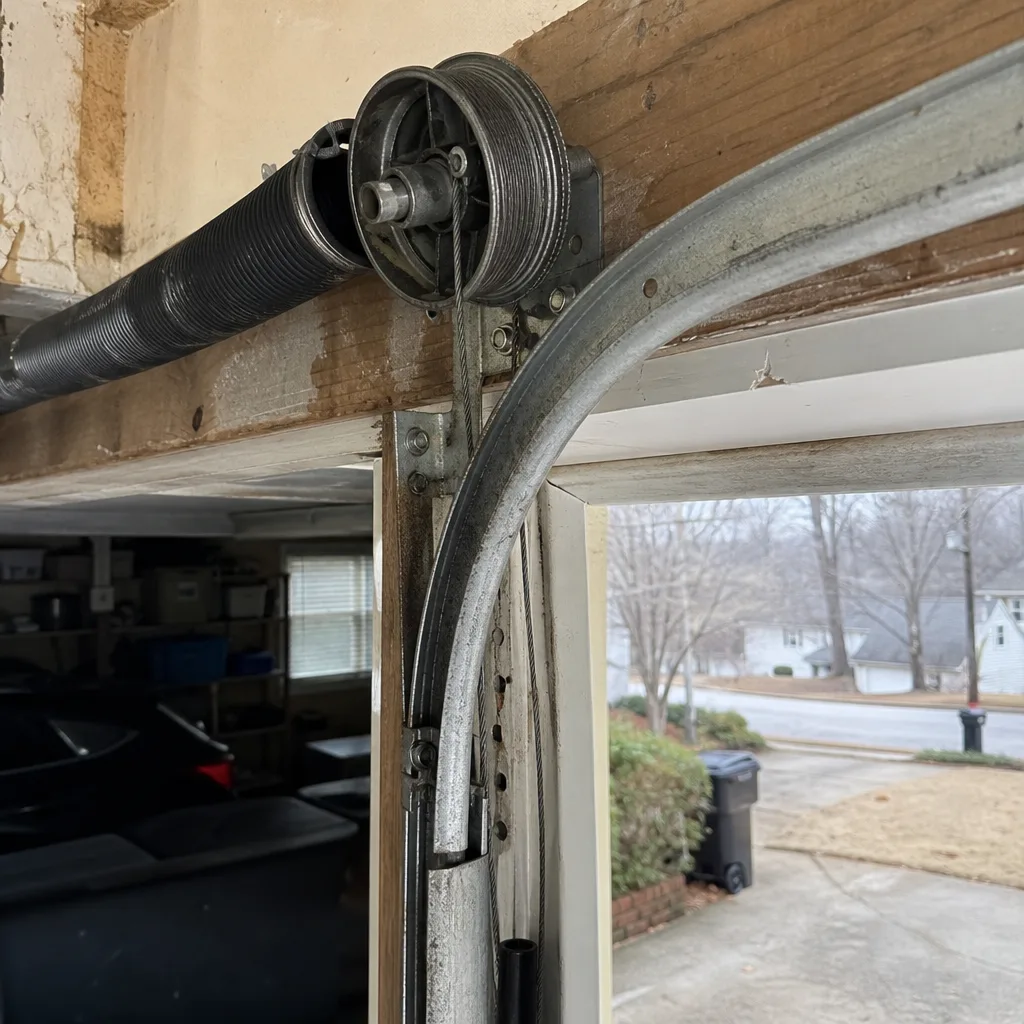 Before
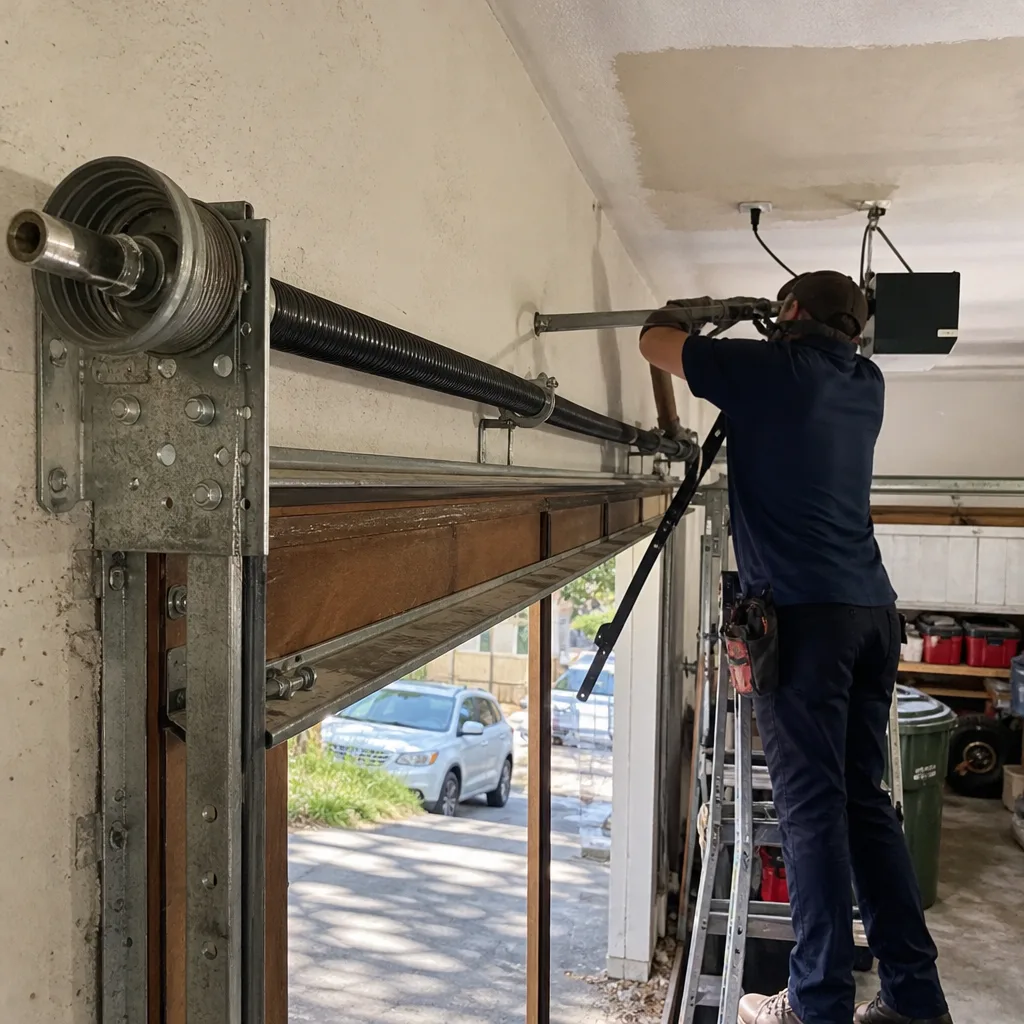 After
After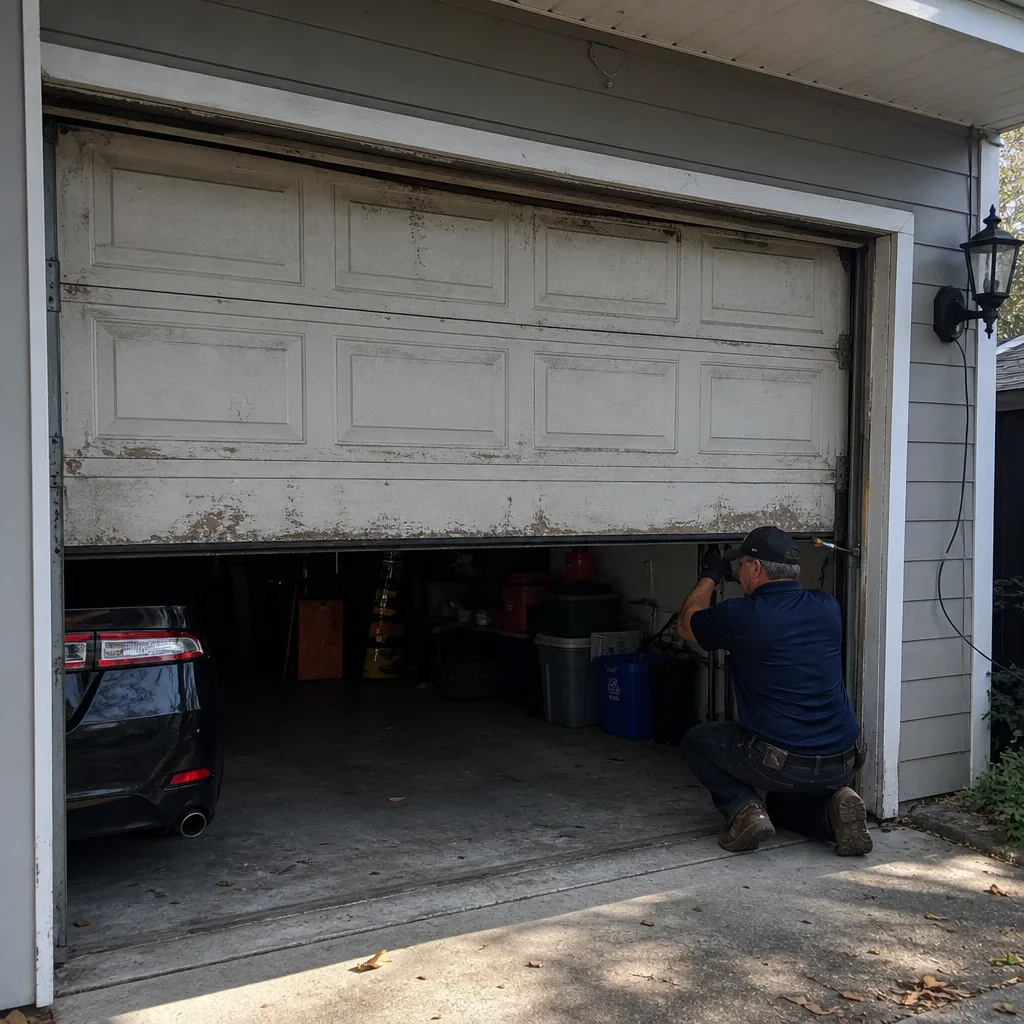 Before
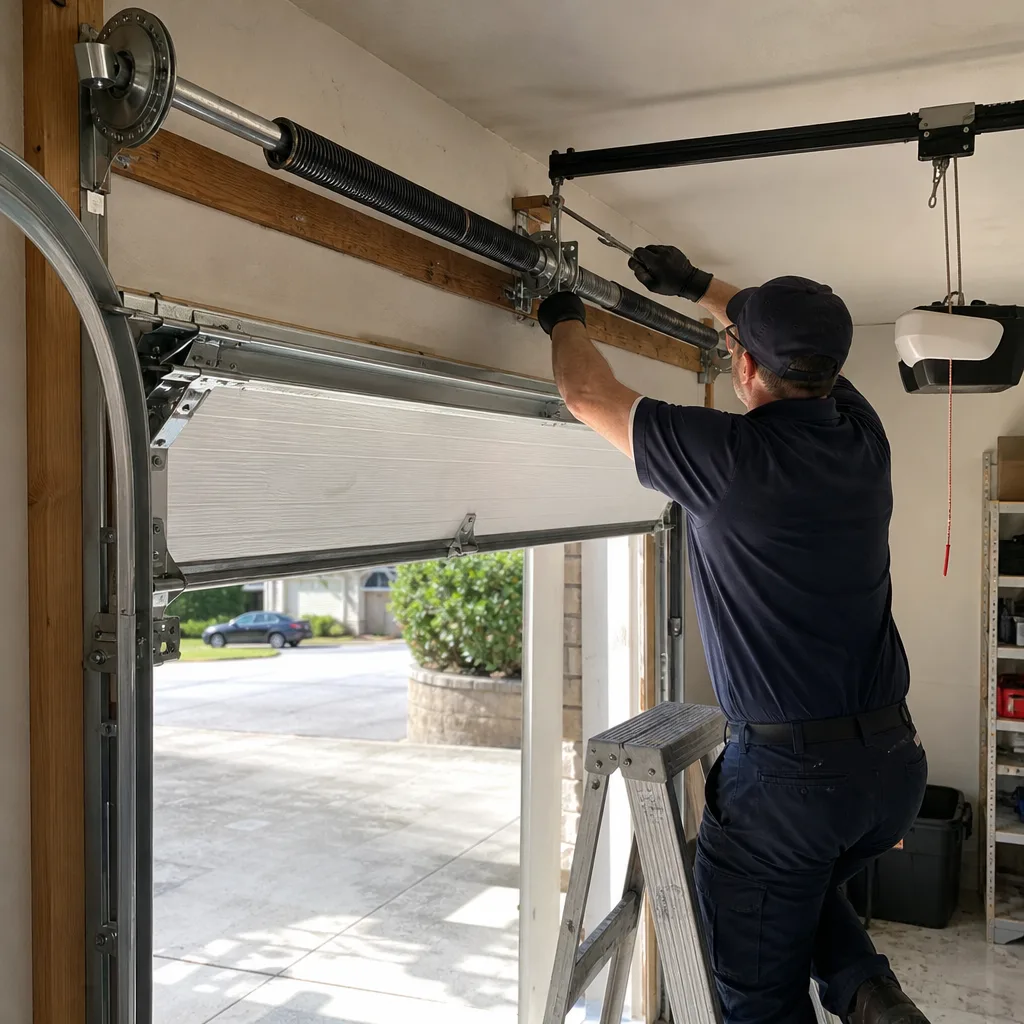 After
After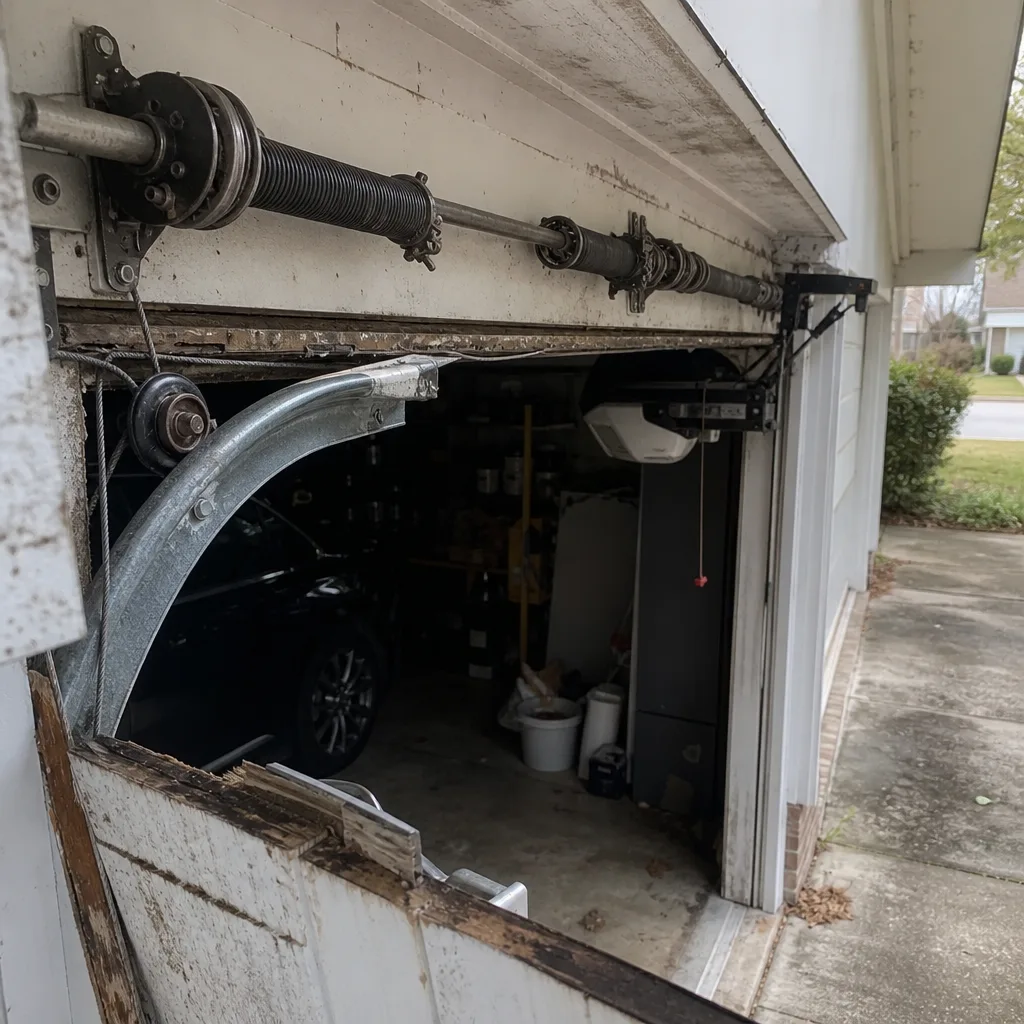 Before
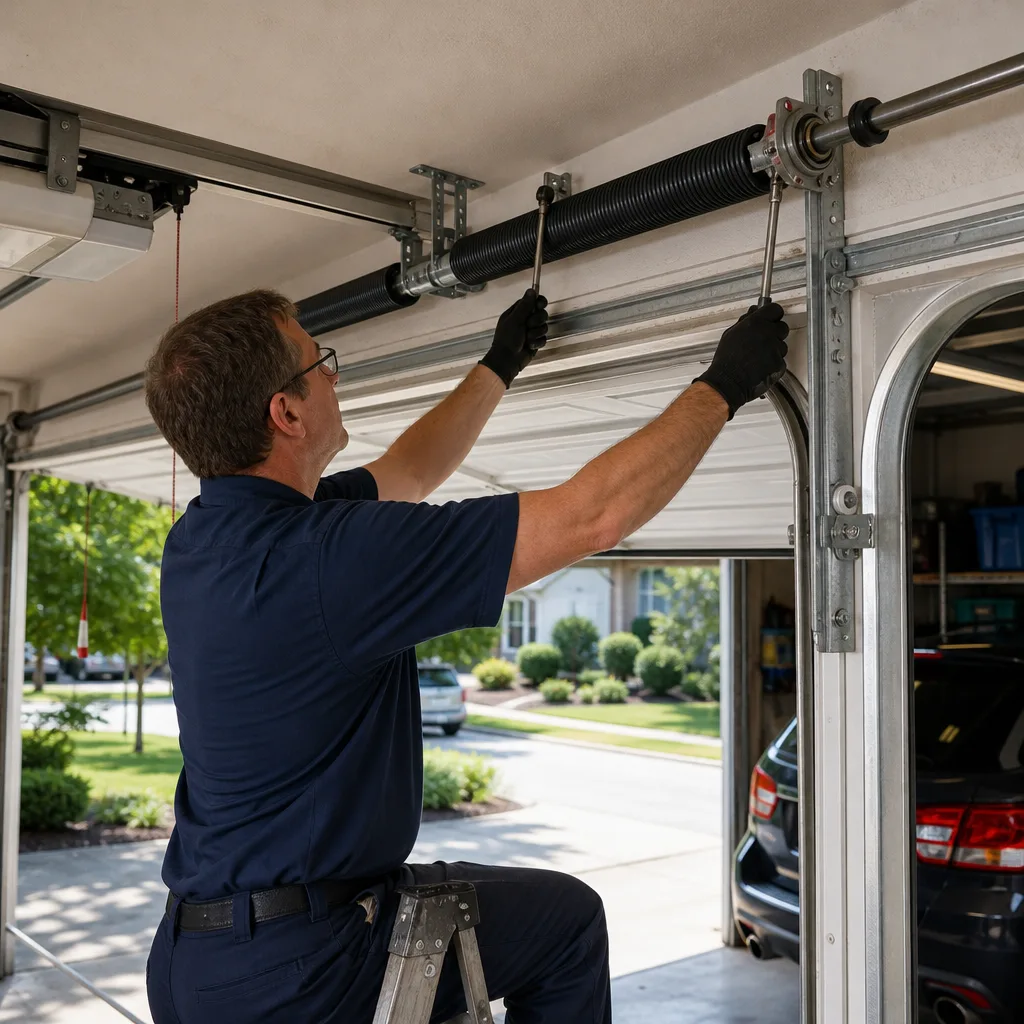 After
AfterWhen to Call a Professional
Some garage door work is genuinely hazardous. Torsion springs, the horizontal coils above your door, are under hundreds of pounds of tension. If a spring snaps or a cable frays, the energy released can cause serious injury. We never recommend a homeowner attempt to adjust, replace, or wind a torsion spring on their own. The same goes for cables, which run through pulleys and carry the full weight of the door. If your door is stuck halfway, making a grinding sound, or you see a visible gap in a spring coil, call a professional. Garage door spring repair in Atlanta is the single most common repair we handle, and it’s the one where DIY attempts most often end in an ambulance ride. If your issue is a frayed or snapped cable, our garage door cable repair in Atlanta page covers what to look for. Marlow Garage Door Repair Atlanta offers free estimates in Atlanta, call (762) 230-6145.
Frequently Asked Questions
Most garage door repairs in Atlanta fall between $180 and $475 depending on the part. Spring replacement typically runs $325 to $475, cable replacement $180 to $300, and roller or hinge work $150 to $250. You’ll see the exact written number before we start, on every job, no exceptions. Call (762) 230-6145 for a free estimate on your specific door.
Georgia requires a Residential Basic Contractor license for jobs over $2,500 on single-family homes, but many garage door repairs fall below that threshold and are performed by unlicensed individuals. That’s why insurance verification is the most important step in your vetting process. Ask for a certificate of insurance and call the carrier to confirm the policy is active before anyone touches your door.
Most spring and cable repairs in Atlanta can be scheduled same-day or next-day. When you call, you’ll speak to a live person 24 hours a day, 7 days a week, not a voicemail. We’ll give you a live arrival window you can track on your phone so you’re not waiting around. Call (762) 230-6145 and we’ll get you on the schedule.
No. The price we quote after diagnosing the door is the price on the invoice. It’s written down, agreed to, and locked before any wrench turns. That’s a non-negotiable standard on every call. If your situation reveals something unexpected, we’ll explain it, show you the evidence, and get your approval on a new written price before continuing. You’re never surprised at the end.
Yes. Our trucks are stocked with springs, cables, rollers, and hinges for the most common doors in Atlanta, including Genie, Clopay, Amarr, and Wayne Dalton systems. That means most repairs are completed in a single visit, no follow-up appointment needed. If your door requires a less common part, we’ll tell you upfront and schedule the return.
Every repair we make in Atlanta is covered by the 365-Day Done Right Promise. If the fix isn’t right, we make it right with a free second visit, for a full year. That’s stated in writing, not buried in fine print. If your contractor’s warranty isn’t at least this specific, ask why not.
The Bottom Line
Hiring a garage door contractor in Atlanta comes down to verification, not trust. Verify the insurance, get a written price before work starts, demand a warranty that specifies who pays for labor, and hold the company accountable for the time window they give you. The details matter more than the star rating. We built Marlow Garage Door Repair Atlanta on exactly these standards: a written price before any wrench turns, a live arrival time you can track, background-checked technicians in uniform, and a 365-Day Done Right Promise on every repair. If you need a garage door contractor, call (762) 230-6145 for a free estimate.
Written by Jaylen Ross, Owner at Marlow Garage Door Repair Atlanta, serving Atlanta since 2002.