
Last updated October 16, 2026
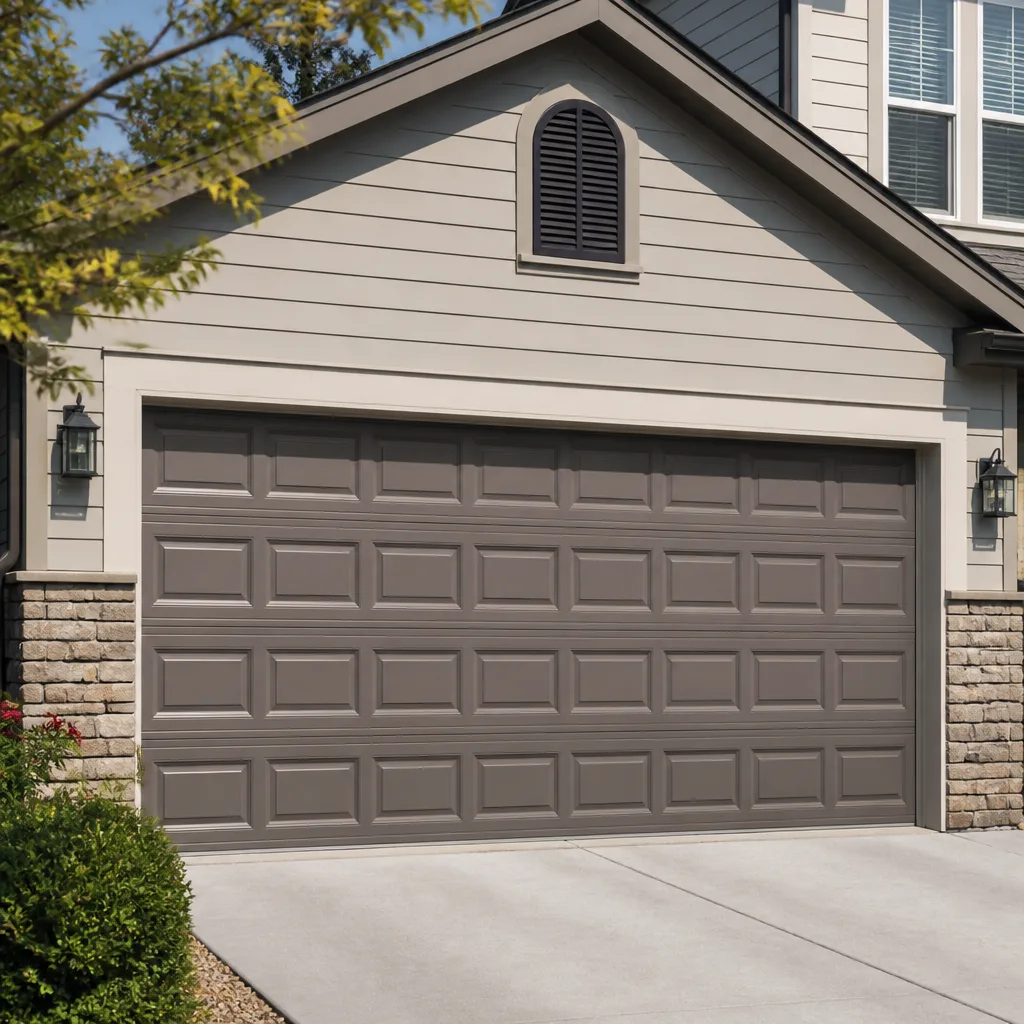 Raised-panel steel
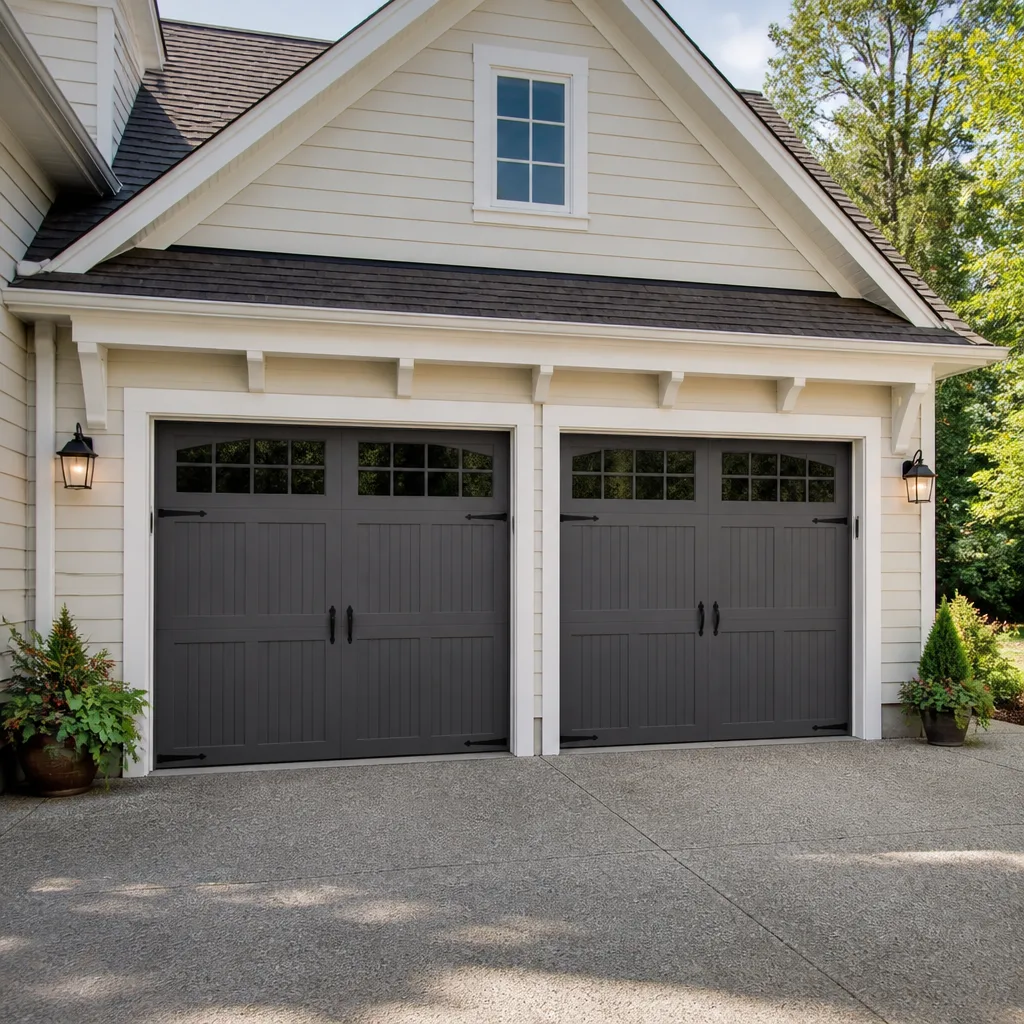 Carriage house
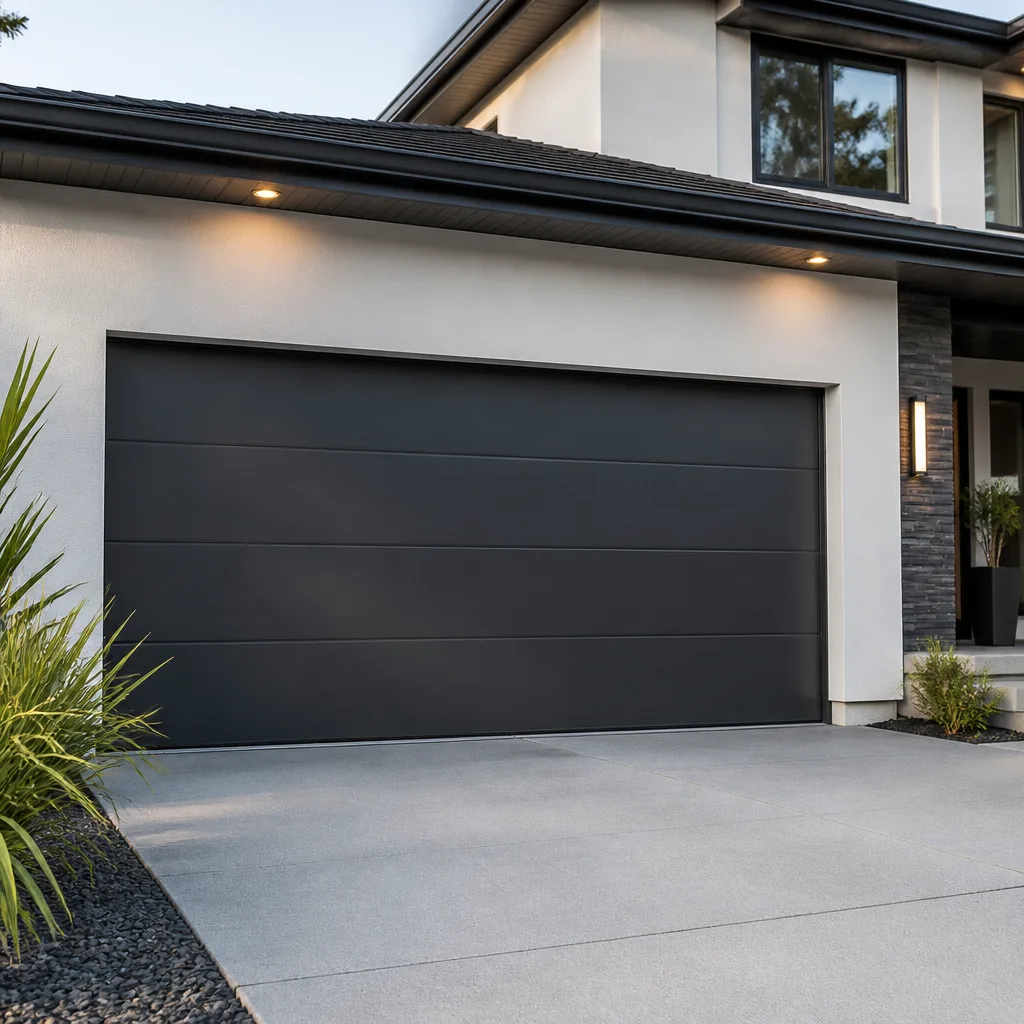 Modern flush
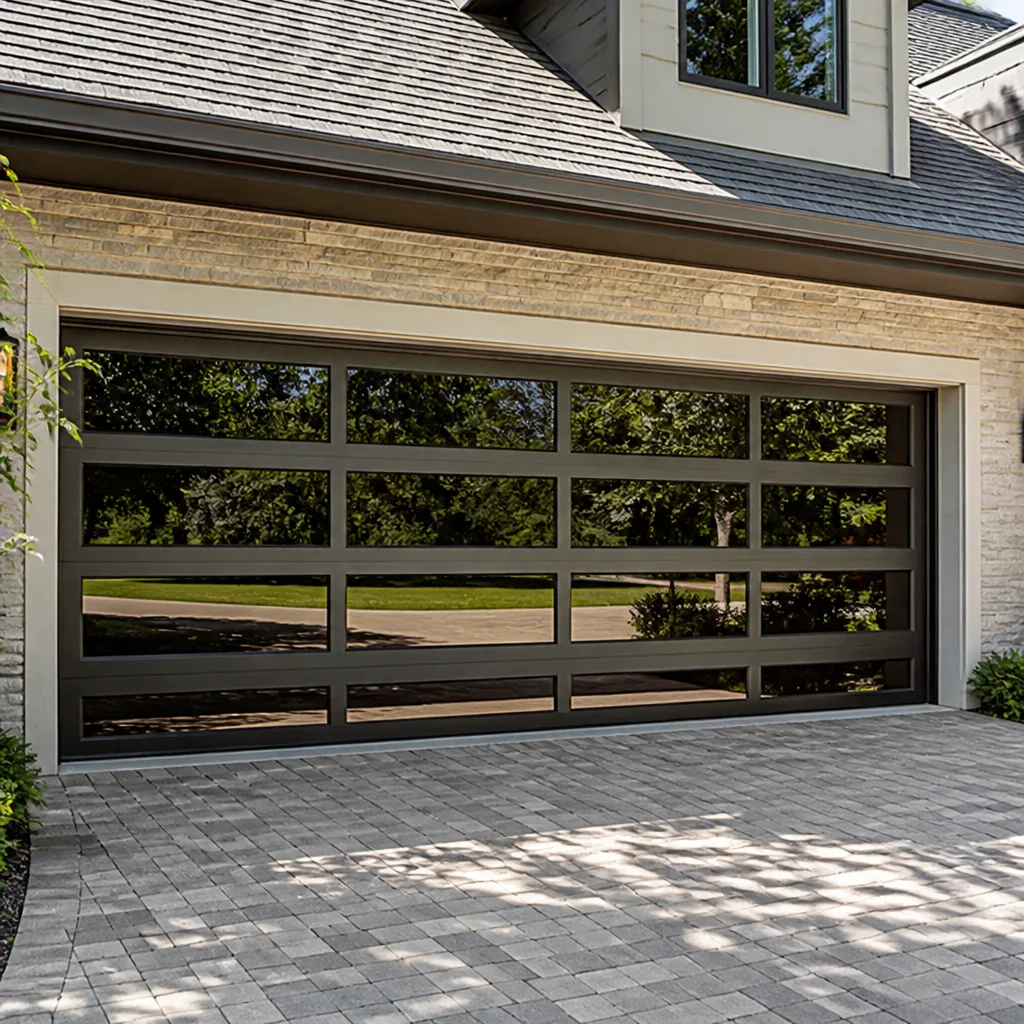 Full-view glass
 LiftMaster openers
 Chamberlain openers
Full 25-point door and opener safety check with every visit - springs, cables, rollers, tracks, and your LiftMaster or Chamberlain opener included
You get a price before we start. It does not change when the truck arrives.
Get your free estimateThe Complete Guide to Garage Door in Atlanta
Atlanta’s average relative humidity sits above 70% for six months out of the year. That single number explains more about why garage doors fail in this city than any spec sheet ever will. We’ve spent over two decades repairing doors across Fulton, DeKalb, Cobb, and Gwinnett counties, and the failure patterns we see in Atlanta would look unusual to a technician in Phoenix or Denver. This guide walks through everything that actually matters here: the red clay, the builder-grade hardware boom, the spring systems common in Atlanta-era homes, and how to read your door’s nameplate before you pick up the phone. For more guides & resources, see our blog.
Styles & brands we work with
Quick Answer
Garage door repair in Atlanta typically costs $125 to $340 for common fixes like spring replacement, cable repair, or track realignment. For a deeper look at pricing, see our Garage Door Cost Breakdown: The Atlanta Homeowner’s Reference for 2026. The final price depends on your spring type, door weight, and whether your house sits on Atlanta’s shifting red clay. Most repairs take under two hours, and a written estimate should always come before work starts.
Table of Contents
- Why Atlanta’s Climate Is Harder on Garage Doors Than You Think
- How Atlanta Clay Soil Throws Garage Doors Off Track
- Steel vs. Wood Composite vs. Aluminum: What Survives Atlanta Humidity
- Torsion vs. Extension Springs: What’s in Your Atlanta Home
- The Builder-Grade Hardware Problem in Atlanta’s New Construction Boom
- How to Read a Garage Door Nameplate Like a Technician
- What Garage Door Repairs Actually Cost in Atlanta
- Common Mistakes to Avoid
- When to Call a Professional
- Frequently Asked Questions
- The Bottom Line
Why Atlanta’s Climate Is Harder on Garage Doors Than You Think
Most national garage door guides treat climate as an afterthought. In Atlanta, climate is the whole story. The city’s humidity does not just sit on the surface of your door. It works its way into the hardware, the rollers, the hinges, and especially the springs. When moisture combines with Atlanta’s summer heat, which regularly pushes past 90 degrees from June through September, the metal components expand and contract daily. Over time, that cycle creates hairline fractures in springs and accelerates rust on cables and roller bearings.
The specific failure we see most in Atlanta is rust-induced spring fatigue. Torsion springs are coated steel coils under enormous tension. When humidity penetrates even a tiny nick in the coating, oxidation begins. Atlanta’s freeze-thaw cycles in January and February, brief as they are, create additional stress. A spring that might last 10,000 cycles in a dry climate can fail at 6,000 to 7,000 cycles here. That is not an exaggeration we use to sell repairs. It is the difference between a 9-year spring and a 6-year spring on the same door.
Rollers are another casualty. Nylon rollers with sealed bearings hold up better in Atlanta than steel rollers with exposed bearings, because the sealed design keeps humidity out. If your door sounds like it is grinding gravel, the bearings are already corroded. Replacing four rollers early costs $60 to $120 and prevents damage to the track and hinges later, which runs $200 and up. The takeaway for Atlanta homeowners: think of your garage door hardware as a wear item in this climate, not a permanent fixture.
How Atlanta Clay Soil Throws Garage Doors Off Track
Atlanta’s red clay soil is notorious for movement. It is expansive soil, meaning it swells when wet and shrinks when dry. Over the course of a year, that expansion and contraction applies slow, uneven pressure to concrete slabs, including garage floors. The result is exactly what you would expect: the slab under your garage door shifts by fractions of an inch over time, which is enough to throw the tracks out of alignment.
Here is how we explain it to homeowners in neighborhoods like Virginia Highland, East Atlanta, and Morningside, where foundations date from the 1920s through the 1960s. The garage door tracks mount to both the walls and the floor. When the floor slab moves and the wall does not, or vice versa, the two tracks stop being parallel. The door starts grinding against the track edges, rollers bind, and eventually the door comes off the track entirely. This is not a door malfunction. It is a geology problem that shows up as a garage door problem.
What surprises people most is the timing. We see a spike in track-related calls after Atlanta’s rainy season, when the soil has been saturated for weeks. May and June are particularly busy months for off-track doors. The slab shifts a little, the door jams, and suddenly the garage will not open. The fix is track realignment and sometimes roller replacement. If the slab movement is significant, which we see in older homes around Grant Park and West End, the tracks may need remounting with new hardware. That runs $180 to $300 depending on the extent of the misalignment.
What can an Atlanta homeowner do? First, watch for visual warning signs. A door that scrapes on one side, gaps between the door and weather stripping that widen and narrow seasonally, or a door that looks slightly crooked when open are all indicators of slab movement. Second, do not force the door. Running an off-track door under power bends the tracks further and breaks rollers. Third, get the tracks inspected after particularly wet seasons. A $125 realignment now is cheaper than a $450 track replacement later.
Steel vs. Wood Composite vs. Aluminum: What Survives Atlanta Humidity
The garage door material you choose, or the one already on your home, determines how much maintenance Atlanta’s climate demands. Not all materials handle the humidity-heat cycle equally, and we have strong opinions based on what we see in the field.
Steel doors are the most common in Atlanta, and for good reason. Modern steel doors from brands like Clopay and Amarr use galvanized steel with a baked-on finish that resists rust far better than older models. The weak point is not the panel itself but the seams and the bottom edge. When the bottom weather seal fails, standing water from Atlanta’s afternoon thunderstorms sits against the steel and eventually rusts through from the bottom up. If you have a steel door, replace the bottom seal every two to three years. It is a $30 part and 20 minutes of work.
Wood and wood composite doors are the most vulnerable to Atlanta’s climate. Solid wood doors from the 1980s and 1990s, common in Buckhead and Dunwoody, absorb moisture year-round. Panels warp, paint blisters, and stiles rot where they meet the threshold. Composite doors, which use wood fibers bound with resin, are better but still require repainting every three to five years. If you love the wood look, composite from Amarr or Wayne Dalton is the more practical choice for Atlanta. Expect to pay $1,800 to $3,500 for a 16×7 composite door installed, versus $1,200 to $2,200 for a comparable steel model.
Aluminum doors hold up beautifully against humidity, but they dent. If your home faces an alley or your kids play basketball in the driveway, aluminum is a liability. They are also poor insulators, which matters less in Atlanta than in Minneapolis but still affects attic temperature if your garage shares a wall with living space. We rarely recommend aluminum for Atlanta except for carriage-style doors that see little traffic and light use.
For most Atlanta homes, a properly sealed steel door with a good bottom seal remains the best value. The door will last 15 to 20 years if maintained, compared to 10 to 15 for an unmaintained wood door in this humidity.
Torsion vs. Extension Springs: What’s in Your Atlanta Home
Every garage door uses springs to balance the weight of the door. There are two types, and which one you have matters enormously for repair cost and safety. Understanding the difference is the single most useful piece of garage door knowledge an Atlanta homeowner can have.
Torsion springs are the horizontal coils mounted on a steel tube above the door opening. They store energy by twisting, or torquing, when the door closes, and release it to lift the door. They are the modern standard, and for homes built in Atlanta from roughly 1990 onward, they are what is on nearly every door. Torsion springs are safer than extension springs, last 10,000 to 15,000 cycles, and are what we install on every replacement we do, regardless of what was there before.
Extension springs are the older design. They mount parallel to the horizontal tracks, one on each side, and stretch to store energy. Atlanta homes built from the 1960s through the late 1980s commonly have them, especially ranch and split-level houses in neighborhoods like Chamblee, Doraville, and Decatur. Extension springs are cheaper to make and were standard on builder-grade doors of that era, but they fail more violently and more often, typically lasting 6,000 to 8,000 cycles. They also require a safety cable threaded through the center to contain the spring if it snaps, and many older Atlanta homes are missing that cable.
Here is what matters for you as a homeowner. If you hear a loud bang from your garage, like a firecracker, a spring has snapped. If the spring is above the center of the door, it is torsion. If the springs are along the sides, they are extension. Torsion spring replacement in Atlanta runs $150 to $290, depending on spring size and door weight. Extension spring replacement runs $120 to $230. We quote the exact price before any work begins, and the number does not change.
One word of caution that we give every Atlanta homeowner: do not attempt to replace either spring yourself. Torsion springs are under hundreds of pounds of torque, and extension springs carry enough stored energy to break bones or worse. This is the one repair where the DIY risk genuinely outweighs any savings.
The Builder-Grade Hardware Problem in Atlanta’s New Construction Boom
Atlanta is in the middle of one of the largest new-construction booms in the country. Subdivisions in Forsyth, Cherokee, and Henry counties are adding thousands of homes per year, and most of those homes come with builder-grade garage doors. The hardware on those doors is designed to hit a price point, not a lifespan.
Builder-grade hardware typically means torsion springs rated for 5,000 cycles, stamped-steel hinges, nylon rollers with open bearings, and thin-gauge tracks. A 5,000-cycle spring sounds like a lot until you calculate what it means: one full open-and-close per day is two cycles. Five thousand cycles is roughly seven years. In an Atlanta household where the garage is the primary entry and exit, with two open-close cycles per day, that spring fails in three and a half years. We are already replacing springs on doors installed in 2021 and 2022 in new communities around Woodstock and McDonough.
The pattern is so consistent that we can often tell a door’s age by the hardware, even without the nameplate. Thin-gauge track, hinges that flex by hand, and springs with no visible brand stamp are the hallmarks of builder-grade. The panels themselves may be fine, but the moving parts wear out fast. The good news is that all of it is replaceable, and the upgrade is not as expensive as homeowners expect. A full hardware upgrade, with a 25,000-cycle spring, sealed-bearing rollers, and heavier hinges, runs $300 to $500 installed. That is usually less than the cost of the first repair call on a door that has gone hard down at 7 a.m.
If you bought a new construction home in Atlanta within the last five years, have your springs and cables inspected before you hit the three-year mark. A 15-minute inspection catches wear before failure, and it costs nothing if it is part of a service call.
How to Read a Garage Door Nameplate Like a Technician
Before you call anyone for garage door service in Atlanta, find the nameplate. It is the fastest way to know exactly what you have, and it saves time on the phone because the technician will ask for this information anyway. The nameplate is a metal or vinyl label, usually on the inside of the door panel near the bottom edge or on the side jamb. It contains the door manufacturer, model number, and sometimes the manufacture date.
Here is how to use it:
- Locate the label. Look on the inside lower panel of the door, the edge of a horizontal panel, or the side weather stripping. On Genie, Clopay, Amarr, and Wayne Dalton doors, the label is usually on the bottom panel, driver’s side when viewed from inside.
- Write down the model number. It looks like “Clopay 4050” or “Amarr Lincoln 2000” or “Wayne Dalton 9100.” The model tells a technician the panel material, insulation value, and approximate weight, all of which determine spring size.
- Note the manufacture date if present. Some labels print it directly. If it is missing, the model number’s production era gives a technician a reasonable range.
- Check the spring type. While you are at the door, look up. A spring across the top center is torsion. Springs along the sides are extension. Take a photo with your phone.
- Send the photo to whoever is coming out. This step alone can prevent a wasted trip if the technician needs a specific spring size or replacement panel that is not common stock.
This is the same process our technicians use when they arrive, and it is the single biggest time-saver for an Atlanta homeowner who wants a fast diagnosis and an accurate price. If the label is missing because the door was painted over or the sticker peeled off in the humidity, do not worry. A good technician can identify the door from photos and measurements, which is what we do on every call where the nameplate is gone.
What Garage Door Repairs Actually Cost in Atlanta
Garage door repair pricing in Atlanta is more predictable than most people think, assuming you are working with a company that quotes upfront. The table below reflects what we charge and what we see across the Atlanta market for the most common repairs. These are real numbers, not ranges pulled from a national guide.
- Garage door spring replacement: $150 to $290 for torsion springs, $120 to $230 for extension springs, parts and labor included
- Garage door cable replacement: $140 to $240, including both cables and rebalancing of the door
- Track realignment: $125 to $300, depending on whether new brackets or hardware are required
- Roller replacement: $60 to $120 for four rollers, $120 to $180 for all rollers on a double door
- Hinge replacement: $40 to $90 per hinge, installed
- Bottom seal replacement: $60 to $110, including the seal and re-adhesion to the door
- Full door replacement: $1,200 to $2,200 for a standard 16×7 steel door, $1,800 to $3,500 for composite or carriage-style
- Opener replacement: $350 to $700 installed, depending on motor type and features
Two factors move the price in Atlanta more than anything else. The first is spring type and door weight. A heavy wooden carriage door in a Virginia Highland bungalow needs a stronger spring than a lightweight aluminum door in a Midtown condo, and that spring costs more. The second is the condition of the surrounding hardware. We always check tracks, hinges, and rollers when a spring snaps, because a door that has been running on a failing spring has almost certainly worn the other components unevenly.
What about the price changing once the technician sees the door? At Marlow Garage Door Repair Atlanta home, the written price you get before we start is the price on your invoice. If we find additional damage during the repair, we stop, show you what we found, and give you an updated written price before doing anything else. That is how the quoting process should work everywhere, but we know from customer stories that it often does not.
Common Mistakes to Avoid
- Forcing a door that suddenly feels heavy or binds. A sudden change in door weight usually means a spring has broken. Running the opener on a broken spring bends the door and burns out the motor, turning a $250 spring repair into a $700 opener replacement.
- Ignoring a slow, grinding operation for months. In Atlanta’s humidity, grinding is almost always corroded or worn rollers. The longer they run, the more damage they do to the tracks, and track replacement costs more than roller replacement.
- Skipping the safety cable on extension springs. If your Atlanta home has extension springs from the pre-1990 era, the safety cable is not optional. It prevents the spring from becoming a projectile when it snaps. We replace missing cables on every extension-spring repair, no exceptions.
- Waiting for total failure before doing maintenance. Atlanta homeowners who wait for the loud bang of a spring snapping pay more on average than homeowners who catch wear during a routine call. The math is simple: a $120 roller replacement now versus a $450 track repair later.
- Choosing a door material based on looks alone. That solid wood door looks beautiful in a Buckhead Colonial, but it requires sealing every two years in this climate or it rots. Steel with a good finish and a wood-look powder coat achieves the same aesthetic with far less maintenance.
- Painting over the nameplate label. We see this constantly. Homeowners repaint the garage door and cover the label that identifies the manufacturer and model. When the door needs parts, the technician has to identify the door from photos and measurements, which slows down the diagnosis.
- Ignoring an off-center or crooked door. A door that sits unevenly in the opening is usually a soil settlement problem, not a door problem. Left unaddressed in Atlanta’s expansive clay, the misalignment worsens and eventually pulls the door off the track under power.
When to Call a Professional
Some repairs are clearly in the professional column: broken springs, snapped cables, off-track doors, or any repair that requires touching the high-tension components. Torsion springs and lift cables are dangerous, full stop, and we recommend a trained technician for any job involving them. But there are also situations that are less obvious. A door that reverses unexpectedly, an opener that runs but does not move the door, or a door that scrapes loudly on one side all indicate problems that are hard to diagnose from a YouTube video. If you are in Atlanta and any of this sounds familiar, Garage Door Repair in Atlanta from Marlow includes a free estimate with a written price before any work starts. Call (762) 230-6145 and a live person answers, day or night.
Frequently Asked Questions
A torsion spring replacement in Atlanta runs $150 to $290, and extension springs run $120 to $230, with parts and labor included. Your exact price depends on the door’s weight and the spring’s cycle rating. Call (762) 230-6145 for a written quote before any work begins, which is how we do every job.
Yes, most spring, cable, and track repairs in Atlanta can be done the same day the problem is reported. We carry common torsion springs, extension springs, cables, and rollers on every truck, so the technician usually arrives with the right parts. Call (762) 230-6145 and you will talk to a live person who can book the visit.
Atlanta’s humidity accelerates corrosion on steel springs, shortening their life from the manufacturer’s rated cycle count by 20 to 30 percent in many cases. Rust enters through small nicks in the coating and weakens the metal from within, which is why springs here often fail at 6,000 cycles instead of 10,000. Choosing a higher-cycle spring on replacement helps offset the climate effect.
Atlanta’s expansive red clay soil shifts garage floor slabs over time, throwing the tracks out of alignment and pulling the door off track. We see the most off-track calls in May and June, after the rainy season has saturated the soil. Track realignment typically costs $125 to $300, depending on whether remounting hardware is needed.
For most Atlanta homeowners, upgrading the hardware on a builder-grade door is worth it and costs less than a single major repair. A higher-cycle spring, sealed-bearing rollers, and heavier hinges run $300 to $500 installed, and the upgrade extends the door’s life from roughly 5 years to 15 or more in Atlanta’s climate. Call (762) 230-6145 for a free estimate on an upgrade.
Yes, our technicians carry common torsion and extension springs, lift cables, rollers, hinges, and bottom seals on every truck that serves Atlanta. For less common parts, we source them from local Atlanta suppliers and return the same day or the next. The written price you agree to is the price you pay, even if the part is uncommon.
The Bottom Line
Atlanta’s garage doors fail for reasons that have nothing to do with the door itself. The red clay shifts, the humidity corrodes, and the heat cycles stress the metal until something gives. The better you understand those local forces, the better your maintenance decisions will be. Knowing your spring type, your door material, and your nameplate model puts you ahead of 90 percent of Atlanta homeowners, and it makes any repair call faster and cheaper. When something does break, get a written price first, choose a company that answers the phone with a person, and never attempt spring or cable work yourself. For more on specific repairs, read our guides on Garage Door Spring Repair in Atlanta and Garage Door Cable Repair in Atlanta. If you are ready for an estimate, call (762) 230-6145.
Written by Jaylen Ross, Owner at Marlow Garage Door Repair Atlanta, serving Atlanta since 2002.
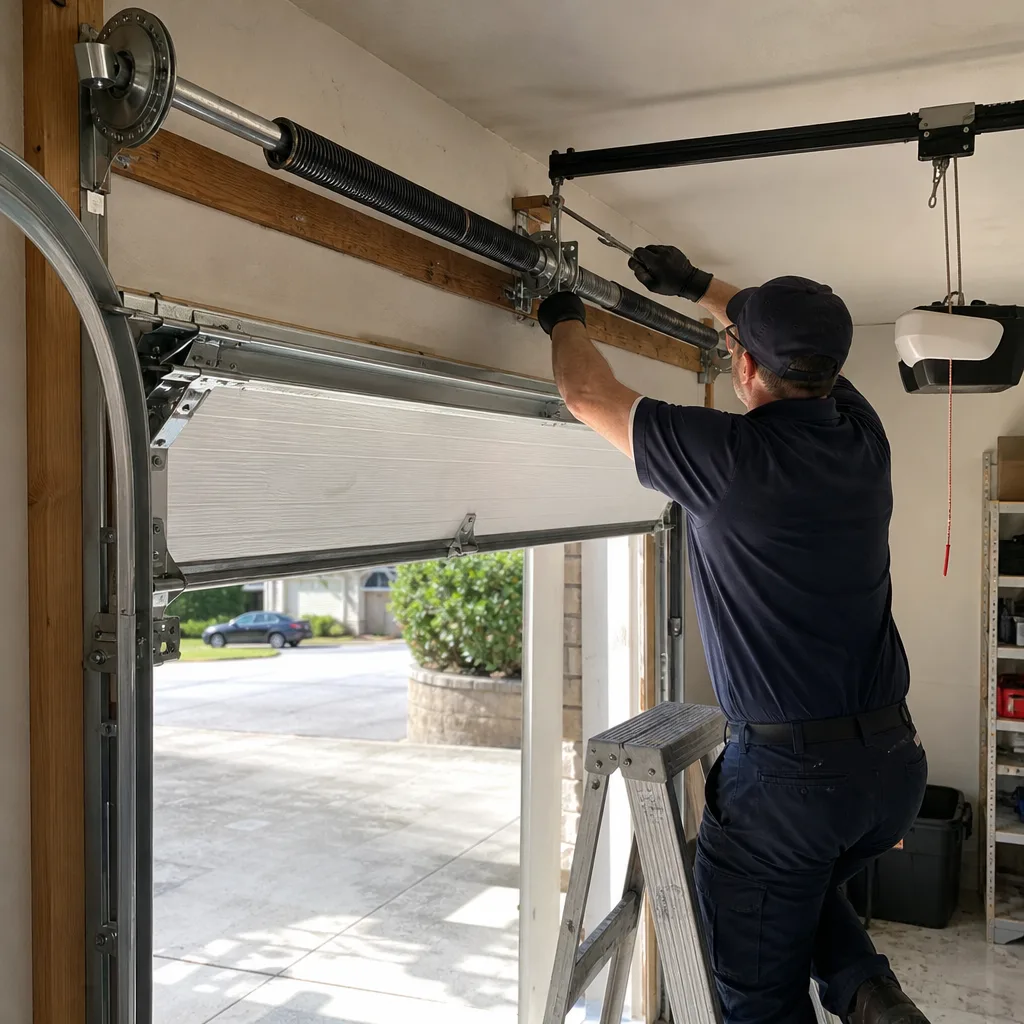
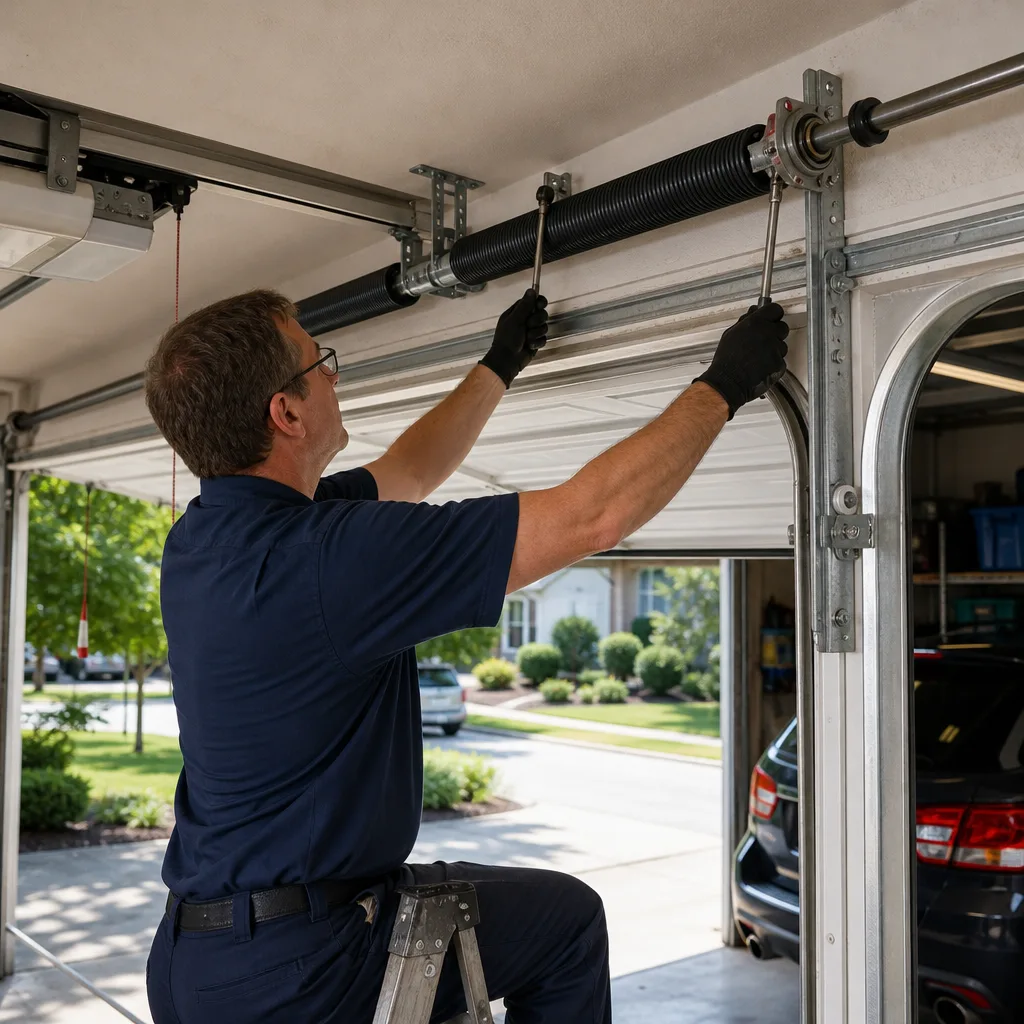
See the difference
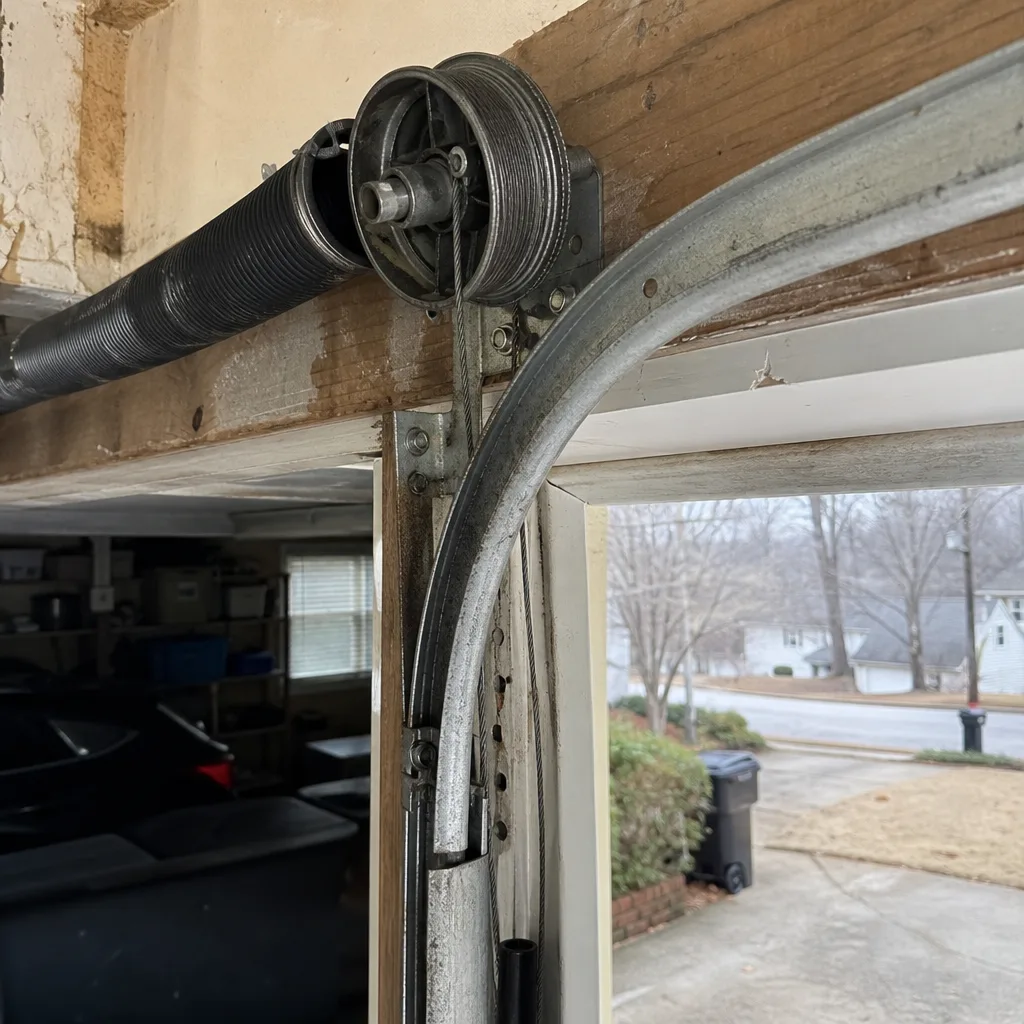 Before
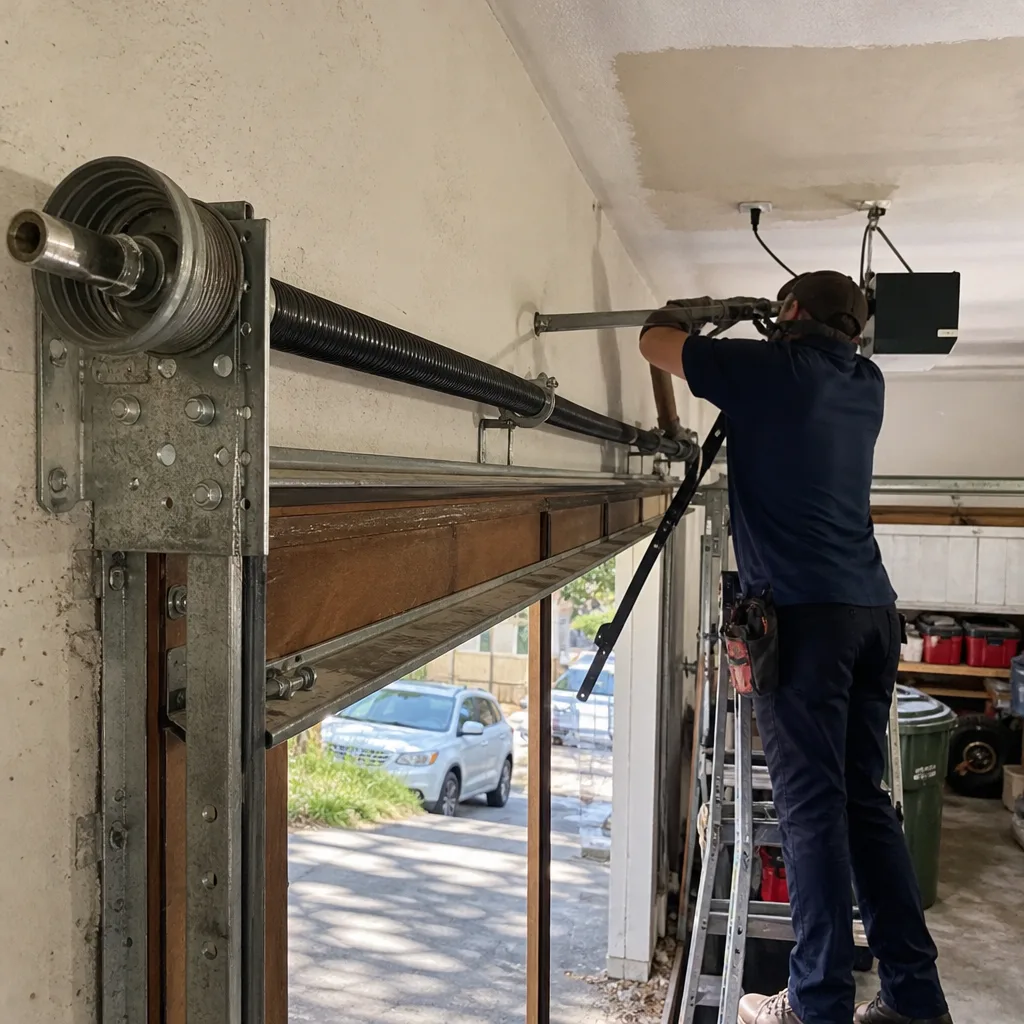 After
After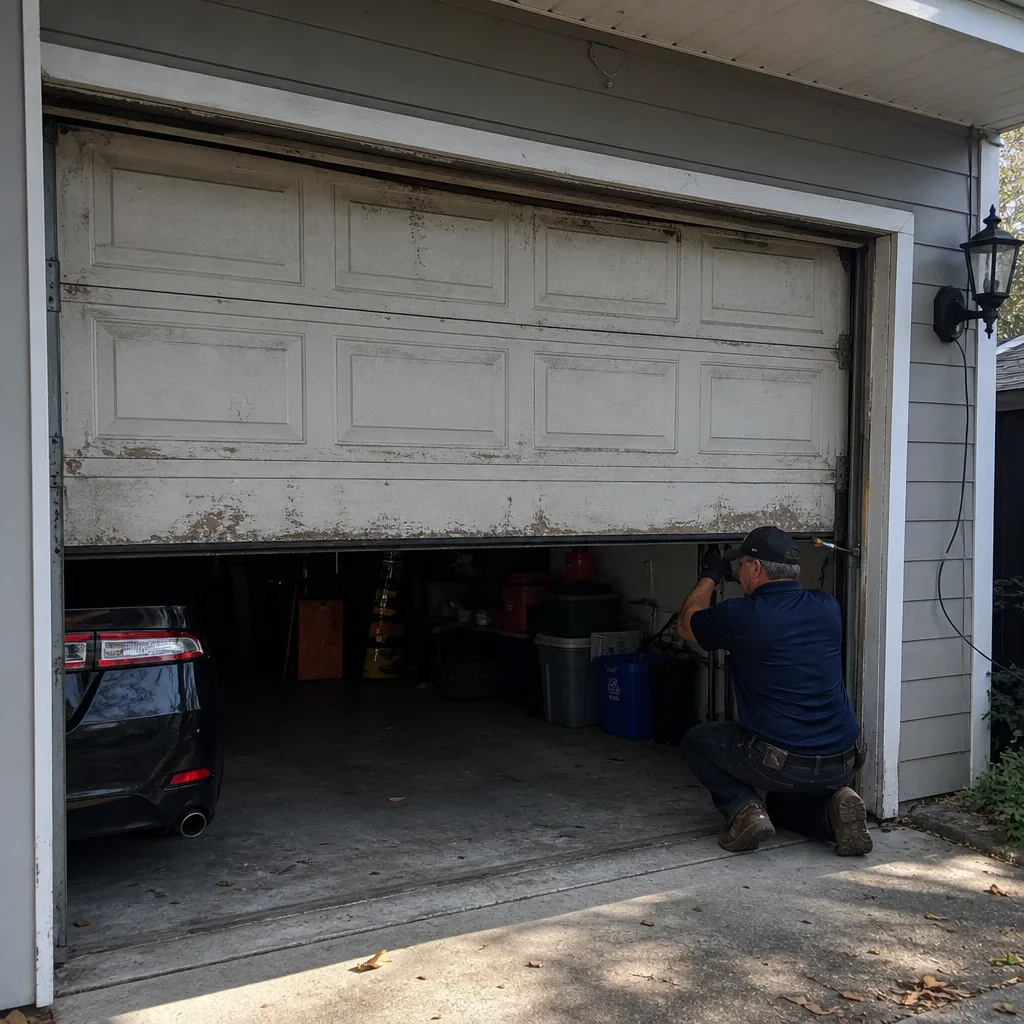 Before
 After
After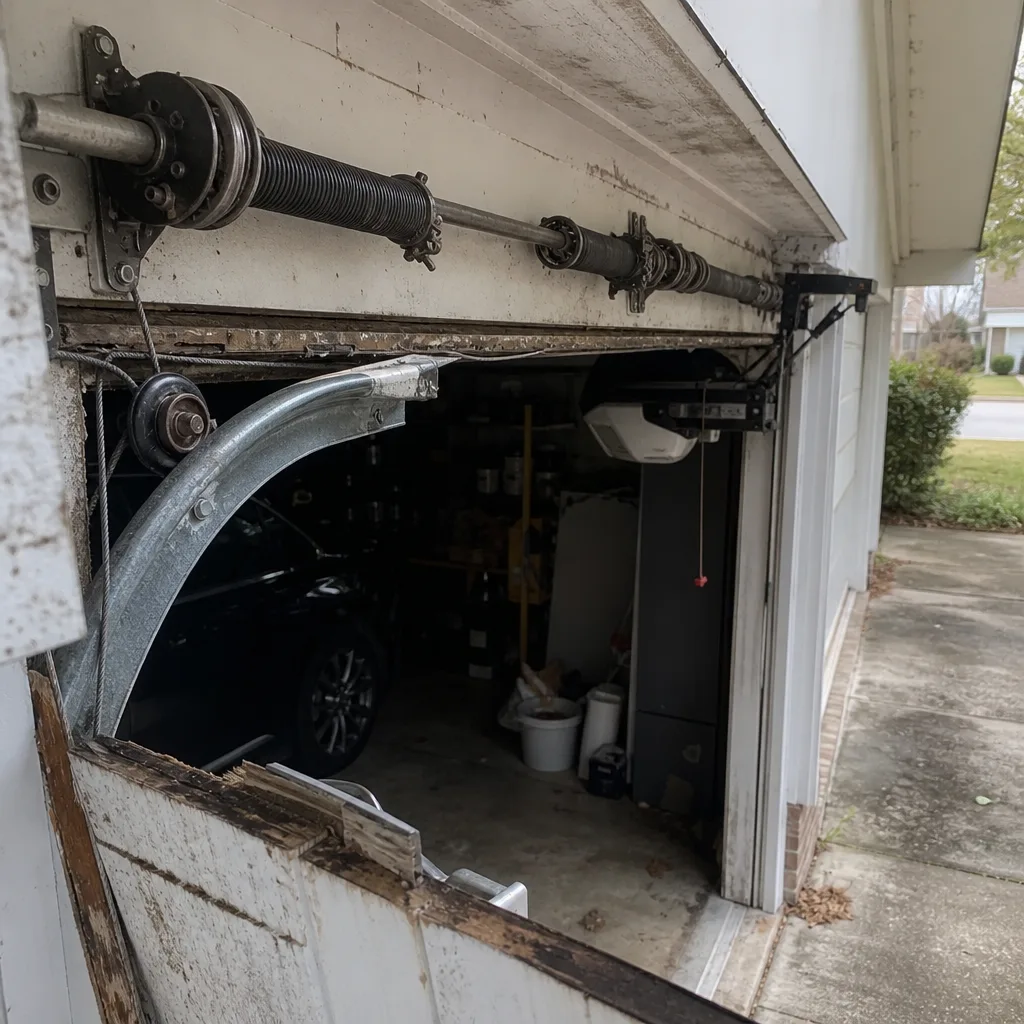 Before
 After
After