
Last updated October 16, 2026
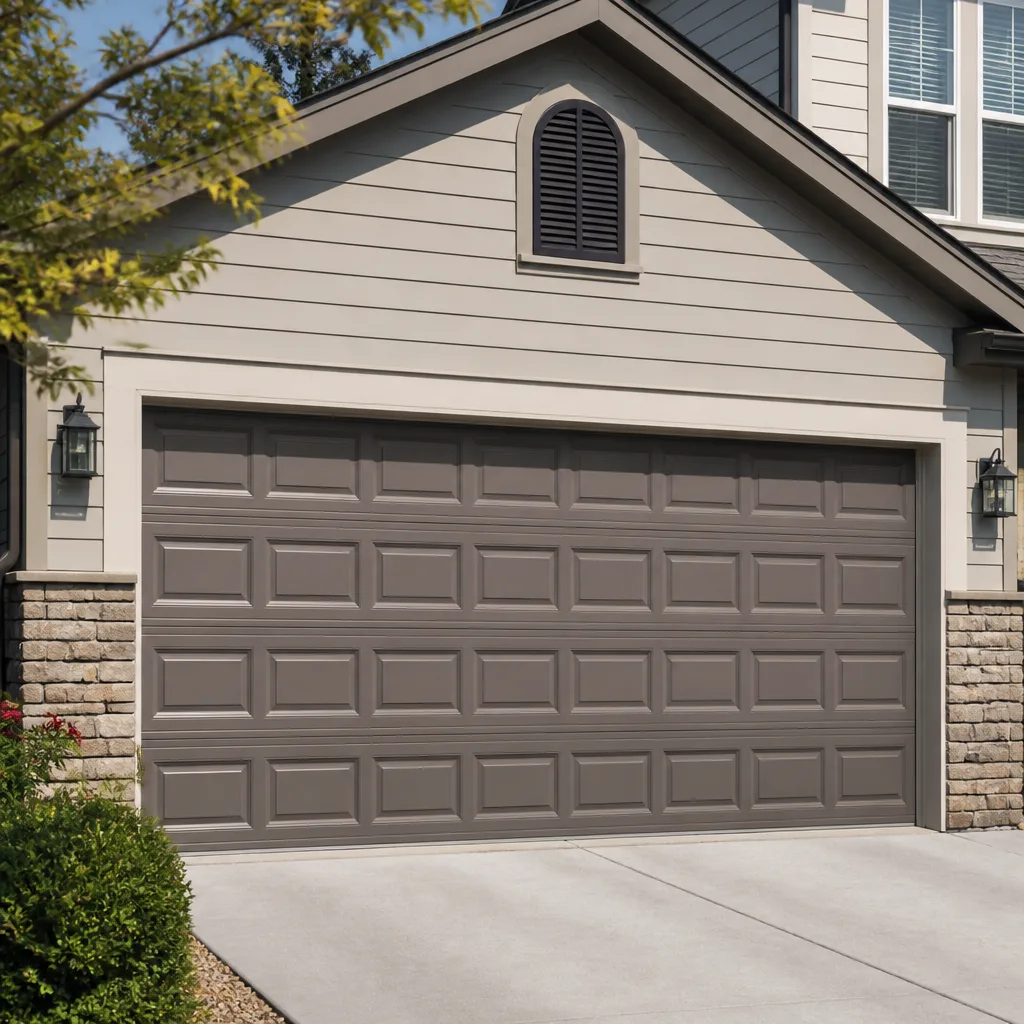 Raised-panel steel
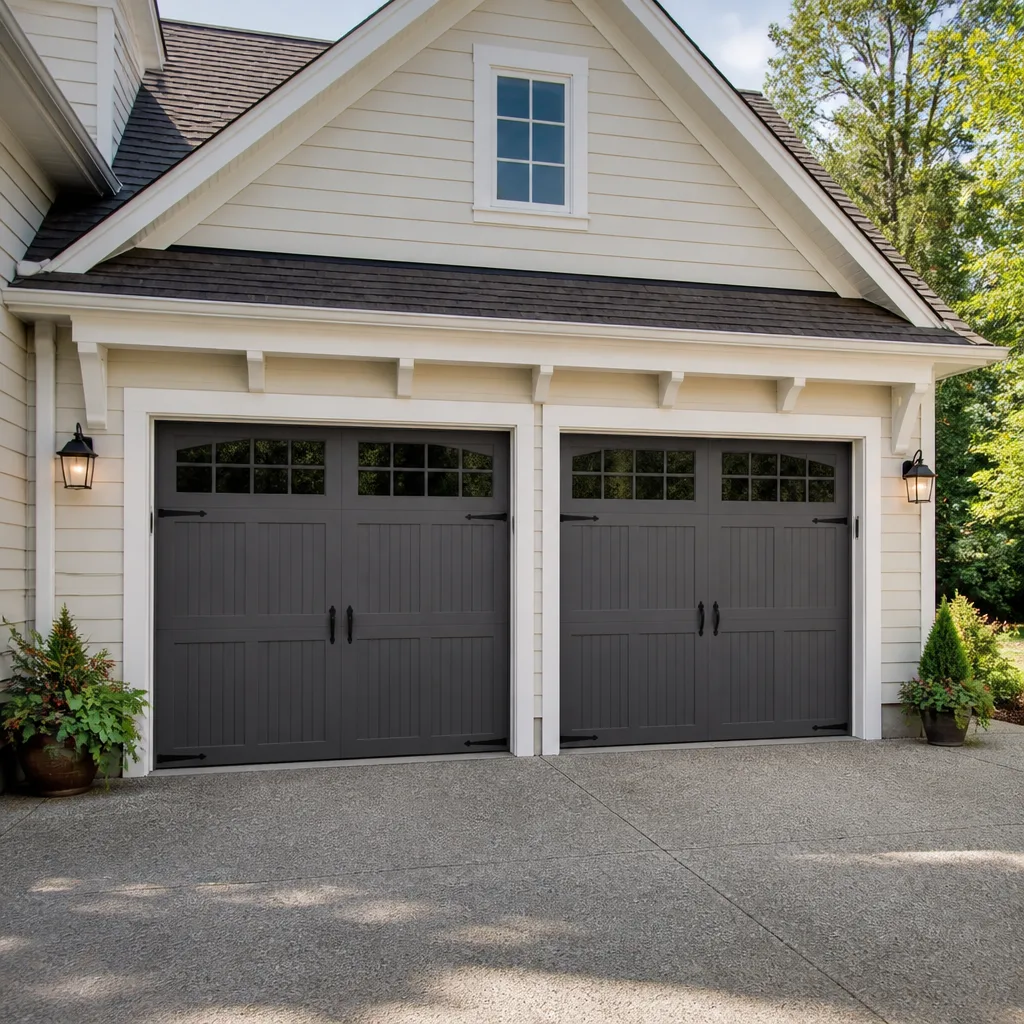 Carriage house
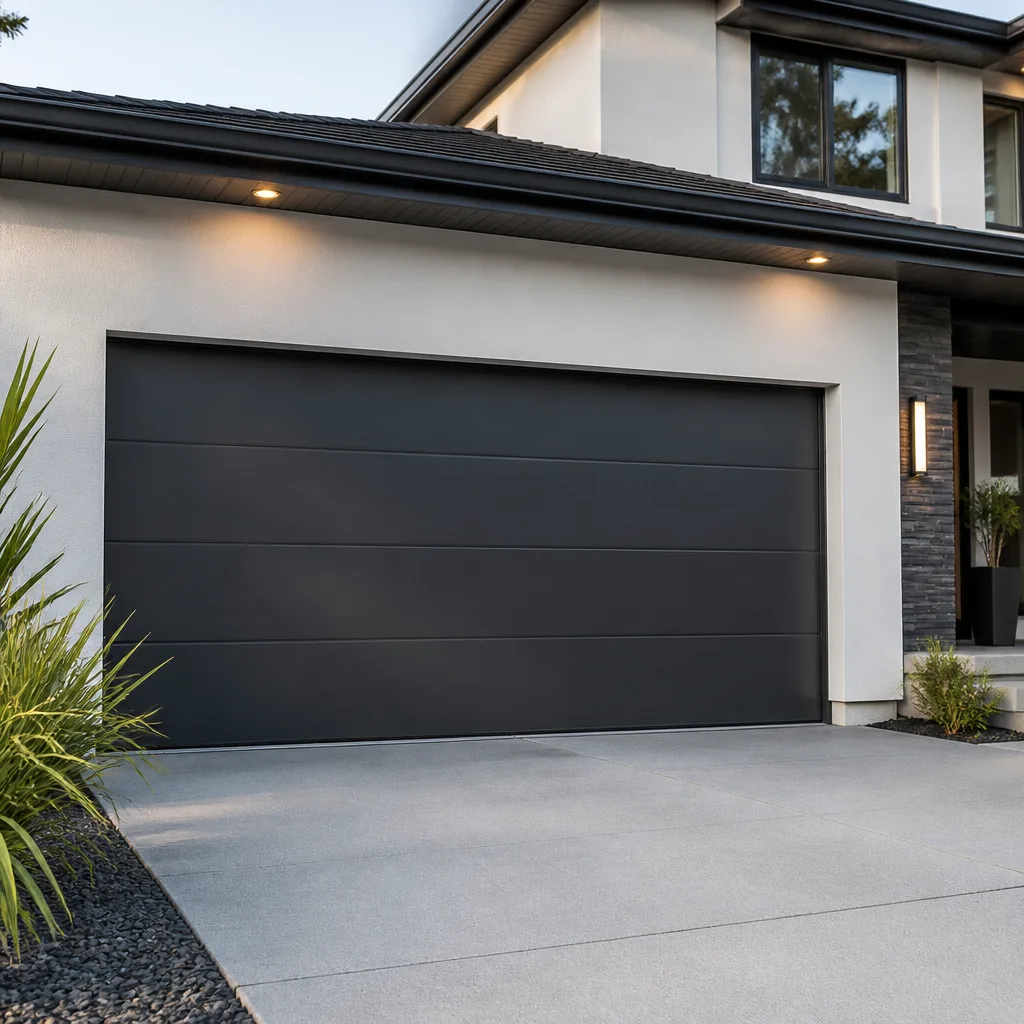 Modern flush
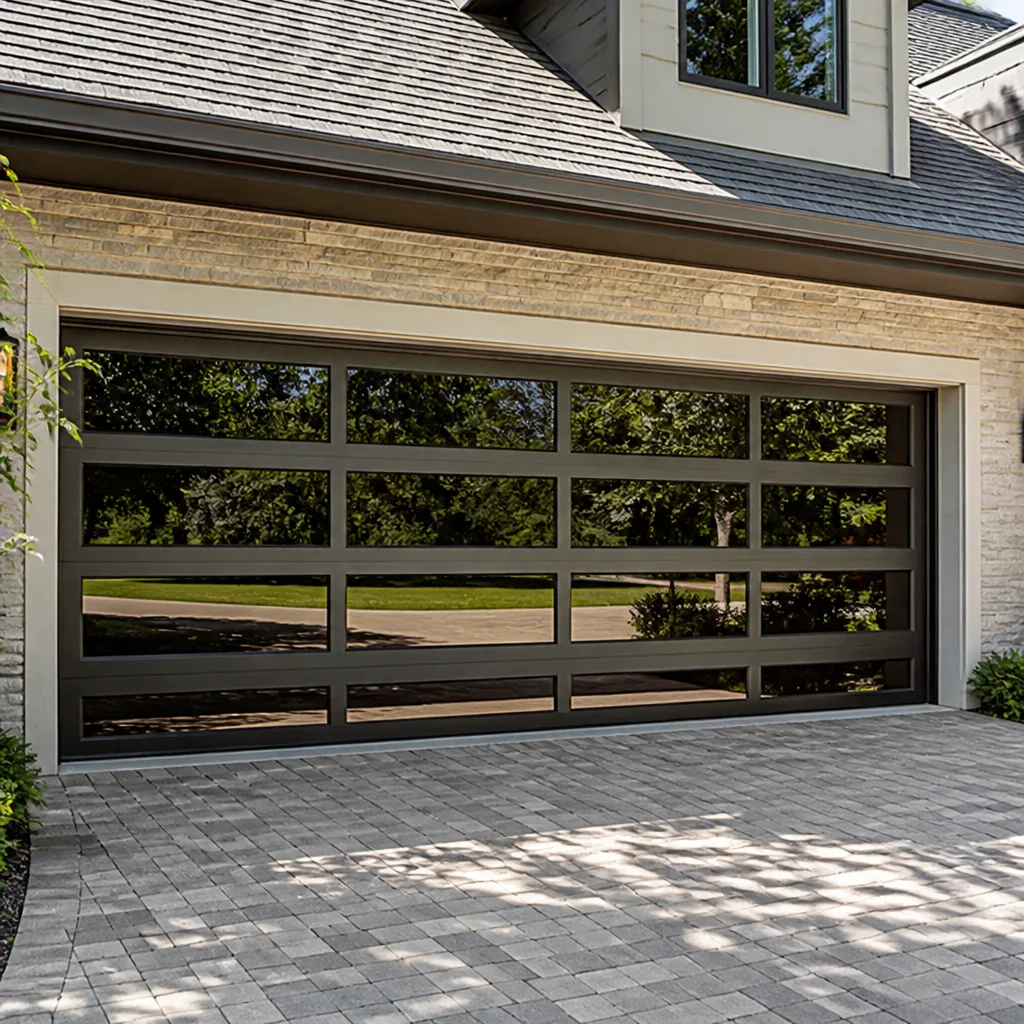 Full-view glass
 LiftMaster openers
 Chamberlain openers
Full 25-point door and opener safety check with every visit - springs, cables, rollers, tracks, and your LiftMaster or Chamberlain opener included
You get a price before we start. It does not change when the truck arrives.
Get your free estimateGarage Door Warning Signs: A Atlanta Homeowner’s Reference Guide
A garage door that moves unevenly on one side isn’t just annoying. It means one torsion spring has already failed and the second one is now under double the load it was designed for. It will break without warning, usually at the worst possible moment. This guide connects each symptom to its specific cause, tells you whether you’re looking at a 48-hour fix or a 48-minute emergency, and gives Atlanta homeowners a way to triage the problem before picking up the phone. For a deeper dive, see The Complete Guide to Garage Door in Atlanta. We’ve spent over two decades watching garage doors fail across this city, and the warning signs are remarkably consistent once you know what to look for.
Styles & brands we work with
Quick Answer
The most serious garage door warning signs in Atlanta are a door that moves unevenly or jerks side to side, a visible gap in a torsion spring, slack in the lift cables, and a grinding or popping sound during operation. Any of these means a load-bearing component has already failed or is about to, and you should stop using the door immediately and call a professional. Less urgent signs like slow operation, rusted hardware, or a door that reverses without cause can usually wait a few days, but they’re worth addressing before they become emergencies.
Table of Contents
- The Severity Matrix: Stop Now vs. Schedule vs. Monitor
- The Five Sounds Your Garage Door Makes (and What Each One Means)
- Visual Warning Signs on the Springs and Cables
- Why a Slow Door Is an Opener-Killer
- Atlanta-Specific Warning Signs: Rust, Humidity, and Bottom Seal Bubbling
- How to Safely Inspect Your Garage Door From Ground Level
- Common Mistakes to Avoid
- When to Call a Professional
- Frequently Asked Questions
- The Bottom Line
The Severity Matrix: Stop Now vs. Schedule vs. Monitor
Not every garage door problem needs immediate attention. Some need you to stop using the door this minute. Others can sit for a week. Here’s how to sort what you’re seeing into three buckets. This is the triage system we use on every Garage Door Repair in Atlanta call, and it’s the same framework you can use before you call anyone.
Stop Using the Door Right Now
- Visible gap in a torsion spring: The horizontal coil above your door splits cleanly when it fails. A gap wider than a pencil means the spring is broken and the door’s full weight is now resting on components that were never meant to carry it alone.
- Slack or dangling cables: If either of the two lift cables has gone loose, the door can drop suddenly. The cables are under enough tension to cause serious injury if they snap while you’re standing nearby.
- Door jerks or tilts during operation: One side moving faster than the other means a spring, cable, or roller has failed. Continuing to operate the door will damage the other side.
- Loud bang or popping sound during operation: This is typically a spring or cable failing in real time. Stop using the door and unplug the opener if you can do so safely.
Schedule Within a Week
- Door reverses without touching anything: This points to a sensor misalignment or a force-settings problem. It’s not dangerous, but it’s annoying and can leave your garage unsecured if you force it closed.
- Grinding or squealing sounds: Usually worn rollers or hinges. Not urgent, but the longer they grind, the more damage they do to the track.
- Slow movement with no other symptoms: A sluggish door is often an opener that’s working too hard against an out-of-balance door. More on this below, in the section on opener strain.
- Rust on the bottom panel or track: Surface rust is expected in Atlanta’s humidity, but it advances quickly once it starts. Addressing it now is cheaper than replacing a panel later.
Monitor and Recheck Monthly
- Light surface rust on springs: Not urgent, but track it. When rust creates pitting or flaking, the spring’s lifespan drops sharply.
- Slight unevenness in the gap under the door: A quarter-inch difference side to side when closed can simply be the floor settling. If it grows past half an inch, schedule an inspection.
- Opener noise that hasn’t changed in years: Older openers are louder. If the sound is consistent and the door balances correctly, monitor it but don’t panic.
- Bottom seal cracking at the edges: In Atlanta, heat and humidity break down rubber seals faster than in drier climates. Small edge cracks are cosmetic until the seal itself detaches.
If you’re unsure which bucket your door falls into, err on the side of caution. A broken spring leaves the door’s full weight on components not built for that load. The risk of a sudden fall is real, and the cost of an inspection is far lower than the cost of a door landing on a car or a person.
The Five Sounds Your Garage Door Makes (and What Each One Means)
Garage doors talk. Most Atlanta homeowners just haven’t learned the vocabulary. Once you know what each sound points to, you can often identify the failing component without touching a single tool. Here are the five sounds we hear most often on calls across Atlanta, from Buckhead to East Atlanta Village, and what each one tells us.
1. A Sharp Pop or Bang
This is the sound of a torsion spring breaking. When the spring under tension fails, it releases stored energy all at once. Some customers describe it as a gunshot. Some describe it as a car backfiring. If you heard this sound and the door won’t lift, the spring is done. The fix is Garage Door Spring Repair in Atlanta, and it’s a same-day job for a trained tech. Spring replacement in Atlanta typically runs $150 to $290 per spring, depending on the spring type and door weight. You’ll see the exact number in writing before any wrench turns.
2. Grinding or Scraping
Grinding during door travel almost always points to metal-on-metal contact somewhere in the track system. The usual culprits are worn rollers whose bearings have failed, or hinges that have loosened and are dragging against the track. Left alone, this sound means the roller is slowly machining a groove into the track itself. What starts as a $40 roller replacement becomes a track replacement if you ignore it long enough.
3. Squealing or Squeaking
Squealing is usually an opener belt or chain issue rather than a door issue. On chain-drive openers, the chain stretches over time and begins to slip on the sprocket, producing a high-pitched squeal. On belt-drive models from brands like Chamberlain or LiftMaster, a squeal can indicate a failing belt tensioner. A quick lubrication check might resolve it, but if the sound persists, the opener’s drive mechanism is telling you it’s wearing down.
4. Rattling During Travel
A rattle that happens as the door moves often means loose hardware somewhere along the line: hinge bolts backing out, track brackets that have worked loose from the wall, or roller stems wobbling in their hinges. Atlanta’s humidity cycles expand and contract the wood framing around garage doors, which loosens fasteners faster than in drier climates. This one is usually a straightforward tightening job, but finding every loose bolt takes a trained eye.
5. Thumping or Clunking at Specific Points
If you hear a thump when the door hits a particular spot in its travel, the door is likely out of balance or the track has a bend. The door is hitting something it shouldn’t, or the rollers are catching on a damaged section of track. This is a warning sign that the door’s weight distribution has shifted. Continuing to run the door with a thump will eventually worsen the imbalance and put more strain on the springs.
Visual Warning Signs on the Springs and Cables
You don’t need to climb a ladder or touch anything to identify most spring and cable problems. Standing a safe distance back from the door gives you a clear view of the components that matter most. Here’s what to look for. These are the checks we perform on every initial service call in Atlanta, and they’re safe to do yourself from ground level.
Spring Gaps
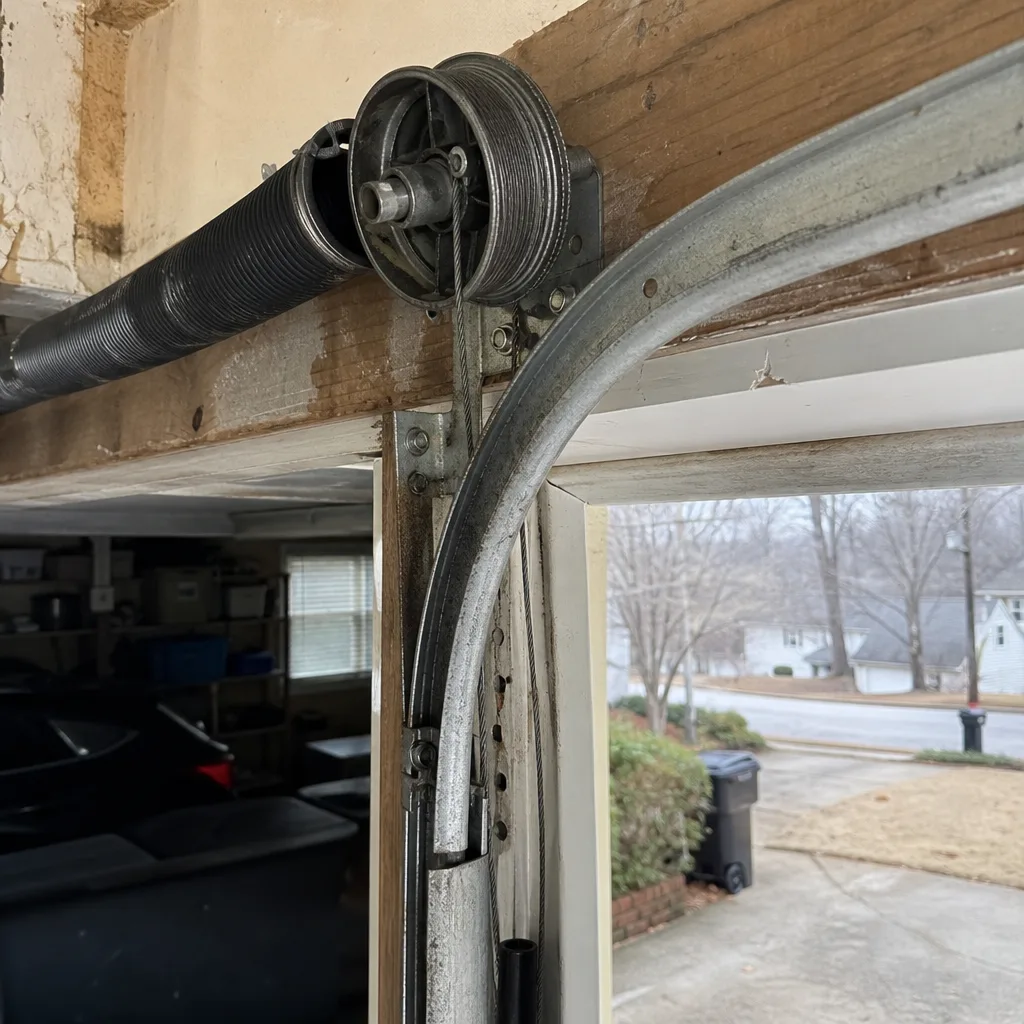
The torsion spring is the horizontal coil mounted above your door opening. When it’s healthy, it’s one continuous coil from end to end. When it fails, it splits cleanly somewhere along its length. From the floor, look for a visible gap in the coil, a section where the coils no longer line up. This is the single clearest sign that your spring has failed. Note: a worn but not yet broken spring may show small surface cracks in the coating. These are visible if you have good light and good eyesight, but they’re subtle. Most homeowners first notice the split.
Rust Patterns on Springs
In Atlanta, springs rust more aggressively than they do in most of the country. Our summers average over 70 percent humidity, and that moisture settles on every metal surface in your garage. Surface rust on a spring isn’t an immediate failure, but look at the pattern. Uniform, light rust across the coil is normal for a spring that’s a few years old. Pitting, flaking, or rust concentrated in thin bands around the coil is a different story. Those bands indicate stress points where the metal is flexing. A pitted spring is a spring on borrowed time.
Cable Slack
Look at the two cables running along the outside edges of the door, one on each side. When the door is closed, these should be taut. If one hangs loose or sags, the spring on that side has likely failed or the cable has slipped off its drum. A door with slack in one cable and a working opener is a dangerous combination. The opener will try to lift the door, but the weight is only being carried on one side. This is a stop-using-the-door-now situation.
Fraying at Cable Ends
Even a taut cable can show warning signs at its connection points. Look at where the cable meets the bottom bracket and at the drum up top. Frayed strands, a cable that looks thinner in one section, or visible kinks in the line all mean the cable’s structural integrity is compromised. Cable replacement is a Garage Door Cable Repair in Atlanta job best handled by someone who understands the load these cables carry. A snapped cable under tension can whip with enough force to cause serious injury.
Why a Slow Door Is an Opener-Killer
A garage door that works fine but moves slowly seems like a minor annoyance. It’s not. In most cases, the door itself is out of balance, and the opener motor is compensating by working harder. Every cycle slowly cooks the motor until it fails, usually a year or two earlier than it should have. Here’s what’s actually happening, step by step.
- The springs lose tension over time. Springs are rated for a certain number of cycles, typically 10,000 to 20,000, depending on quality. Every open-close cycle is one tick off that lifespan. When springs weaken, they no longer fully counterbalance the door’s weight.
- The opener picks up the slack. Opener motors are designed to assist the springs, not carry the door. When the springs weaken, the motor strains. This strain shows up as slower operation, a motor that runs hot, and a noticeable lag when the door starts moving.
- The motor wears out faster. Heat is the enemy of electric motors. An opener that generated X amount of heat per cycle for a balanced door now generates significantly more. Over months, the heat degrades the motor’s internal components.
- You replace the opener, not the springs. This is where most Atlanta homeowners get it wrong. They call a general handyman or try a DIY opener swap, install a brand new motor, and find the door still moves slow. That’s because the springs, not the opener, were the root cause. The new opener is now working just as hard as the old one.
- The correct fix. The door needs a balance test. Disconnect the opener (there’s usually a red cord hanging from the track), and lift the door manually. A properly balanced door should lift easily with one hand, stay put at waist height, and close with gentle pressure. If it’s heavy to lift or drifts down on its own, the springs need attention. Do not replace the opener until the door is balanced.
If you’re unsure how to perform this test safely, skip it. This is the kind of check we do on every Marlow Garage Door Repair Atlanta home service visit, and it takes less than two minutes. But a heavy door and a disconnected opener can fall quickly. When in doubt, watch the door during normal operation instead. If the opener sounds like it’s working harder than it used to, it is.
Atlanta-Specific Warning Signs: Rust, Humidity, and Bottom Seal Bubbling
Atlanta’s climate does things to garage doors that you won’t find in a generic maintenance guide written for the national audience. Our hot, humid summers and frequent afternoon thunderstorms create failure patterns that are distinctly local. Here’s what we see on doors throughout the metro area, from the intown neighborhoods to the northern suburbs, that you won’t read about on sites written for Phoenix or Seattle. For year-round protection, check out our Seasonal Garage Door Care for Atlanta: Year-Round Homeowner’s Guide.
Rust After a Humid Summer
Atlanta’s summer humidity doesn’t just sit on your skin; it sits on your garage door hardware. After a particularly wet season, you’ll see rust forming first on the spring coils, the bottom brackets, and the heads of the bolts. The pattern matters. If rust appears in streaks following the coil lines of the spring, that’s surface-level and expected. If it appears as crusty, raised patches that flake when touched, the metal is compromised. Flaking rust on a spring means the spring’s coating has failed and the underlying steel is oxidizing. That spring will fail earlier than its rated cycle count, and in our experience, it usually breaks during the first cold snap of November, when the metal contracts and the weakened section can’t hold.
Bottom Seal Bubbling
The rubber strip along the bottom of your garage door is called the astragal or bottom seal. In most climates, it dries out and cracks. In Atlanta, you’ll often see something different: bubbling. The seal develops raised blisters along its length, particularly where it contacts the concrete floor. This isn’t just door age. It’s subfloor moisture. Atlanta’s water table is high, and many garages sit on slabs that wick moisture upward. That moisture gets trapped between the concrete and the rubber seal, and the heat of the day bakes it. The result is a seal that bubbles and separates from the door. This matters for two reasons. First, the seal stops doing its job of keeping water and pests out. Second, the moisture that caused the bubbling is now working on the bottom panel itself. Wood-composite panels soak up that moisture and rot from the bottom edge inward. Steel panels rust along the bottom seam. If you see bubbling on your seal, you have a moisture problem that will eventually claim the panel.
Track Corrosion Patterns
The vertical tracks that guide your door are galvanized steel, and in most of the country, the galvanization lasts the life of the door. Not always in Atlanta. If your garage isn’t climate-controlled, the daily expansion and contraction from temperature swings works the track fasteners loose. When the fasteners loosen, water gets between the track and the wall, and corrosion starts behind the track where you can’t see it. By the time you notice rust bleeding through at the fastener holes, the track itself has often thinned enough to bend under load. This is common enough in Atlanta that we look for it on every inspection, and it’s not something a homeowner would catch without knowing to look.
How to Safely Inspect Your Garage Door From Ground Level
Everything we’ve described so far can be checked without climbing anything or touching any component under tension. Here’s a step-by-step inspection you can do in about ten minutes, standing safely on the floor of your garage. This works for any door brand, whether you’ve got a Clopay, an Amarr, or a Wayne Dalton door.
- Close the door fully. A closed door puts the springs at their lowest tension, which is the safest position for visual inspection.
- Stand back about six feet from the door. Look at the top edge. Is the gap between the door and the header even left to right? An uneven gap suggests the door has shifted or a track is out of alignment.
- Look up at the torsion spring. The horizontal coil above the door. Is it one continuous coil? Is there any visible gap or separation? Any rust that looks flaky or pitted rather than smooth?
- Check both lift cables. The steel cables running along each side of the door. When the door is closed, both should be taut with no visible slack or sags. Look at the connection points for fraying.
- Examine the bottom seal. Look for bubbling, cracking, or separation from the door. In Atlanta, bubbling specifically points to slab moisture, as covered above.
- Look at the tracks. Both vertical tracks should be straight, with no visible bends or gaps between the track and the wall. Check the fastener heads for rust bleeding.
- Run the door one cycle. Stand clear and watch it open and close. Does it move evenly? Does it hesitate, jerk, or make any of the five sounds we described?
If any of these checks turns up something concerning, don’t attempt a fix. Garage door springs and cables are under enough tension to cause serious injury or death. The term to know is torsion spring: the horizontal coil above your door that does most of the lifting. When one of these fails, it releases energy violently. This is the component that most often injures DIYers, and it’s the reason every inspection we describe here is visual only. Call a trained professional with a Garage Door Spring Repair in Atlanta specialty if a spring shows signs of fatigue.
Common Mistakes to Avoid
- Ignoring a slow door. A sluggish door is an out-of-balance door, and the longer you run it, the more damage you do to the opener motor. What could be a $200 spring replacement becomes an $800 opener replacement if you wait long enough. We see this sequence weekly across Atlanta.
- Oiling the spring instead of replacing it. Lubrication prevents squeaking, but it does nothing for a spring that has lost its tension. A noisy spring that’s still lifting the door may be fine. A door that’s heavy is a spring problem, and no amount of spray lube will fix it.
- Tightening loose hardware without addressing the root cause. Loose bolts are usually a symptom of a door that’s vibrating because it’s out of balance. Tightening the bolts is fine, but if you don’t fix the balance, they’ll loosen again within the season.
- Disconnecting the opener to run the door manually when the door is visibly damaged. If a spring is broken or a cable is slack, the door’s weight is uncontrolled. Manually lifting a door with a broken spring is dangerous even for strong people. The door can drop without warning.
- Assuming the door brand matters. We service Craftsman, Clopay, Amarr, Wayne Dalton, and six other major brands. The warning signs are the same across all of them. Don’t let brand loyalty delay a necessary repair; the physics of a failing spring don’t care what logo is on the panel.
- Buying an opener replacement when the springs are the problem. This is the single most expensive misdiagnosis we see. A new Chamberlain or LiftMaster opener installed on an unbalanced door will wear out just as fast as the old one. Balance first, then opener.
- Checking the door only when it breaks. Monthly visual checks take ten minutes and catch most problems before they become emergencies. The homeowners who avoid the most expensive repairs in Atlanta are the ones who do a quick check every time they change their HVAC filter.
When to Call a Professional
If you’ve spotted a spring gap, slack in the cables, or a door that jerks during operation, stop using the door and make the call today. These are load-bearing failures, and the risk of a sudden fall is not theoretical. If your door shows more gradual warning signs like slow movement, unusual noise, or rust progression, schedule an inspection within the week. Not sure what to ask? Read How to Hire a Garage Door Contractor in Atlanta: A Step-by-Step Guide first. The cost of a service call in Atlanta is a fraction of the cost of a door that fails catastrophically. Marlow Garage Door Repair Atlanta offers free estimates in Atlanta, and every job comes with a written price before any work starts and the 365-Day Done Right Promise, meaning if the repair isn’t right, we make it right for a full year. Call (762) 230-6145 to talk to a live person, 24/7.
Frequently Asked Questions
Spring replacement in Atlanta typically runs $150 to $290 per spring, depending on the spring type, door weight, and whether you’re replacing one or both. We recommend replacing both springs at once because they wear at the same rate, and the second one usually fails shortly after the first. The exact price is quoted in writing before any work begins, so the number on your invoice matches the number you agreed to. Call (762) 230-6145 for a free estimate.
Yes. Most spring and cable repairs are same-day jobs because our trucks carry the parts needed for the eight major brands we service, including Clopay, Amarr, and Wayne Dalton. A broken spring isn’t something you want to live with overnight; a door that can’t open means a car trapped in the garage. Call (762) 230-6145 and we’ll tell you honestly whether we can get there today.
No. The price we quote is the price you pay. We deliver a written price before any work starts, and we don’t add surprise fees after the fact. If we find something additional while working, we’ll stop and get your sign-off before doing anything else. The 365-Day Done Right Promise backs the work for a full year.
Standard springs are rated for 10,000 cycles, which translates to about 7 to 10 years for most Atlanta homeowners who use their door as the primary entry point. High-cycle springs rated for 20,000 cycles can last 15 years or more. Humidity accelerates rust formation, but the bigger factor in spring lifespan is how often the door opens and closes. A three-car household running multiple vehicles will burn through cycles faster than a single-car household.
No. A broken spring means the door’s counterbalance system has failed, and the full weight of the door, often 150 to 300 pounds, is now uncontrolled. If the opener is still running, it’s dragging or dropping that weight on components not designed for the load. Stop using the door, unplug the opener if you can do so safely, and call a professional in Atlanta for a spring inspection.
We serve the full Atlanta metro, including the intown neighborhoods and the surrounding suburbs. Every call is backed by The Relay Visibility Guarantee: you get a live arrival time you can track, before-and-after photos, a written price, and a digital invoice you can pay from a link. No four-hour windows, no vague promises. Call (762) 230-6145 to book.
The Bottom Line
Garage doors fail predictably. The warning signs are visible and audible, and every one of them maps to a specific component: springs, cables, rollers, tracks, or the opener. A ten-minute ground-level inspection once a month catches most problems before they become emergencies. When you do find something, the triage is simple: spring gaps, cable slack, and jerky movement mean stop now. Grinding, slow movement, and rust progression mean schedule within the week. In Atlanta’s humid climate, rust and moisture accelerate every failure mode, so local homeowners need to be more vigilant than the national average. When in doubt, call (762) 230-6145 for a free estimate and a written price before any work begins, or browse more guides & resources on keeping your door reliable.
Written by Jaylen Ross, Owner at Marlow Garage Door Repair Atlanta, serving Atlanta since 2002.
See the difference
 Before
 After
After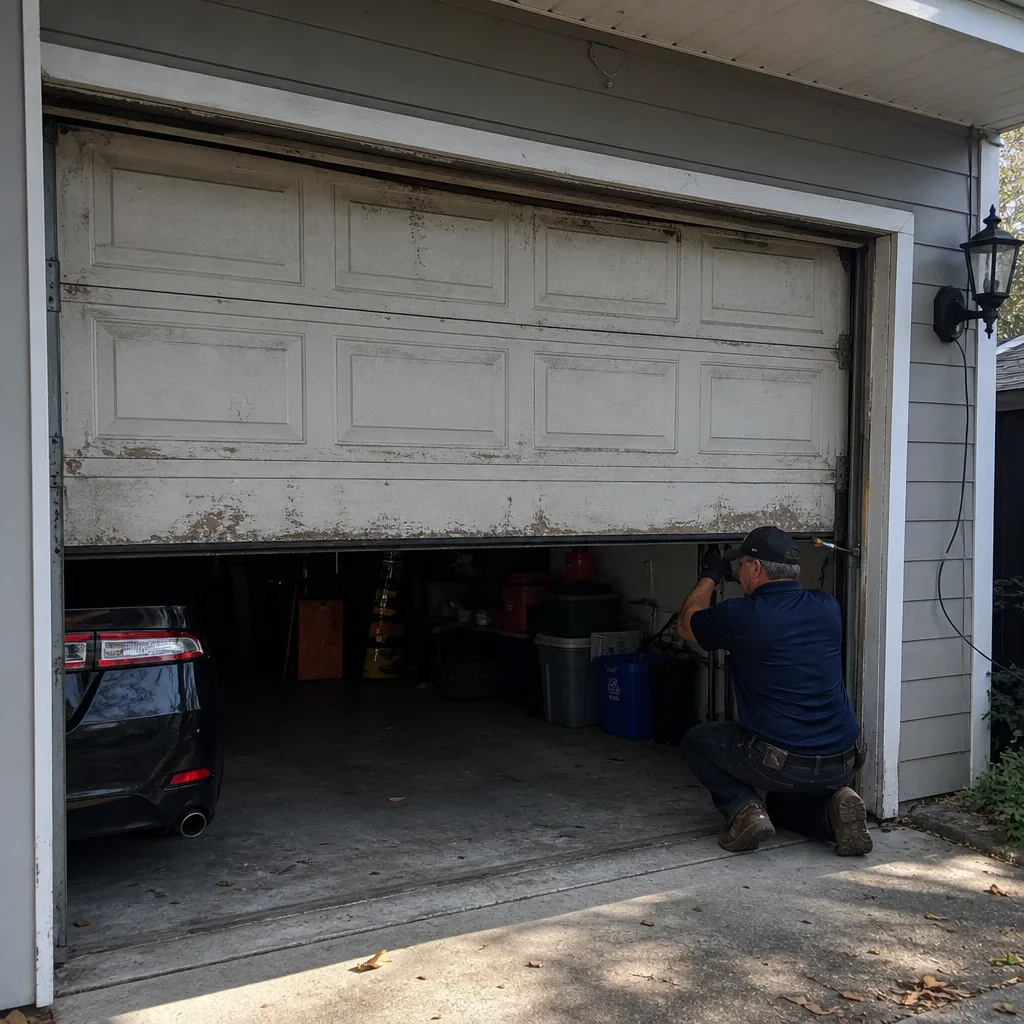 Before
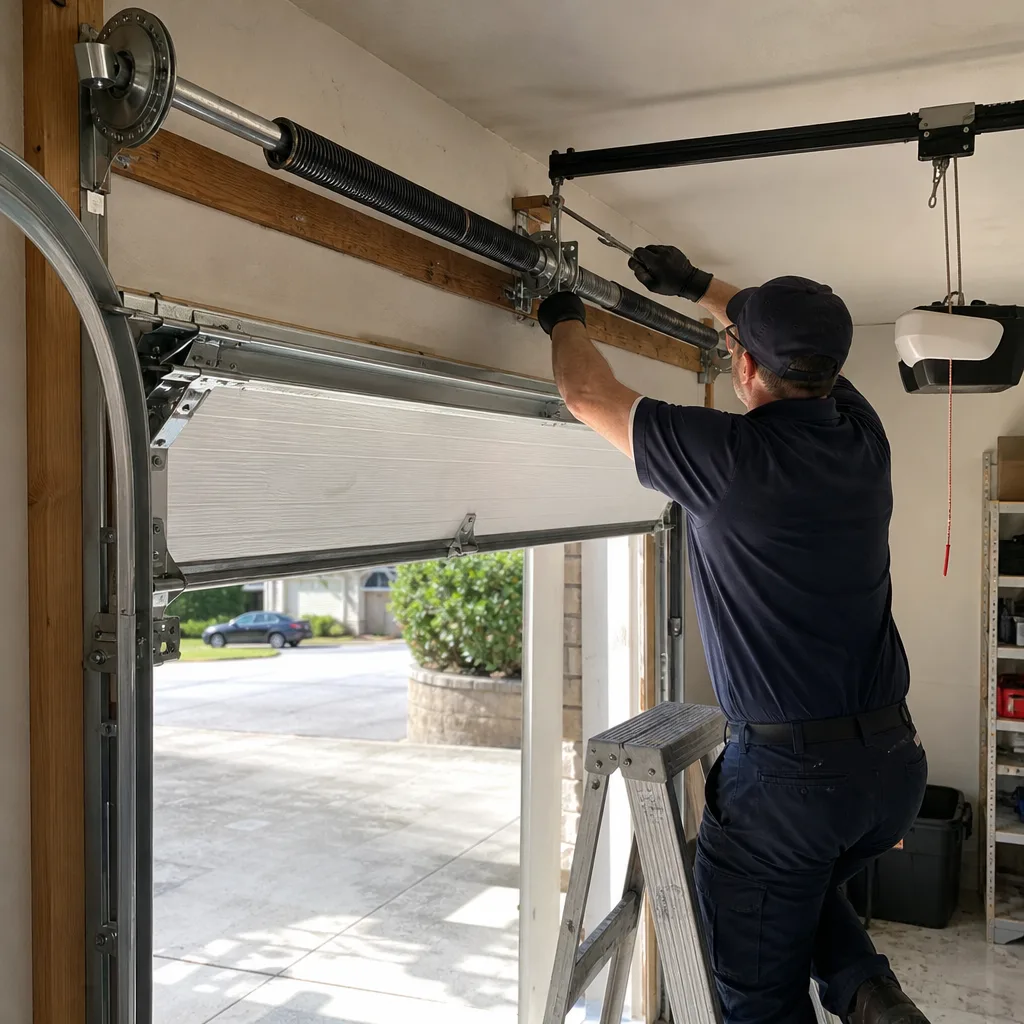 After
After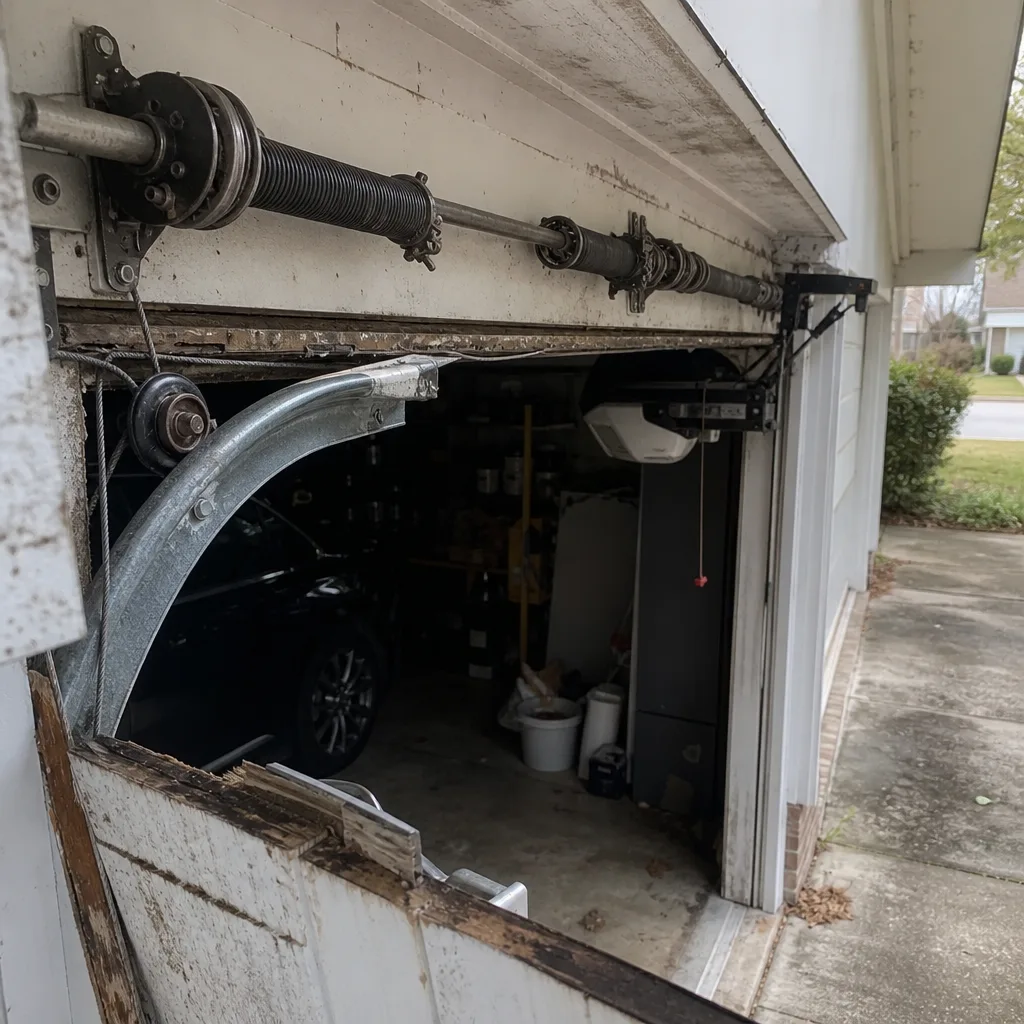 Before
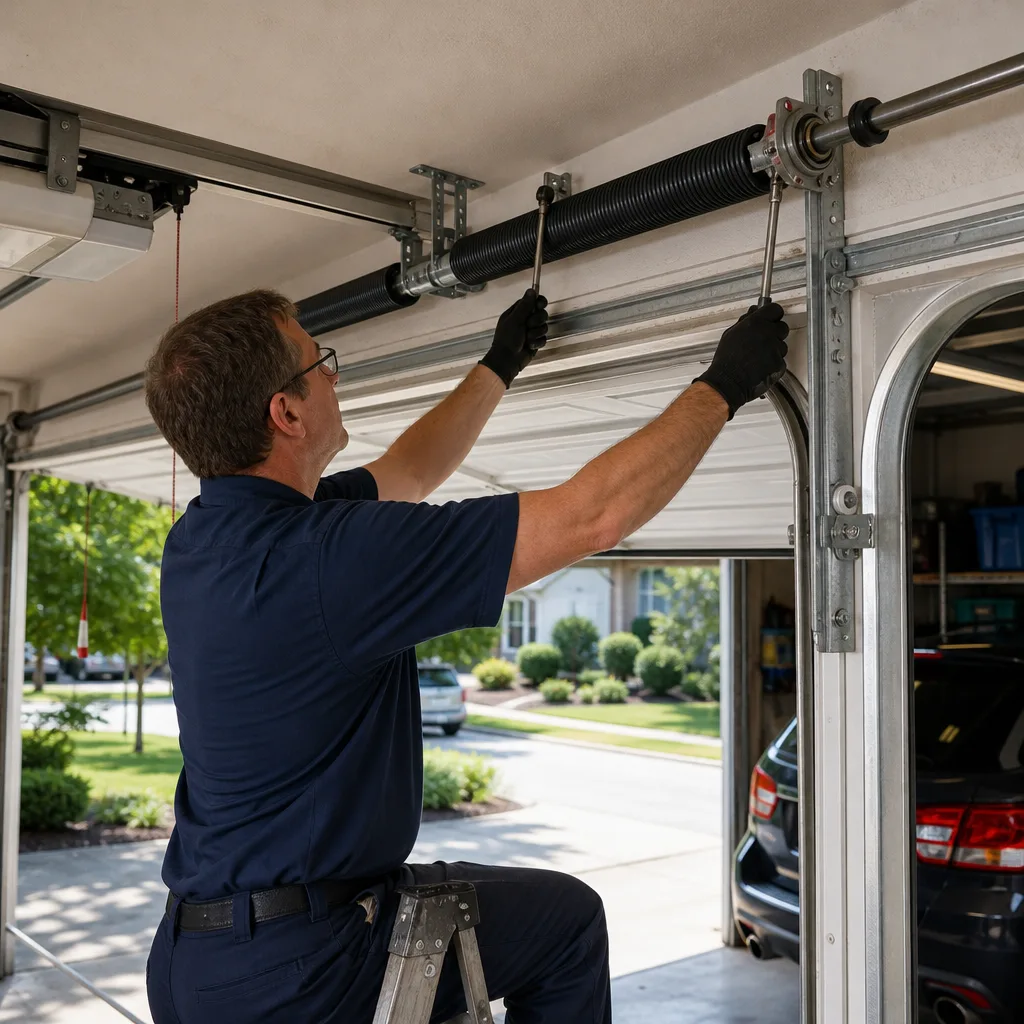 After
After