
Last updated October 16, 2026
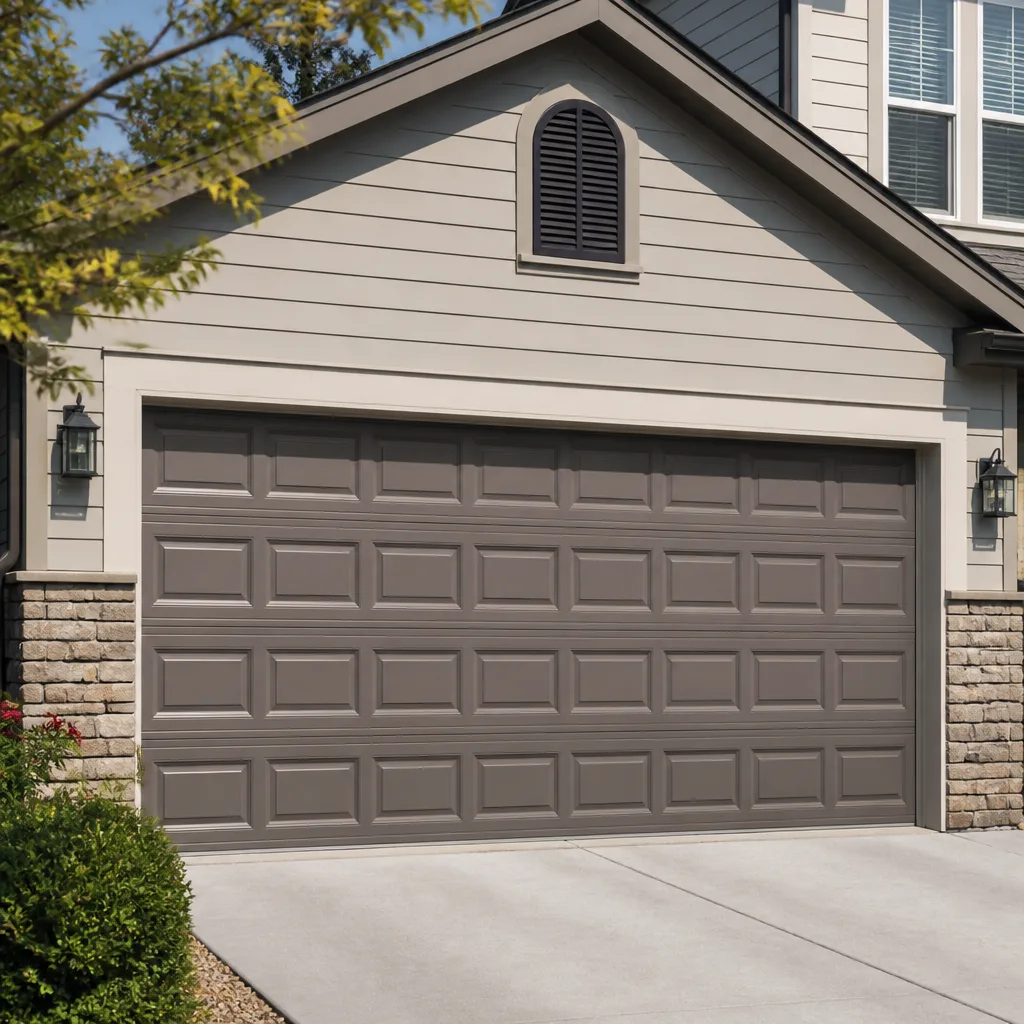 Raised-panel steel
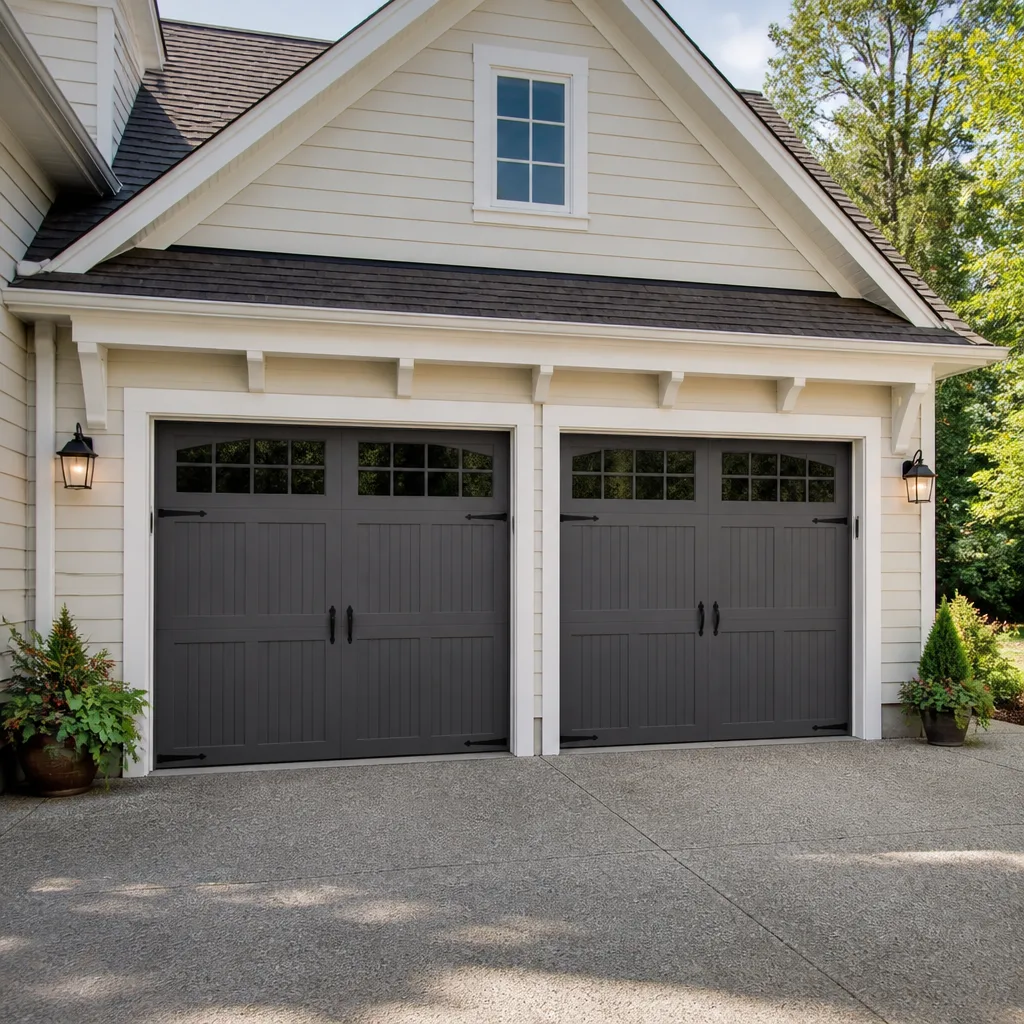 Carriage house
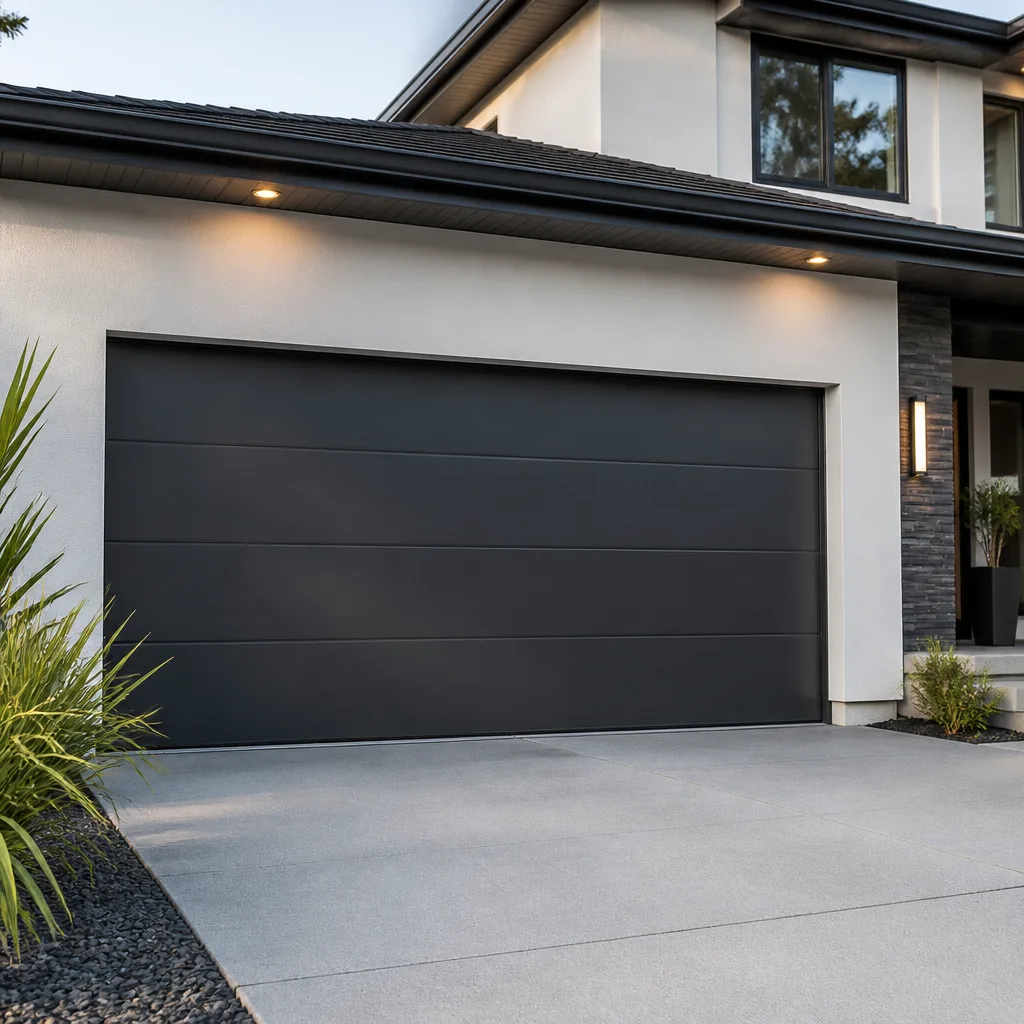 Modern flush
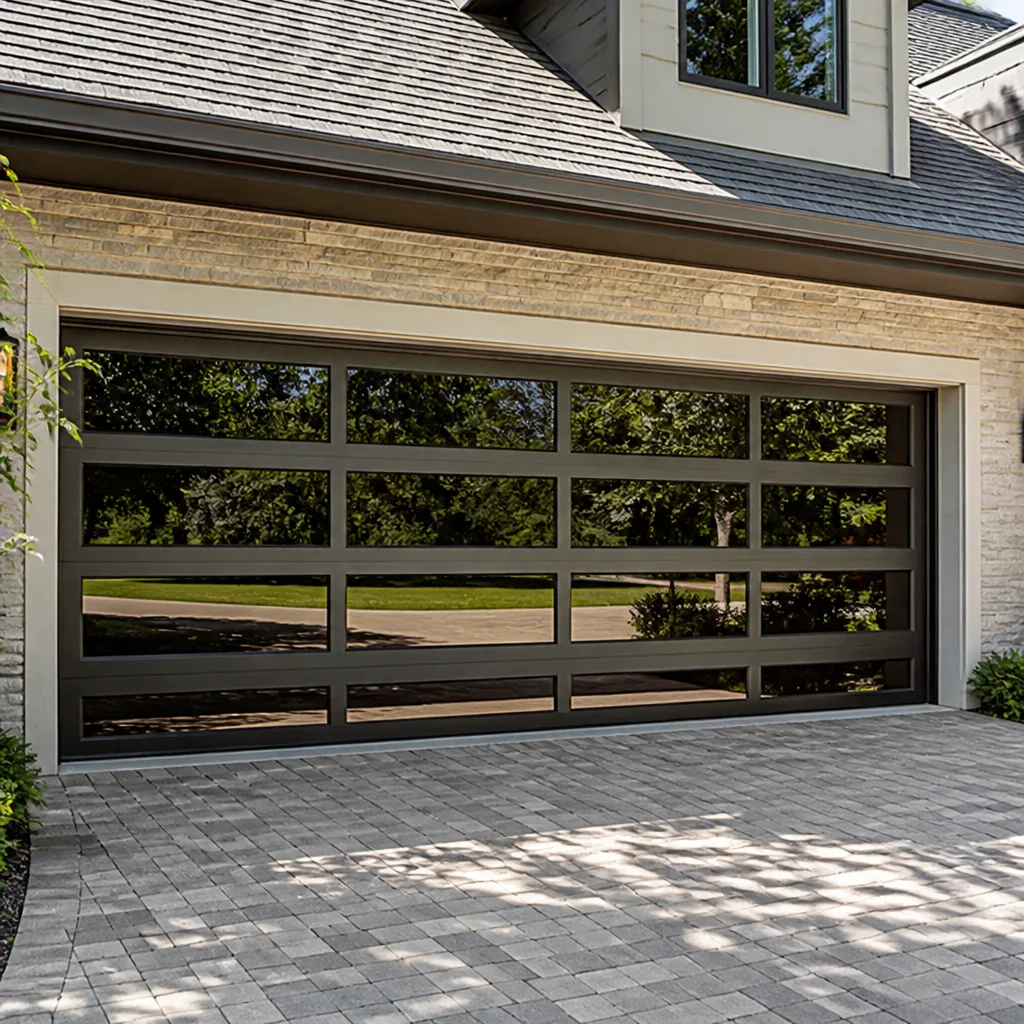 Full-view glass
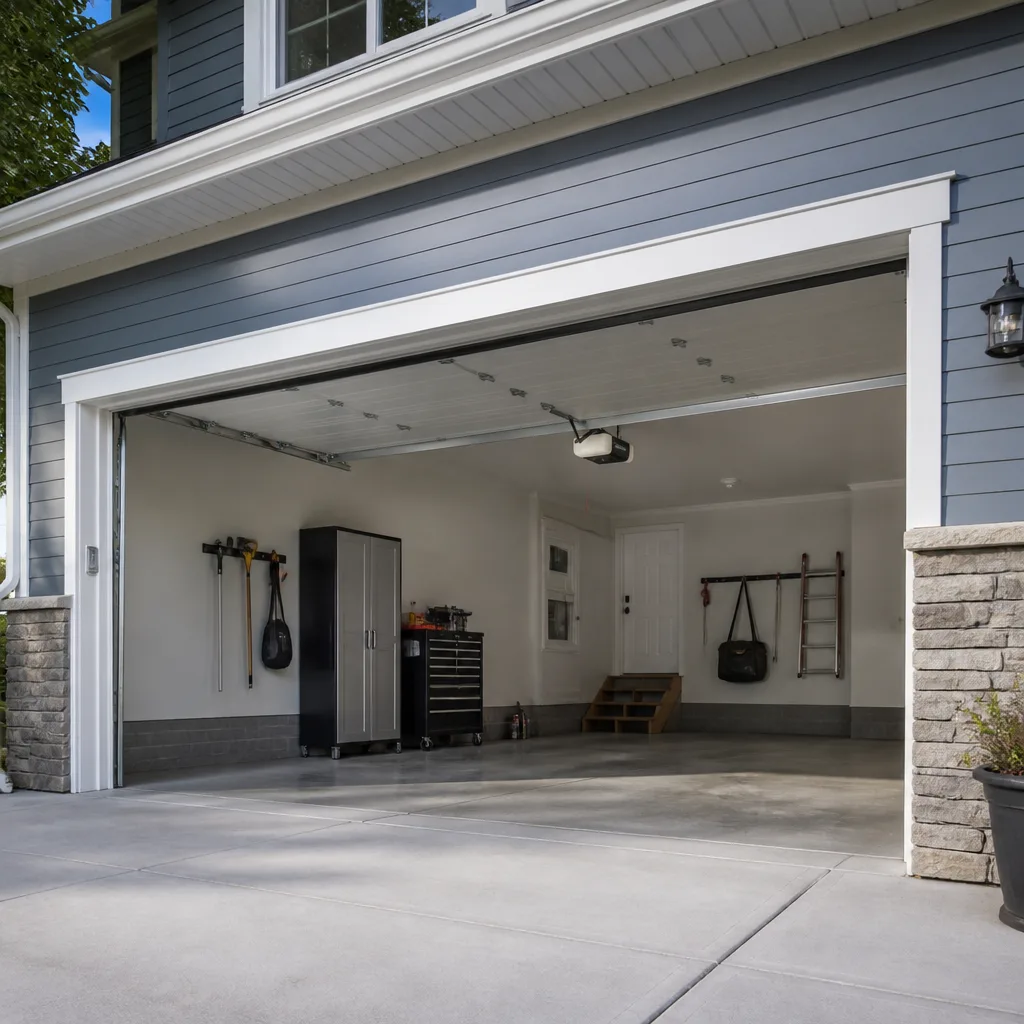 LiftMaster openers
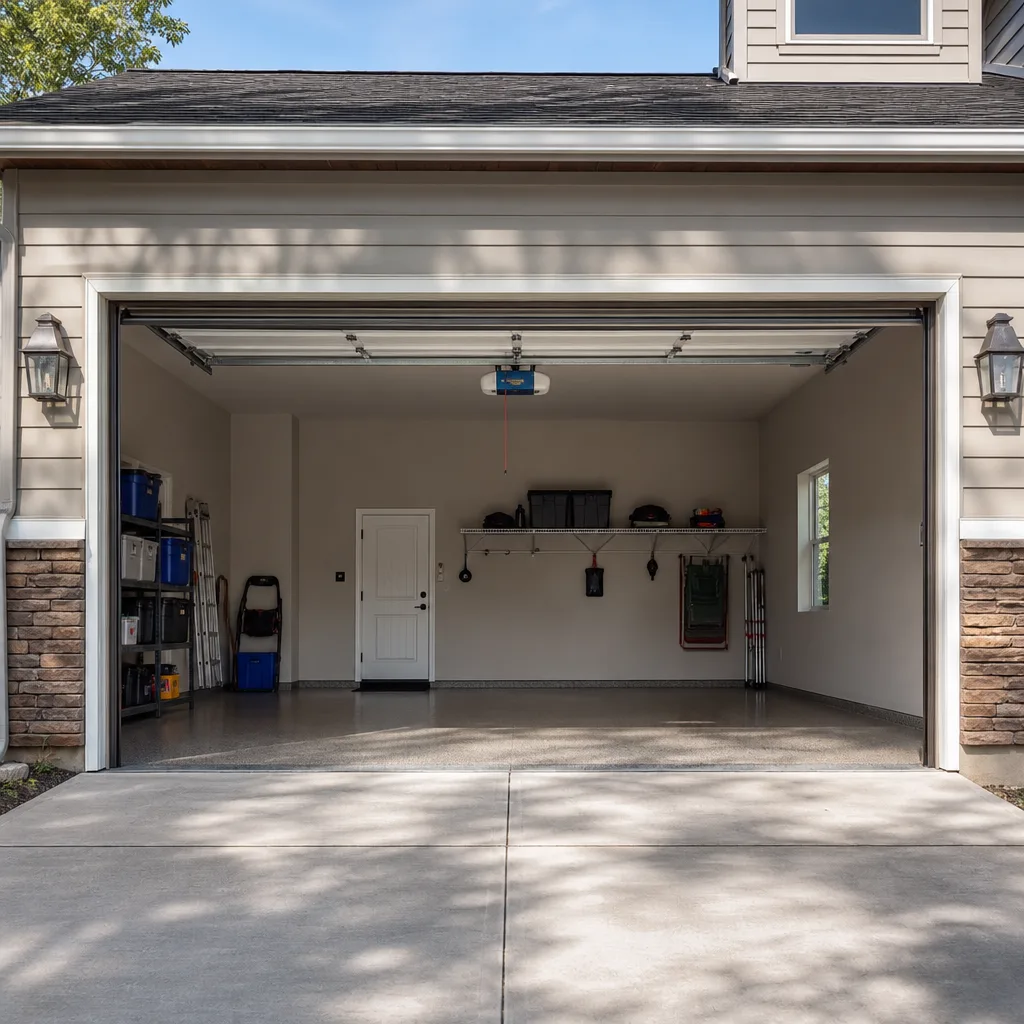 Chamberlain openers
Full 25-point door and opener safety check with every visit - springs, cables, rollers, tracks, and your LiftMaster or Chamberlain opener included
You get a price before we start. It does not change when the truck arrives.
Get your free estimateDIY vs Professional Garage Door: The Atlanta Homeowner’s Decision Guide
Here’s a number most Atlanta homeowners never hear: a residential torsion spring under full tension stores roughly 700 to 900 pounds of rotational force. That’s not a warning label, it’s physics. The spring above your garage door carries enough energy to break a forearm, shatter fingers, or throw a steel winding bar through drywall if it slips. Yet in the same breath, replacing your bottom weather seal costs $12 and takes 25 minutes with a screwdriver. The DIY question isn’t one question. It’s a dozen different ones, and the honest answer changes depending on which square foot of your garage door you’re touching. This guide draws the actual line for Atlanta homeowners: what’s genuinely safe to tackle yourself, what’s risky but possible, and what should never be attempted without a trained technician and a service truck full of the right parts.
Quick Answer
Most garage door maintenance is safely DIY: lubricating rollers and hinges, replacing weatherstripping, tightening loose hardware, and reprogramming remote controls. Spring replacement, cable repair, track realignment, and panel replacement are not DIY jobs in any practical sense because the injury risk is severe and the specialized tools cost more than hiring a professional. In Atlanta, hiring professional garage door repair for the dangerous work typically runs $150 to $450 depending on the part, which is often less than the emergency room copay for a spring-related injury.
Styles & brands we work with
Table of Contents
- The Anatomy of a Modern Garage Door: What You’re Actually Dealing With
- Jobs That Are Genuinely Safe for DIY
- The Gray Zone: Risky But Doable With the Right Tools
- Never DIY: The Professional-Only List
- Why Torsion Springs Are Different: The Physics No One Explains
- Cost Comparison: What You Actually Save on the Five Most Common Repairs
- Atlanta-Specific Factors: Humidity, Hardware, and Older Homes
- The Liability Question Homeowners Skip
The Anatomy of a Modern Garage Door: What You’re Actually Dealing With
A garage door looks simple: a big panel, some tracks, a motor. But each component has a distinct failure mode, a distinct skill requirement for repair, and a distinct consequence for getting it wrong. Before deciding what to do yourself, you need to know which part you’re actually diagnosing.
The five systems at play:
- Torsion springs: The horizontal coil or coils mounted on a shaft directly above the closed door. These do between 85 and 90 percent of the lifting work. They are the most dangerous single component in most homes. When one breaks, it sounds like a gunshot in the garage.
- Extension springs: Found on older doors, running along the horizontal tracks on both sides. They stretch rather than wind, storing energy the same way a giant rubber band does. Still dangerous, slightly less so than torsion springs, but absolutely capable of causing serious injury.
- Cables: Braided steel lines that connect the bottom corners of the door to the spring system. They carry the tension from the spring to the door itself. A frayed cable next to a loaded spring is a time bomb.
- Rollers and tracks: The wheels that let the door travel up and down, and the metal channels that guide them. These parts wear out gradually, get noisy, and bind. They move the door but don’t carry stored tension.
- The opener: The motor unit on the ceiling, its drive system (belt, chain, or screw), and the electronics that run the whole thing. The opener does far less lifting than people assume. A properly balanced door can be opened by hand with two fingers. The opener moves the door, but the springs carry it.
Here’s the thing that surprises Atlanta homeowners who’ve lived in their house for years: your door is not balanced by the opener. If your door suddenly stops halfway, or slams shut with more speed than it used to, or opens crooked, the opener is rarely the culprit. Openers fail electrically. Springs fail physically. Cables fail under tension. Knowing which system you’re looking at is the whole game.
Jobs That Are Genuinely Safe for DIY
Some garage door work is exactly as approachable as changing a light fixture or swapping out a toilet seat. Any reasonably capable homeowner can handle the following without a technician, and doing so saves you between $89 and $150 in service call fees that Atlanta companies charge just to show up.
Safe DIY list:
- Lubricating rollers, hinges, and the torsion spring: This is quarterly maintenance. A can of white lithium grease or silicone spray costs $9 at any Atlanta hardware store. Spray the roller bearings, the hinge pivot points, and lightly coat the torsion spring. It takes 15 minutes and prevents most squeaking issues.
- Replacing weatherstripping: The rubber strip along the bottom of the door, and the vinyl trim around the frame. Atlanta’s humid springs and hot summers break down rubber faster than in drier climates. A 16-foot replacement seal runs $15 to $35 depending on the door width. You’ll need a utility knife, a tape measure, and about 30 minutes.
- Tightening loose hardware: The garage door opens and closes roughly 1,500 times a year. Vibration loosens nuts and bolts. A socket set and 20 minutes of tightening the bolts on the hinges, tracks, and opener rail addresses most rattling. Do this with the door closed and the opener unplugged.
- Reprogramming and replacing opener remotes: Whether you have a LiftMaster, Chamberlain, Genie, or Craftsman opener, the pairing process is well documented in the manual or online. Universal remotes run $20 to $35. You don’t need any special training, just the “learn” button and instructions.
- Repainting the door exterior: Steel doors in Atlanta take sun, humidity, and occasional hail. A proper scuff-sand, primer, and exterior paint job is a weekend project that extends the door’s life by years. Cost: $40 to $80 for paint and supplies.
None of these involve tools that can maim you. None involve stored mechanical energy. None require a second person to safely control the risk. If you can operate a socket wrench without supervision, you can do everything on this list.
The Gray Zone: Risky But Doable With the Right Tools
These jobs are possible for a determined DIYer, but they carry genuine risk and a higher mistake rate than most YouTube tutorials would have you believe. The tutorial was filmed by someone who has done it forty times. You’ll be doing it once. That gap is where injuries and broken doors happen.
- Replacing rollers: If the rollers are worn, bent, or grinding, new ones cost $10 to $20 per pair. But here’s the catch: on most doors, you cannot remove old rollers without loosening the hinges, and in some configurations, without touching the cable tension. On doors with extension springs, the cable runs through a pulley right where the bottom roller sits. If the cable slips while you’re working, the spring snaps toward the wall with shard-generating force. If your door has torsion springs and bottom-bracket rollers, that bottom bracket is connected directly to the cable under full spring tension. Removing the wrong bolt without a winding bar in the right spot is a hospital trip. Verdict: Doable on some door configurations, genuinely dangerous on others. You need to understand YOUR setup before touching anything.
- Replacing the safety sensor or keypad: Modern sensors are simple: mount, align, wire. A replacement sensor from Chamberlain or LiftMaster is $30 to $45. The risk here isn’t physical, it’s electrical. If you miswire the sensor, the door won’t close, which is annoying but not dangerous. If you miswire the keypad outside the garage, you’ve potentially created a security gap. Verdict: Low physical risk, moderate technical competence required.
- Adjusting the opener’s force and travel limits: When your opener stops reversing in the right spot or doesn’t close all the way, the travel-limit screws on the motor unit need fine-tuning. This is a $0 fix with the right screwdriver. But if you set the down-force too high because the door was binding on something, you create a door that will not reverse when it hits an obstruction. That’s a safety mechanism you’re overriding. Verdict: Doable only if you understand why the door was binding in the first place, which circles back to spring and roller issues.
A good rule of thumb for the gray zone: if the repair requires you to remove any bolt that is painted red, has a warning tag attached, or sits near a cable with visible tension on it, stop. That’s not a bolt. That’s a decision point.
Never DIY: The Professional-Only List
These jobs require specialized equipment, training, and in most cases, a strong reason to have another human present. We’ve repaired doors in Buckhead, Decatur, and Sandy Springs that homeowners attempted themselves after watching a 12-minute video, and the second repair bill is always higher than the first one would have been.
The non-negotiable list:
- Torsion spring replacement: This is the most dangerous home repair in existence, bar none. The winding bars, the unwinding procedure, the bar-under-tension sequence, the potential for the winding cone to shatter: one wrong move and you get a steel bar through your face or a broken arm. Average cost in Atlanta: $180 to $340 per spring, installed. The DIY tool cost alone is $75 to $120 for proper winding bars and a safety cable kit, plus the risk. The math speaks for itself. Professional spring repair is not a convenience, it’s the only rational option.
- Cable replacement: Cables are intimately connected to springs on every door design. Releasing the cable releases the spring’s stored energy. A cable that snaps under load becomes a steel whip. We’ve seen cables slice through cardboard boxes, dent car roofs, and nearly take a homeowner’s eye out in the Virginia-Highland area. Garage door cable repair is absolutely a professional-only job. No exceptions.
- Track realignment or replacement: Tracks that are misaligned cause the door to bind, which puts uneven stress on the spring system, which can cause a spring to fail prematurely or the door to derail entirely. Realigning tracks requires precise measurements, a level, and knowledge of the correct spacing tolerances for your specific door. A track that’s off by half an inch at the bottom is a door that’s off by three inches at the top.
- Panel replacement: A bent or dented panel from a kid’s basketball game or a car bumper in a Midtown driveway is not just cosmetic. Panels are load-bearing sections of the door. Replacing one requires unhooking the door from the opener, disconnecting the cable tension, and rebalancing the entire assembly. This is a two-person, four-hour job in ideal conditions.
- Any repair to a door that won’t stay closed, stays partially open, or slams shut: If the door’s behavior changed suddenly, something in the balance system failed. Springs are the usual suspect. Cables are close behind. Neither is DIY territory, and delaying the repair makes everything worse.
Why Torsion Springs Are Different: The Physics No One Explains
A torsion spring works by twisting, not stretching. Imagine wringing out a wet towel: you twist it tighter and tighter, and the towel stores that energy in its coils, waiting to spring back. A garage door torsion spring is the same principle, except it’s made of high-carbon steel wire roughly the thickness of your finger, and the “towel” is wound seven to eight full rotations under load.
Here’s what most YouTube videos breeze past: the spring must be wound on the shaft, not off the door. This is done with two steel winding bars inserted into the winding cone. Each rotation requires you to insert a bar, push it to a specific angle, hold it against the tension of the previous rotation, insert the second bar, and repeat. Each rotation stores more energy in the cone. A standard 7-foot Atlanta garage door with a 120-pound panel needs roughly 7.5 to 8 turns per spring to achieve proper balance. That’s 7.5 turns of accumulating stored energy that wants to unwind itself into whatever is holding it, which is your shoulder, your wrist, and your face.
If the winding bar slips out of the cone while you’re under load, the cone spins backward at speeds high enough to break bones before your nervous system registers the slip. If the set screw on the winding cone isn’t tightened to the exact right torque, the cone slips during operation and the spring unwinds violently, throwing the bar and potentially taking the shaft, the cable drum, and a chunk of the wall with it.
Professional technicians use purpose-made winding bars that fit the cone sockets precisely. Hardware store pipes don’t fit. They’re too short, the wrong diameter, or they have threads that concentrate stress. That’s the detail nobody tells you until it’s already too late.
In our experience across Atlanta, from Grant Park to Brookhaven, we see roughly one DIY spring attempt every three or four months. The homeowner usually calls us after the door is half-open, one cable is off the drum, and the spring is half-wound. The repair we then perform takes twice as long and costs more than a fresh spring replacement would have. That’s not a judgment. It’s a pattern.
Cost Comparison: What You Actually Save on the Five Most Common Repairs
The DIY math assumes everything goes right the first time. In Atlanta’s humid climate, with hardware that’s often 10 to 20 years old on homes built before 1990, the realistic success rate for first-time DIY repairs in the gray zone is somewhere around 50 to 60 percent. Here’s the honest ledger for the five most common garage door issues:
| Repair | Professional Cost in Atlanta | DIY Material Cost | Realistic Savings | Hidden Costs |
|---|---|---|---|---|
| Weatherstripping replacement | $120 – $180 | $15 – $35 | $85 – $145 | None. This is the best DIY value on the list. |
| Roller replacement (all rollers) | $130 – $230 | $55 – $90 | $75 – $140 | Tool cost, potential injury from cable slippage, and door damage if a roller binds during reinstallation. |
| Opener reprogramming | $75 – $110 | $0 – $35 | $75 – $110 | Minimal. This is the second-best DIY value. |
| Extension spring replacement | $160 – $270 | $40 – $70 | $120 – $200 on paper | Injury risk is significant. One slip with a loose tool or a frayed cable under load, and the savings vanish into a hospital bill or a broken window. |
| Torsion spring replacement | $180 – $340 | $55 – $85 | $125 – $255 on paper | The highest injury risk of any home repair. Tool cost alone erodes a third of the savings. The mistake rate for first-timers is high enough that the expected value is negative. |
The pattern is clear: the repairs with the biggest “savings” are the ones where the word savings belongs in quotes. You’re not saving $200 on a torsion spring. You’re accepting a risk of severe injury to avoid paying a technician $200. That’s not a financial decision. It’s a gamble with bad odds.
Atlanta-Specific Factors: Humidity, Hardware, and Older Homes
Atlanta’s climate does two things to your garage door: it rusts the hardware faster, and it rots the seals faster. The city averages over 50 inches of rain per year, and the summer humidity sits above 80 percent for weeks at a stretch. That moisture works its way into every uncoated metal surface in your garage.
What we see in Atlanta homes, specifically:
- Rusted torsion springs: Springs in unconditioned Atlanta garages rust faster than in northern or desert climates. A rusted spring is a spring with microfractures in the steel. It will fail years earlier than a clean one. If your spring looks brown and flaky, it’s closer to the end of its life than the date on the original install would suggest.
- Big-box parts that don’t match older door specs: Homes built in the 1980s and 1990s in areas like Norcross, Smyrna, and East Atlanta often have doors that are no longer in production. The spring’s wire gauge, inner diameter, and length are specific to that door model. A universal spring from the Home Depot on Ponce de Leon Avenue is a guess. A wrong-spec spring under-tensions or over-tensions the door, which wears out the opener motor or slams the door shut.
- Wood rot in the jamb and frame: Atlanta’s humidity plus the freeze-thaw cycles we get a few times each winter break down wooden door frames. A door that appears to be sagging or binding might not be a spring or cable issue at all. It might be the wood around the tracks pulling away from the structure. Fixing that requires more than garage door expertise. It requires opening the wall to inspect the framing.
- Afternoon thunderstorm cycles: Lightning storms that roll through in July and August are hard on opener circuit boards. If your opener suddenly stops working after a storm, and the door is otherwise fine, check the opener’s internal breaker and the wall outlet before calling anyone. A fried board is usually a replacement job, and it’s not a DIY-friendly repair because it involves line voltage.
The Liability Question Homeowners Skip
Every Atlanta homeowner has insurance. What most don’t understand is what that policy does and doesn’t cover when a DIY garage door repair goes wrong.
The three scenarios that matter:
- You injure yourself doing a DIY repair: Your health insurance covers your medical bills, subject to your deductible and out-of-pocket maximum. Your homeowner’s policy typically does not pay for your own injuries. If your deductible is $3,000 and a broken forearm costs $8,000 to fix, you’re out $3,000 before insurance contributes a dollar.
- Your DIY repair fails and injures someone else: Say you replace a spring, and two months later the door comes off its track while a neighbor’s kid is playing basketball in the driveway. The neighbor’s medical claim goes through their insurance, and their insurer will likely subrogate against your homeowner’s liability coverage. If your insurer determines you performed a repair that a reasonable person would have hired out, they may deny the claim on the grounds of negligence. You could be personally liable, meaning your assets are on the line.
- Your DIY repair fails and enables a break-in: You replace a cable, it slips after a week, and the door won’t close all the way. Someone walks into your garage and cleans out your tools, bikes, and the golf clubs you’ve had since college. Your policy covers the theft, but if the door was left unsecured due to a repair you performed incorrectly, the adjuster has grounds to reduce or deny the payout. Read your fine print.
Professional repair isn’t just about avoiding injury at the moment of the fix. It’s about the liability chain. A licensed technician who performs a repair is responsible for it. A homeowner who performs a repair is the end of the liability chain. There’s nobody to pass the risk to.
Common Mistakes to Avoid
- Using the wrong size winding bars on a torsion spring: A half-inch pipe does not fit the cone sockets on modern doors. If the bar slips under tension, the spring unwinds and everything nearby becomes a projectile. Use the right tool or don’t do the job.
- Replacing a spring without replacing both springs: On a double-spring door, the springs wear at nearly the same rate. If one broke, the other is close behind. Replacing only the failed one means paying for labor twice and leaving an unbalanced door in the meantime.
- Ignoring rust on hardware before it becomes a failure: In Atlanta humidity, a quarter-sized patch of surface rust on a spring is normal. When the rust becomes pitting or flaking, the spring is compromised. Lubricating a rusted spring does not un-rust it.
- Clicking ’emergency release’ while the door is up and the springs are loaded: The red handle disconnects the opener from the door. If the door is up and the springs are carrying the load, pulling the handle sends the door downward with nothing controlling its speed. We’ve seen this snap cables and bend panels in Buckhead garages.
- Buying springs from a big-box store without knowing your door’s exact specs: Wire gauge, inner diameter, and coil length are not interchangeable. A spring that’s off by one gauge is under-powered or over-powered by up to 30 percent.
- Skipping the annual spring inspection because the door ‘works fine’: Springs don’t announce their retirement. They break at 7 a.m. on a Tuesday when you’re already late for work. An Atlanta homeowner who has had springs for 10-plus years is overdue for an inspection regardless of how the door currently behaves.
See the difference
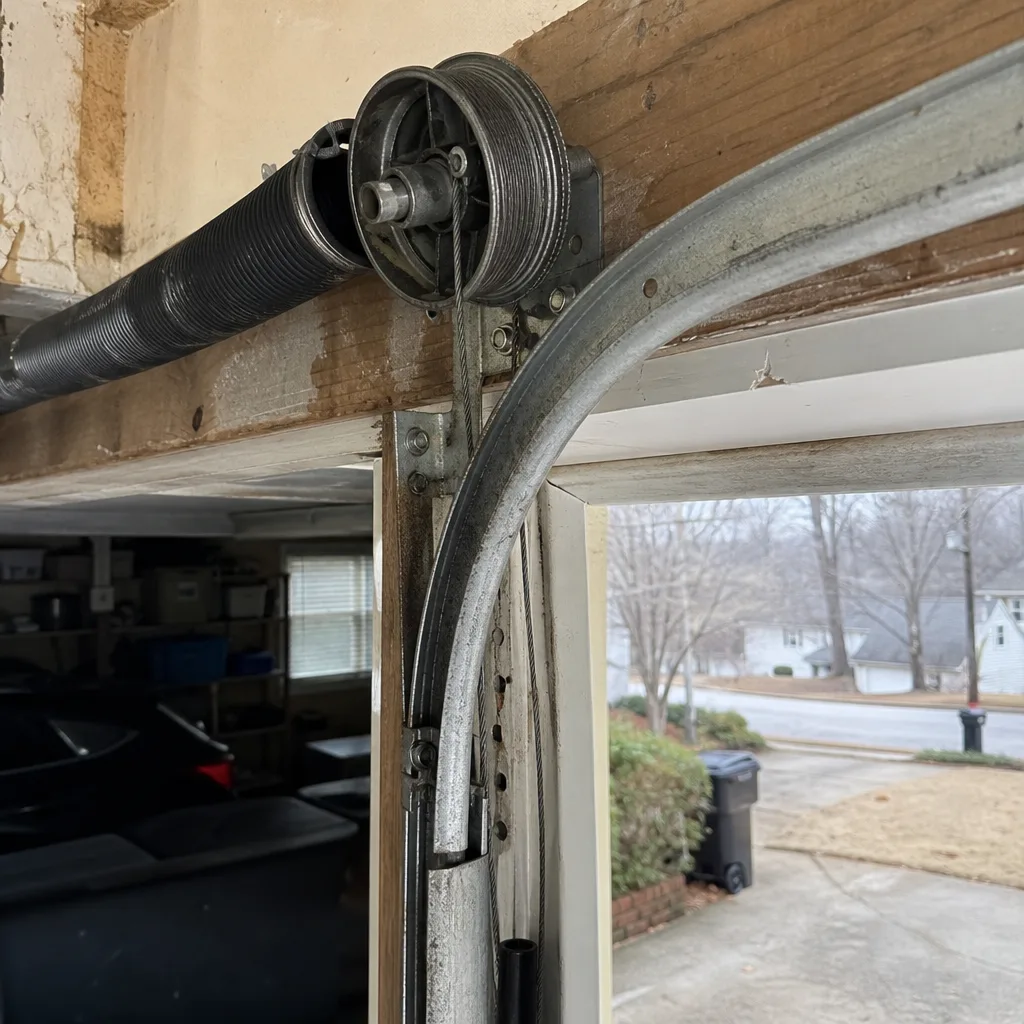 Before
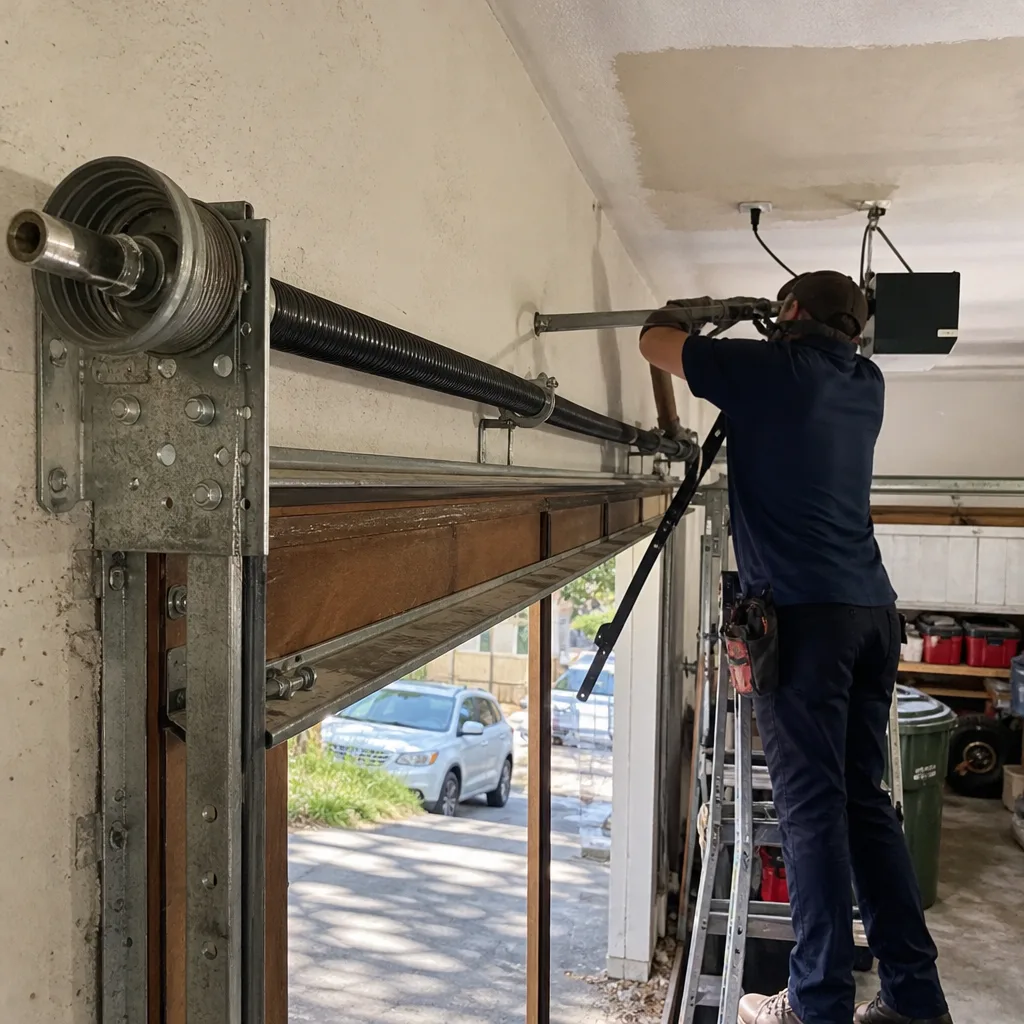 After
After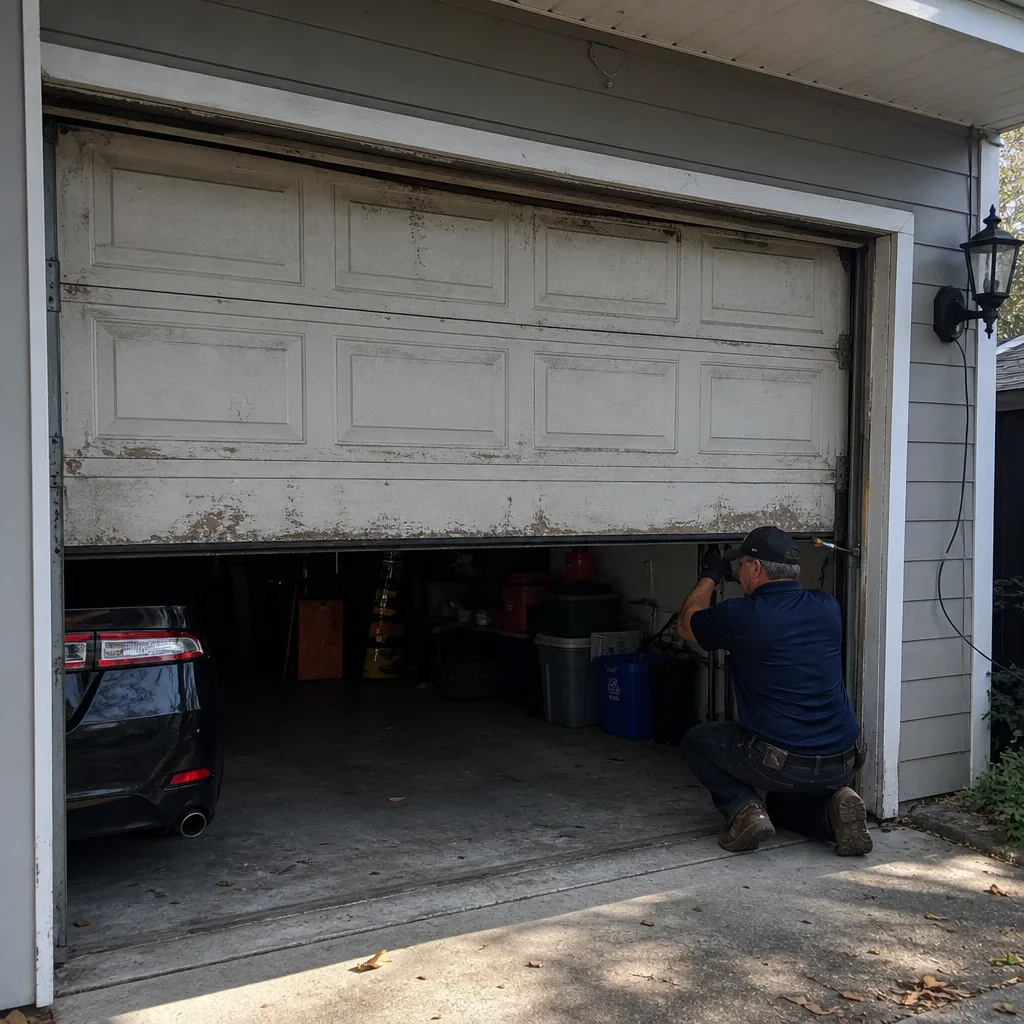 Before
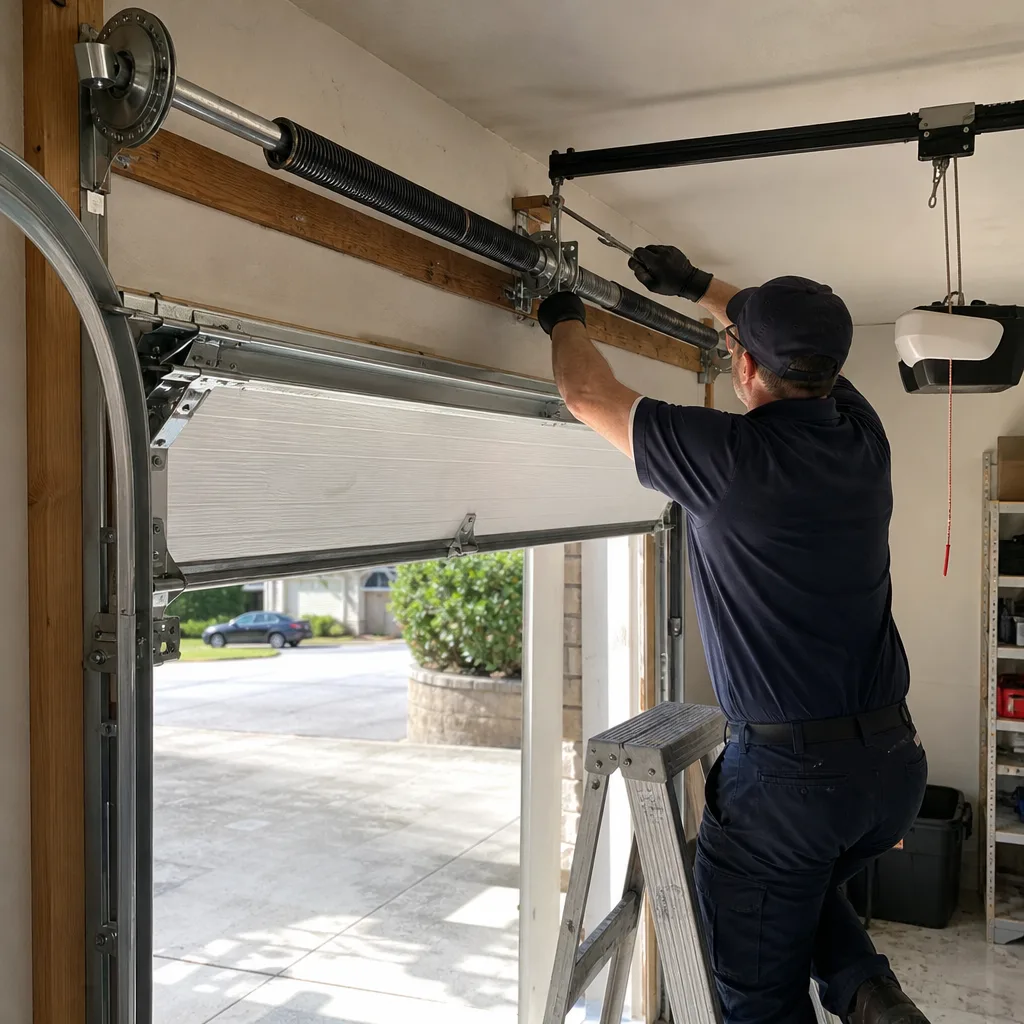 After
After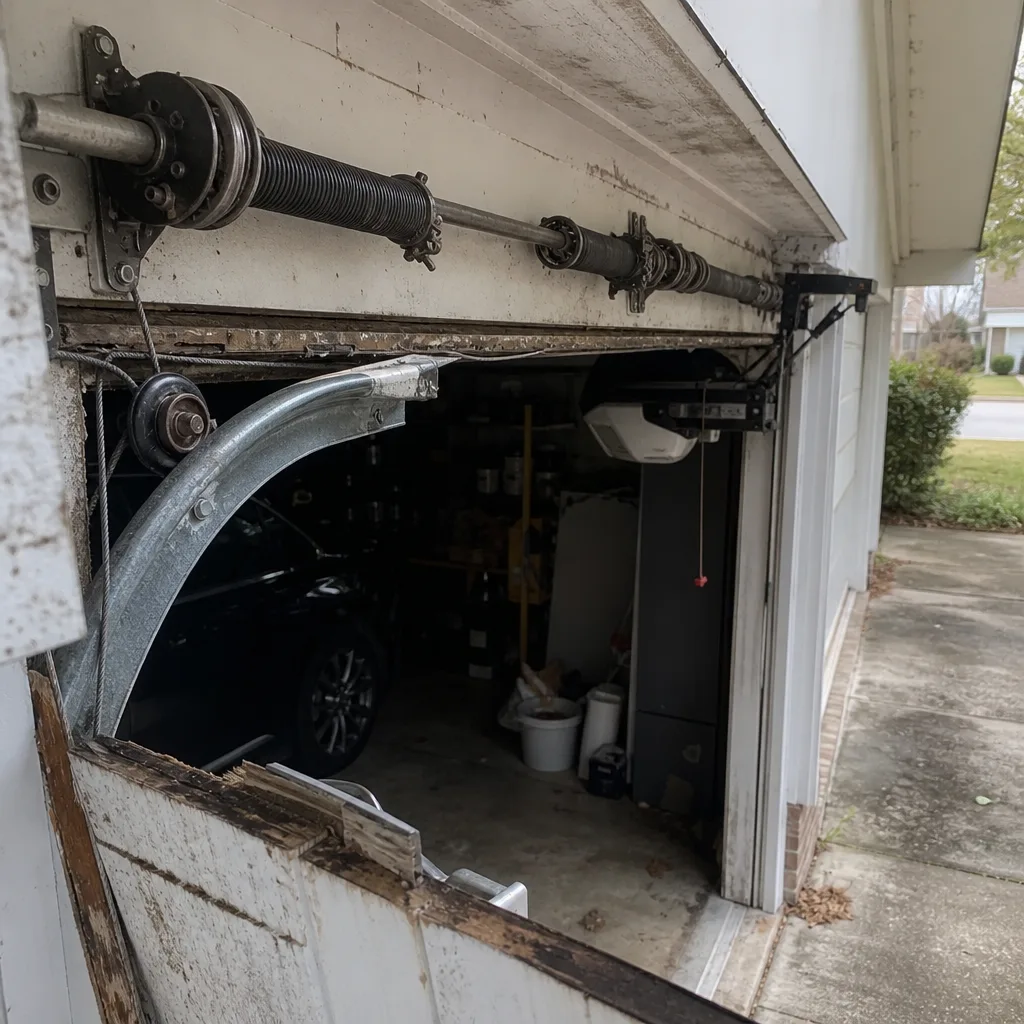 Before
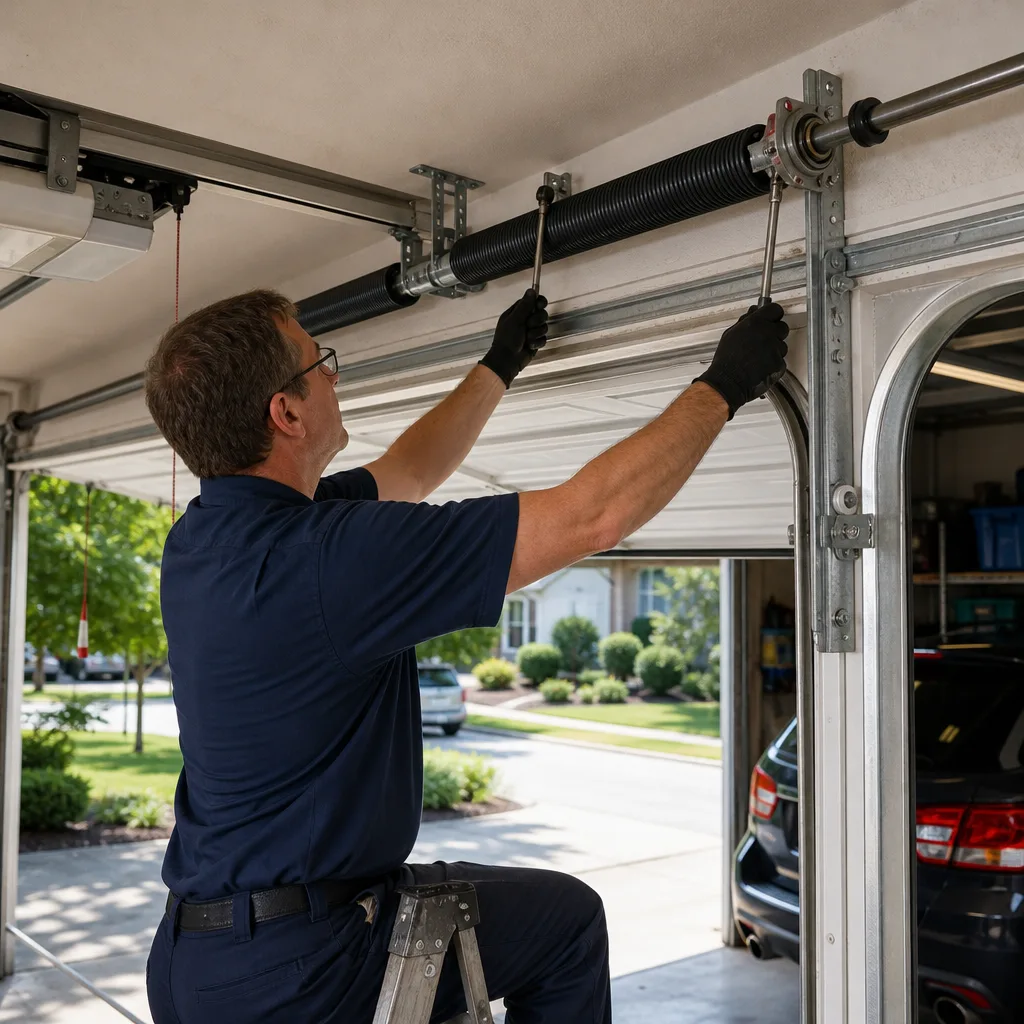 After
AfterWhen to Call a Professional
If your door won’t open or close, makes a loud bang, has a visible gap in a spring, shows a frayed cable, hangs crooked, or feels dramatically heavier than it used to, call someone who does this every day. The phone-first Atlanta homeowner should not spend a Saturday under a loaded spring hoping YouTube got it right. We’re Marlow Garage Door Repair. We serve Atlanta and the surrounding metro area, we train our technicians on LiftMaster, Chamberlain, Genie, Clopay, Amarr, Wayne Dalton, Craftsman, and Raynor doors, and every job is backed by a 365-Day Done Right Promise in writing. We’ll give you a written price before any wrench turns. Call (762) 230-6145 for a free estimate in Atlanta, or book online and watch your tech arrive in real time.
Frequently Asked Questions
Spring repair in Atlanta typically runs between $150 and $340 per spring depending on the spring type, door size, and whether you’re replacing one or both springs. The exact price is visible in writing before any work starts. Call (762) 230-6145 for a free estimate, and remember that two springs on a double-spring door should be replaced together to avoid paying for labor twice.
No. Torsion springs hold 700 to 900 pounds of force and replacing one without proper training, tools, and a second person is the most dangerous home repair a person can attempt. The tool cost alone is $75 to $120, which eats into any savings. This is a professional-only repair, no exceptions.
Reprogramming remotes, replacing keypads, and swapping safety sensors are safe DIY projects on any LiftMaster, Chamberlain, Genie, Craftsman, or Raynor opener. Replacing the motor unit itself, repairing the drive system, or troubleshooting a board that failed after a thunderstorm is better left to a professional, especially if the job involves line voltage.
If the door opens, closes, or balances differently than it used to, and the opener still hums when you press the button, the problem is usually the springs. Openers fail electrically; springs and cables fail physically. Pull the emergency release and try to lift the door by hand. If it’s heavy, the springs are done and the opener’s not the issue.
Yes. Atlanta’s 50-plus inches of annual rain and persistent summer humidity rust springs, corrode cables, and shorten the lifespan of uncoated hardware by years relative to drier climates. That’s why Atlanta homeowners should schedule an annual spring inspection even when the door appears to work fine, and why big-box replacement parts often don’t match the spec of older doors still common in Midtown and Decatur homes.
Your own injuries go through your health insurance, subject to your deductible. Injuries to others or property damage caused by a repair you performed incorrectly may be denied by your homeowner’s insurer if the repair is deemed negligent. That risk is part of the real cost of DIY, and it’s one most Atlanta homeowners never calculate before reaching for a wrench. Call (762) 230-6145 for a professional estimate before you take that risk.
The Bottom Line
Garage door DIY isn’t a yes-or-no question. It’s a sliding scale: weatherstripping, lubrication, and opener reprogramming are genuinely homeowner-friendly. Rollers and sensors are doable for the determined. Springs, cables, tracks, and panels are professional-only, and pretending otherwise is how people get hurt and how small repairs become expensive ones. In Atlanta, where humidity ages hardware faster and older homes complicate the parts matchup, the smart play is to do the safe jobs yourself and call a professional for everything under tension. At Marlow Garage Door Repair Atlanta, the written price comes before the work, the 365-Day Done Right Promise comes after it, and a live person answers the phone 24/7. For spring repair, we specialize in spring replacement, and for cable work we handle that too. Call (762) 230-6145 for a free estimate.
Written by Jaylen Ross, Owner at Marlow Garage Door Repair Atlanta, serving Atlanta since 2002.